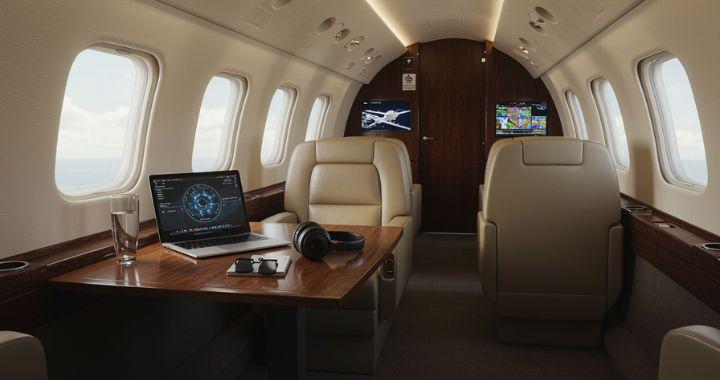
Safety and security are top priorities for travelers who fly privately, especially as private jets have become the preferred mode of transportation for high-net-worth individuals, executives, and celebrities. While private aviation offers unparalleled comfort, privacy, and efficiency, one question often arises: Can you install a defense system on a private jet? Unlike military aircraft, private jets aren’t inherently equipped with advanced protection systems to counter threats like missiles or cyberattacks.
In this article, we will explore whether it is possible to install a defense system on a private jet and the various options available to enhance the security of your private air travel.
But, make sure to check out our new line of JetBeds before you plunge. Made in the United States, our JetBeds are uniquely manufactured and are the only fully cushioned way to fly privately in comfort, giving you the satisfaction of knowing you are in control!

Can You Install A Defense System On A Private Jet?
Yes, defense systems can be installed on private jets, though options remain limited and heavily regulated. Jet owners will have to navigate complicated legal frameworks and security protocols when implementing additional protective measures.
One major challenge that exists stems from the fundamental design differences between private and military aircraft. Private jets lack integrated defense architecture, making retrofits expensive and technically challenging. Significant structural and electronic modifications may be necessary. Moreover, international aviation authorities strictly control the use of defense technologies on civilian aircraft.

Despite these hurdles, several defense options exist for private jets:
- Infrared Countermeasures: These systems are designed to detect and disrupt the guidance systems of heat-seeking missiles, a common threat faced by aircraft. Infrared countermeasures work by emitting a high-intensity infrared signal to confuse the missile’s tracking system, causing it to veer off course.
- Anti-missile Laser Systems: Some private jet owners have opted for advanced laser-based defense systems that can detect and neutralize incoming missile threats. These systems work by tracking the missile’s trajectory and targeting it with a high-energy laser beam, effectively disabling the missile’s guidance and propulsion systems.
- Chaff and Flare Dispensers: Chaff and flares are classic countermeasures used to confuse radar-guided and heat-seeking missiles, respectively. These systems release clouds of small metallic strips or infrared-emitting flares to distract and mislead the incoming threat.
It’s important to note that the installation and use of these defense systems on private jets are subject to stringent regulations and approvals from various aviation authorities, such as the Federal Aviation Administration (FAA) in the United States and the European Union Aviation Safety Agency (EASA) in Europe.

How To Customize Private Jets With A Defense System
Customizing a private jet with defense systems involves a combination of technology integration, legal compliance, and collaboration with certified aerospace experts. Below are actionable methods to enhance onboard security:
Laser-Based Infrared Countermeasures (IRCM)
IRCMs rank among the most common defensive tools adapted for civilian aircraft. These systems identify and counter heat-seeking missiles by projecting focused laser energy to confuse missile guidance mechanisms.
Operation:
- Sensors detect incoming missile threats.
- Laser transmitter directs energy toward the missile’s seeker.
- The missile loses tracking capability and veers off course.
Required Approvals:
- FAA or EASA certification
- Compliance with International Traffic in Arms Regulations (ITAR)
Best Application:
- Flights through regions where surface-to-air threats exist
Electronic Warfare (EW) and Signal Jamming
EW systems protect aircraft by disrupting hostile radar or communication signals. They jam frequencies used to track or target the jet.
Operation:
- Antennas detect hostile radar or missile lock-on.
- The system emits radiofrequency noise to obscure the jet’s location.
Limitations:
- Strictly regulated due to potential interference with civilian air traffic
- Requires government authorization in most countries
Best For:
- Corporate jets operating in politically unstable areas
Armored Components and Ballistic Protection
While full-scale armor plating is rare, reinforcing critical areas like fuel tanks, avionics, and crew compartments can mitigate damage from small arms fire or explosions.
Options Include:
- Bulletproof windows: Multi-layered polycarbonate glass
- Kevlar-lined panels: Added to fuselage and cockpit doors
- Blast-resistant cargo holds: For secure storage
Approval Requirements:
- Structural modifications must pass FAA Part 25 airworthiness standards.
Best For:
- VIPs or heads of state requiring physical protection
Advanced Cybersecurity Measures
Modern private jets rely on networked systems for navigation, communication, and entertainment, making them vulnerable to cyberattacks. Robust cybersecurity suites are essential.
Key Features:
- Encrypted communication channels
- Real-time intrusion detection systems (IDS)
- Firewalls isolate flight-critical systems from passenger networks
Compliance:
- Must align with FAA Advisory Circular 119-1 (Cybersecurity Guidelines)
Best For:
- Safeguarding sensitive data and preventing hijacking via digital breaches
Counter-Drone Systems
With the rise of rogue drones near airports, counter-drone technology is increasingly relevant. These systems detect and disable unauthorized drones near the aircraft.
Technologies Used:
- Radiofrequency (RF) scanners to identify drone signals
- GPS spoofing to take control of hostile drones
- Kinetic interceptors (rare for civilian use)
Legal Note:
- Drone disabling is restricted in many countries; check local laws.
Best For:
- Airports or regions with frequent drone incursions
Yes, private jets can be equipped with defense systems.
In conclusion, while it is possible to install a defense system on a private jet, the options are limited, and the process is highly regulated and complex. Private jet owners and operators must carefully weigh the benefits, costs, and regulatory requirements before pursuing this type of security enhancement.
For more information on all things about aviation, check out our blog. We have posts on some of the major talking points in the aviation sector today such as “Safety Pilot Requirements”, “What is a Chartered Flight?” and so on. You can also check out similar posts on “Can Pilots Get Life Insurance?” and “How Safe Are Private Jets?”.
Of course, always ensure your jets are equipped with JetBed. The innovative product turns your jet seats into a luxurious, comfortable bed for optimal in-air sleeping. It’s easy to use and lightweight, so there’s no reason it’s not available on every private aircraft you board!
Jetbed also offers the most comfortable bed linens for private jets, designed to provide ultimate comfort and sound sleep. Don’t settle for less when it comes to chartered flights keep JetBed on your must-have list!