
The aviation industry offers a wide range of exciting and rewarding career opportunities beyond piloting. One of the most dynamic and exclusive roles is that of a private flight attendant a position that blends luxury service with the fast-paced world of private aviation.
In this post, we’ll take a closer look at what it means to work as a private flight attendant, including the responsibilities, required skills, and steps to building a successful career in this specialized field.
But before you dive in, be sure to check out our range of JetBeds to get the most out of your private jet experience. JetBeds are made in the USA and are absolutely the most comfortable way to fly private! Plus, it’s the perfect tool to fight pilot flight fatigue. Don’t fly without one!

Private Plane Stewardess Job
Working as a flight attendant on private jets is a unique experience that differs significantly from commercial aviation. Instead of serving large numbers of passengers with standardized routines, private flight attendants cater to a smaller, high-end clientele with personalized preferences and high expectations. The focus is on creating tailored, luxury experiences for each individual on board.
These roles demand a high level of professionalism, discretion, and attention to detail. Private flight attendants often work with repeat clients, learning their habits and anticipating their needs. Flexibility is also key, as flight schedules can change on short notice. If you’re drawn to a career that offers variety, challenge, and the chance to deliver exceptional, one-on-one service, this post will help you understand what it takes to thrive in this specialized field.
Do Private Jets Have Flight Attendants?
Yes, most private jets do employ flight attendants, although the specific requirements depend on the size of the aircraft and the nature of the flight. Typically, private planes that carry six or more passengers will have at least one flight attendant on board. Larger jets (especially those accommodating 10 or more passengers) often require additional cabin crew to ensure a high standard of service and safety.
While regulations vary by country, in the United States, the FAA mandates that any aircraft configured to carry 20 or more passengers must have at least one flight attendant. However, even when not legally required, many smaller jets still employ cabin crew. This is especially true for flights serving luxury travelers or corporate clients, where exceptional, personalized service is expected as part of the private aviation experience.
On smaller aircraft or shorter flights, pilots will on occasion handle routine passenger service chores. But with safety procedures increasing in intensity and client expectations regarding service quality continually on the ascent, this habit has become rarer. Trained cabin specialists significantly enhance the passenger experience in private aviation.
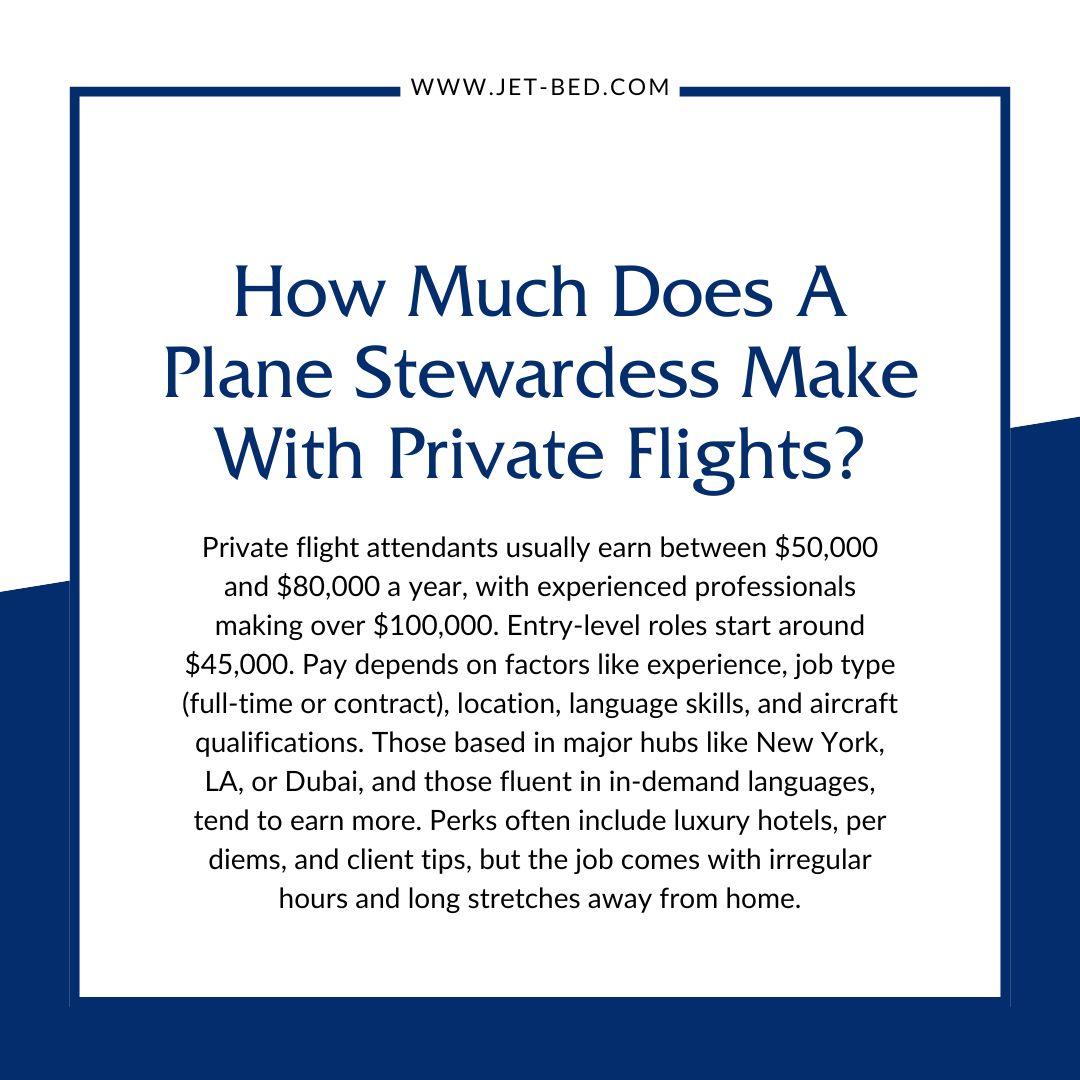
How Much Does A Plane Stewardess Make With Private Flights?
Private plane stewardesses typically earn between $50,000 and $80,000 annually, exceeding commercial airline compensation due to additional responsibilities and irregular schedules. Entry-level positions start around $45,000, while experienced professionals with 10+ years of experience can command salaries exceeding $100,000.
Several factors influence compensation in private aviation. Experience plays a key role, with each year of service typically increasing a flight attendant’s value and earning potential. The type of employment arrangement also matters full-time roles with fractional ownership companies or corporate flight departments often offer stable salaries and benefits, while contract positions with charter operators may provide higher hourly rates but without guaranteed hours or long-term security.
Base location also influences earnings. Flight attendants based in major private aviation hubs such as New York, Los Angeles, or Dubai tend to earn more than those in smaller markets. International experience and language skills can further enhance value, with fluency in Arabic, Russian, or Mandarin especially in demand. Pay can also vary based on aircraft type, as larger or more technically complex jets require additional training and expertise.
In addition to base salary, private flight attendants often enjoy generous perks, including per diem allowances, luxury hotel accommodations during layovers, and occasional gratuities from satisfied clients. However, these benefits come with trade-offs, such as unpredictable schedules and extended time away from home.
For additional information with real numbers, read our guide, “Private Jet Flight Attendant Salary.”
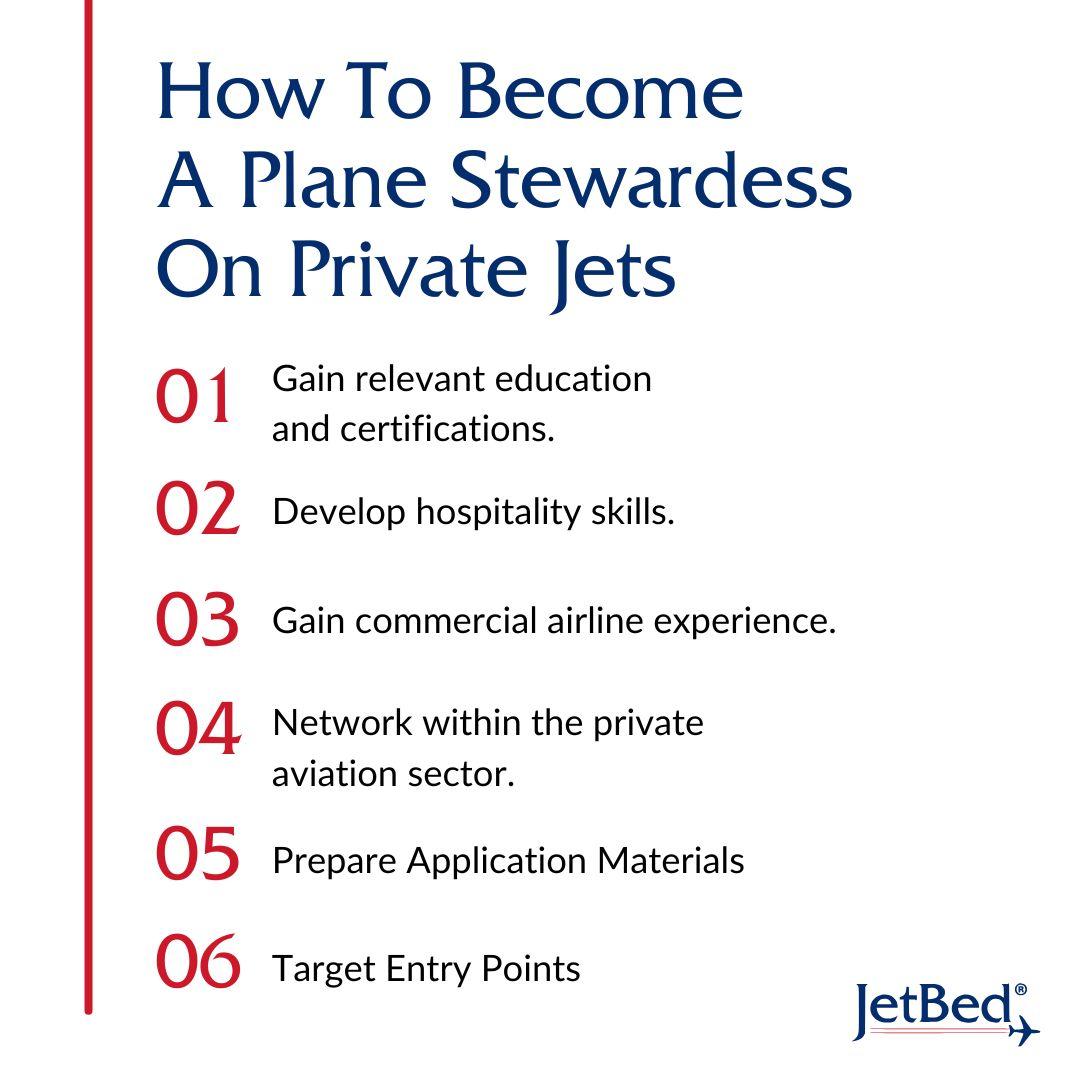
How To Become A Plane Stewardess On Private Jets
The following steps outline the path to becoming a stewardess on private jets.
Step 1: Gain relevant education and certifications.
The foundation begins with proper credentials. Candidates should obtain FAA-approved flight attendant certification through a 3-8 week training program covering safety procedures, emergency protocols, and first aid. Additional valuable qualifications include CPR certification, ServSafe food handling certification, wine education (WSET), and foreign language proficiency.
Emergency training specifically designed for corporate aviation provides essential skills. The FACTS (Flight Attendant Corporate Training Services) program covers the unique challenges of emergency management on private aircraft. These specialized certifications make candidates significantly more competitive in the hiring process.
Step 2: Develop hospitality skills.
At its core, private aviation is a luxury hospitality service delivered at altitude. Backgrounds in high-end hotels, fine dining establishments, or yacht service help cultivate the discretion, precision, and interpersonal skills essential for this role. Exceptional private flight attendants excel in refined service, wine and culinary presentation, conflict management, and cultural awareness particularly when serving a global clientele.
The ability to create memorable experiences with limited resources distinguishes exceptional cabin crew. On private jets, stewardesses transform basic catering into exceptional dining experiences through presentation and service style. This creativity and attention to detail represent core skills for the profession.
Step 3: Gain commercial airline experience.
Most private jet operators prefer candidates with commercial airline experience. This background provides valuable training in standardized safety procedures, managing difficult situations in confined spaces, and adapting to changing circumstances. Aim for 1-2 years on commercial airlines to build credibility and fundamental aviation knowledge.
During commercial airline tenure, experience on international routes and in premium cabins most closely mirrors the private aviation environment. These assignments demonstrate the ability to provide enhanced service and manage complex passenger needs, making the transition to private aviation smoother.
Step 4: Network within the private aviation sector.
Many private jet positions are filled through personal connections rather than published job listings. Building relationships within the industry reveals opportunities that never appear publicly. Professional organizations like the National Business Aviation Association (NBAA) offer valuable networking events. Additionally, the NBAA’s Flight Attendant Conference connects aspiring private stewardesses with potential employers.
Establishing relationships with private aviation caterers provides another networking avenue. These professionals work closely with flight departments and often learn about cabin crew openings before they’re advertised. Maintaining visibility within these specialized circles significantly improves hiring chances.
Step 5: Prepare application materials.
Resumes for private aviation should focus on skills that are highly relevant to the industry. Emphasize experience with VIP clients, attention to detail, and strong problem-solving abilities. A well-curated portfolio showcasing table settings, meal presentations, and relevant training certifications can significantly strengthen your application.
In private aviation, your online presence is also important. Employers often review social media profiles to assess professionalism and judgment. Sharing photos taken inside clients’ aircraft or disclosing trip details can raise serious concerns about discretion, which is a vital quality in this field.
Step 6: Target entry points.
Several paths lead to private aviation careers. Charter companies often have more frequent hiring needs and may consider less experienced candidates. Aircraft management companies maintain jets for multiple owners, providing exposure to different aircraft types and client preferences. Fractional ownership operators like NetJets offer structure and training programs ideal for building skills.
Corporate flight departments managing company-owned aircraft typically provide stable schedules and excellent benefits, though they generally require more experience. Contract or part-time positions offer valuable entry points while building connections that may lead to full-time opportunities.
Private plane stewardesses are key in providing a high-level service!
Private aviation offers a fulfilling career that blends travel with the art of providing exceptional, personalized service. While the standards are high and the hours demanding, the profession presents unique opportunities to visit exclusive destinations and create memorable experiences aboard some of the world’s most luxurious aircraft.
Flying in private jets offers an unparalleled level of comfort and exclusivity, making it essential to optimize your experience. By following these tips and investing in the Jetbed with its premium linens, you can ensure a restful and rejuvenating sleep on your next private flight. After all, it’s not every day that you have the privilege of flying in such luxury so why not make the most of it?
And, for more travel tips and in-depth information on all things related to private aviation, check out our blog, where you’ll find posts like: