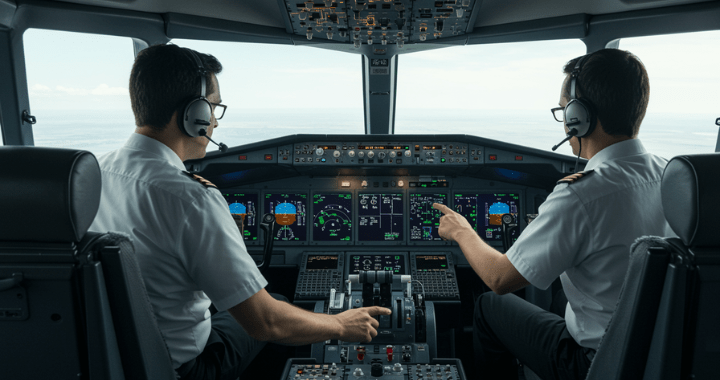
The aviation industry relies on precise communication and standard procedures to function optimally. Abbreviations form the backbone of aviation language and offer a standardized vocabulary that ensures easy coordination among pilots, maintenance staff, and air traffic control. Mastering these abbreviations allows every member of the flight crew to operate from a shared information base. As a result, this reduces the risk of miscommunication and, in turn, enhances overall safety.
Among the numerous acronyms used in the industry, CRM is among the most popular in modern aviation. In this post, we will talk about what CRM stands for and its importance in aviation.
Before we dive into the details of what CRM stands for in aviation, let’s talk about one often overlooked piece of crew management: rest. Jetbeds are designed to support pilot alertness by making in-flight rest not only possible, but comfortable. Proudly made in the USA, JetBeds elevate private jet travel with unmatched style, comfort, and convenience. They’re more than just a luxury; they’re an investment that speaks for itself.

What Does CRM Stand for in Aviation?
In aviation transport, CRM stands for Crew Resource Management. It originally began as “Cockpit Resource Management,” but experts expanded the concept to include other parts of the aircraft. Essentially, this shift in terminology helped generalize the idea beyond just the cockpit. Crew Resource Management is a system of general management that works to optimize the use of all available resources. This includes individuals, equipment, and procedures to provide safe and efficient flight operations.
The concept entails far more than the simple application of technical knowledge. Instead, it is concerned with developing cognitive and interpersonal skills, enabling flight crew members to work well together. This concept acknowledges that modern aviation safety depends not only on individual technical competence, but also on the entire crew’s capability to function as a cohesive unit.
Crew Resource Management (CRM) combines human performance skills—such as communication, decision-making, and teamwork—with standard operating procedures. Together, they form a system that addresses the intricacies of modern aviation. The system acknowledges that even highly trained airline pilots will err when flying solo, but effective team coordination significantly reduces these risks. This principle is just as applicable in commercial aviation as in private jet operations, where smaller crews must maintain the same high standards of safety.

Why Is CRM Important in Aviation?
Reduces Human Error
Human error is the leading cause of aviation accidents, which makes reducing errors a top priority of CRM training. The system educates flight crew members about identifying their limitations and taking measures to reduce errors. With effective communication protocols and decision-making patterns, CRM ensures that potential errors are identified, preventing them from affecting flight safety.
The aviation industry has documented numerous instances where good CRM prevents accidents possibly caused by human mistakes. By fostering a culture where crew members are not afraid to challenge decisions and raise concerns, CRM creates multiple layers of safety that catch errors before they become significant incidents.
Enhances Communication
Effective communication is the backbone of safe aviation operations. CRM training concentrates on standardized communication patterns to ensure that all crew members understand directions, decisions, and operational adjustments. It’s even more important during high-stress situations where miscommunication can have deadly consequences.
Effective communication extends beyond the flight deck. It should also include communication with air traffic control, maintenance crews, and ground personnel. In private aviation, clear communication is essential—espeically with smaller crews managing multiple responsibilities during each flight.
Improves Decision-Making
Aviation decisions are often made under pressure and must be taken promptly, requiring crews to process complex information quickly. CRM provides structured decision-making protocols that help crews consider options sequentially and reach optimal results. This process is especially beneficial when dealing with unexpected situations or emergency measures.
The decision-making component of CRM training teaches crews to gather all available information, think from various perspectives, and implement decisions with open communication to the stakeholders. This helps ensure sound decisions are given sufficient consideration even when time is short.
Facilitates Situational Awareness
Situational awareness is an invaluable skill in aircraft safety. CRM training helps crews stay aware of the aircraft, weather, traffic, and other factors that impact flight safety. Awareness enables crew members to respond proactively to changing conditions rather than reactively.
Maintaining situational awareness for solving problems requires constant monitoring and processing of information. CRM teaches crews to share observations and have situational awareness as a group that exceeds the abilities of any single crew member. This type of group endeavor to situational awareness significantly expands safety margins.
Maximizes Resource Utilization
Modern aircraft require the proper use of advanced systems to ensure maximum safety and efficiency. CRM training teaches crews how to effectively utilize all available resources, including automated systems, navigation equipment, and support personnel. That efficiency should also apply in the utilization of crew knowledge and skills.
The resource management aspect of CRM is particularly important in private aviation, where crews typically have fewer support staff than commercial flights. Understanding how to utilize resources, equipment, and procedures ensures private flight operations maintain high standards of safety.
When Did CRM Start in Aviation?
CRM originated in aviation during the late 1970s following a series of major accidents. These accidents inevitably drew attention to the role human error played in ensuring aviation safety. Ultimately, aviation experts created CRM after realizing poor communication and coordination caused most accidents—not technical faults.
The first official introduction of CRM training was in 1981. United Airlines led the way as the first company to introduce full crew resource management programs. The first of these programs was for cockpit resource management, focusing on enhanced communication and coordination among the members of the flight crew.
The Federal Aviation Administration (FAA) began requiring CRM training in every commercial airline back in 1990. This officially marked the transition from voluntary application to mandatory implementation. The regulation came in recognition of the fact that CRM was necessary to ensure aviation safety standards across the industry.

History of CRM in Aviation
As aviation evolved, the industry increasingly recognized how human performance affects safety—leading to the development of CRM. Each phase of development culminated in the system in use today.
1970s: First Identification
The 1970s marked the decade when experts began to realize that human error played a significant role in aviation accidents. Several major crashes, including the 1977 Tenerife air disaster, demonstrated how crew coordination and miscommunication could lead to fatal consequences. This prompted aviation professionals to explore the human factors of flight operations in more depth.
During this period, investigators also began to research cockpit dynamics and accident causation patterns. The industry recognized that technical skills alone were not adequate for a safe flight. As a result, experts introduced training courses to begin addressing common human errors. This laid the groundwork for the systematic CRM programs that followed.
1980s: Formal Development
In the 1980s, official CRM programs were established and implemented in the aviation industry. United Airlines’ initial program in 1981 marked the beginning of the trend in crew resource management training. Within time, this program was slowly adopted by other airlines. CRM programs focused on improving communication, decision-making, and leadership skills among members of the flight crew.
The decade saw extensive research on human errors and their implementation in aviation safety. The industry consistently improved training courses to address specific crew coordination aspects, including authority gradients, stress, and error identification. Airlines began embracing CRM principles in their operational practices and shifting away from the traditional technical training approach.
1990s: Regulatory Mandate
Regulatory mandates that emerged in the 1990s required CRM training for every commercial aviation activity. The FAA’s 1990 mandate for CRM training set basic standards for crew resource management programs and ensured their consistent application across the industry. This regulatory action recognized CRM as essential in maintaining aviation safety standards.
During this time, CRM training was extended beyond flight deck crews to include cabin crew, maintenance staff, and other aviation personnel. The term evolved from cockpit to crew resource management as its principles became more broadly applicable in aviation operations.
2000s: Technology Integration
The 2000s witnessed a radical shift in CRM training with the aviation industry adopting advanced technology in flight operations. Advanced aircraft systems required crews to acquire new skills to operate automated systems. But, they also had to remain aware of their surroundings and continue making informed judgments. CRM training was, in turn, modified to respond to these technologies.
The development of threat and error management (TEM) shaped CRM training during this decade. TEM focused on threat detection and operational threat management before a potential impact on flight safety. Merging TEM with core CRM concepts developed a more comprehensive framework for crew resource management.
2010s: Evidence-Based Training
Evidence-based practices were introduced in CRM training during the 2010s to enhance crew performances through data-driven approaches. Airlines utilized flight data monitoring and other analysis software to identify the most effective areas for implementing CRM training. This made focused training sessions that addressed specific operational concerns.
During the decade, CRM applications placed greater emphasis on cultural considerations, recognizing that effective crew resource management must account for diverse cultural backgrounds and communication styles. International aviation operations required CRM programs to work effectively across multiple cultural environments.
Modern Era: Continuous Evolution
Existing CRM programs continue to evolve in response to changing aviation technologies and operational environments. The implementation of artificial intelligence, sophisticated automation, and the integration of new communications technologies requires constant adjustments to CRM concepts. Modern training programs emphasize adaptive thinking and ongoing learning to offset emerging threats.
Private aviation has adopted CRM principles, recognizing that smaller crews require effective resource management skills in order to ensure safety standards. The implementation of CRM in private jet operations proves the universal applicability of these principles to all aviation industry segments.
CRM follows the advancement of the aviation industry in creating a continuous improvement system in operational efficiency and safety. From its inception in the 1970s to today’s sophisticated training courses, CRM has been established as essential to managing the interpersonal and operational dynamics that affect aviation safety.
CRM is the hallmark of present-day aviation safety.
CRM has played a central role in ensuring the utmost level of safety in every phase of aviation. The system’s emphasis on communication, decision-making, and resource utilization gives a framework that works both for safety as well as operational efficiency.
In private flying, CRM supports complex flying operations while offering the high levels of service that sophisticated clients demand. As aviation technology advances, CRM principles will evolve to meet new challenges while maintaining their core focus on maximizing performance.
Now that you know what CRM means in aviation, you have peace of mind that your flight and crew are operating efficiently. Alongside, remember not to compromise or settle for less with your comfort in flight. Rest the right way with a Jetbed to ensure every minute spent in the air feels like you’re right at home.
For more information on aviation protocols, safety operations, aviation trends, and so on, check our blog, where you’ll find posts like: