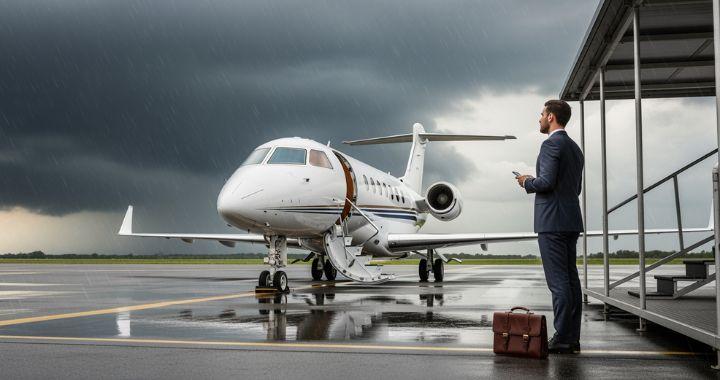
Flying by private jet is the epitome of convenience and operational efficiency. Offering unmatched speed, flexibility, and control, it allows travelers to create their own travel schedules—from departure times to destinations to routing. At its core, private aviation is shaped by the specific needs and preferences of each traveler.
Yet, despite this degree of flexibility, certain external factors—such as weather—remain unavoidable. Regardless of the size or technological sophistication of an aircraft, weather conditions impact all flights.
Therefore, in today’s post, we will explore how tropical storms influence private jet operations. More specifically, we will discuss whether such flights are subject to cancellation during severe weather events.
Before we explore the effect that weather has on private aviation, we must first discuss the importance of proper rest on flights. Proudly made in the USA, JetBed’s patented designs provide the ultimate comfort for both pilots and passengers. This level of luxury isn’t a preference—it’s a fundamental requirement.
Are Flights Cancelled During Tropical Storms for Private Jets?
Yes, private jet flights are certainly cancelled during tropical storms when safety dictates such choices. Flight planning teams continually monitor weather forecasts and make decisions in accordance with strict safety protocols. Above all else, the safety of passengers, crew, and aircraft takes precedence.
Tropical storms usually cause several hazards that make flying unsafe or impossible. High winds, heavy rains, or severe turbulence cause a serious risk to aircraft operations. In addition, the reduced visibility in such situations renders takeoffs or landings virtually impossible even for experienced crews with advanced aircraft.
Private jet operators will generally cancel flights when sustained winds exceed 35 knots or gusts hit 45 knots. Such wind speeds cause unsafe crosswind conditions during takeoff and landing phases. In addition, the wind shear associated with tropical storms will cause sudden altitude or airspeed changes with serious safety risk implications.
Weather forecast technology also enables private jet operators to make proactive cancellation choices. Instead of waiting until the last minute, the flight department tracks the weather conditions days before the proposed flight. This reduces the passenger inconvenience while maintaining the best safety standards.
The decision to cancel a private jet flight involves multiple stakeholders, including pilots, dispatchers, and meteorologists. Each professional brings their specialized knowledge together to decide whether conditions will permit safe flying. However, pilots maintain final discretion over flight choices as they bear the ultimate responsibility for passenger safety.
Tropical storms also impact airport operations beyond aircraft capabilities. Ground handling equipment becomes unsafe for operation due to high wind conditions, preventing safe aircraft servicing and passenger boarding. Airport towers also resort to suspending operations when wind conditions surpass operational thresholds, effectively grounding all traffic, irrespective of the type of private jet.
Is It Safe to Fly During a Tropical Storm in Private Jets?
Flying through tropical storms is generally unsafe for private jets. These weather conditions create scenarios that surpass the operational scope for all civilian aircraft. Expert pilots and aviation safety experts all recommend avoiding flight operations during active tropical storms.
Tropical storms generate extreme turbulence surpassing normal aircraft structural limits. Even the most advanced private jets cannot safely navigate the intense updrafts and downdrafts found in such weather conditions. This increases the risk of injury to both passengers and crew members.
Wind shear represents yet another critical safety risk for flying through tropical storms. This phenomenon consists of the rapid change in wind direction and speed over short distances. Private jets that encounter wind shear suddenly lose the ability to maintain aircraft lift, creating potentially catastrophic conditions during the takeoff and landing phases.
Heavy precipitation reduces visibility and also affects aircraft systems. Ice accumulation on the wings and control surfaces of the aircraft can significantly impact flight proficiency. Although advanced private jets usually have de-icing systems, extreme conditions found in tropical storms can prove hard to overcome. With this, lightning also poses additional risks. Even though most aircrafts are designed to withstand lightning, the intensity and frequency are typically risky.
Airport infrastructure also becomes compromised during tropical storms. Runway flooding, debris accumulation, and power outages can make safe operations impossible. Even if aircraft could theoretically operate in storm conditions, airport limitations often prevent practical flight operations from taking place.
The aviation industry maintains strict weather minimums precisely because tropical storms create catastrophic conditions for aircraft operations. These regulations exist based on decades of safety data and accident investigation findings. Consequently, no legitimate private jet operator will attempt flights during active tropical storm conditions.
How Are Private Flights Impacted by Weather?
Flight Schedule Delays
Weather events significantly disrupt flight schedules for private jets, often resulting in cascading delays that affect numerous flights. Tropical storms ground air travel for days, compelling travelers to reschedule. Flight departments go to get lengths to prevent these interruptions; however, passenger safety always takes precedence over schedule flexibility.
Private aircraft operations face specific challenges with weather delays due to the smaller aircraft being used. When storms ground a given aircraft, replacement options tend to be reduced. Crew duty time restrictions also exacerbate scheduling issues during prolonged weather delays.
Route Planning Adjustments
Flight planning teams continually adjust paths to avoid dangerous weather conditions while charting the most efficient travel course. During the height of the tropical storm season, adjustments become more complex and frequent. Alternates or alternative routings often add considerable extra flying time and additional fuel stop requirements.
Private aircraft have greater flexibility in routings due to access to smaller airports where the storm impact would likely be avoided. By doing so, creative routings involve skipping the brunt of weather conditions altogether. In most cases, these alternatives involve longer flying times and additional refueling.
Airport Operations and Ground Handling
Tropical storms significantly disrupt airport ground operations that support private jets. In high winds, the ground operating vehicles, baggage handlers, and maintenance teams cannot operate safely. Therefore, even minor weather conditions can hinder critical ground services that private jets rely on.
Smaller airports that frequently serve private aviation often lack the robust facilities that major commercial airports have. As a result, these airports may close during relatively minor events that wouldn’t affect larger airports. Consequently, private jet operations face more frequent weather-related closures.
Ground handling equipment becomes unsafe during the course of the tropical storm due to the high wind conditions. Fuel tankers, the stairway, and baggage handlers cannot function when the winds reach certain thresholds. Such limitations on ground support operations may result in private jets being grounded, despite the aircraft being technically fit for flight.
The biggest private jets face additional ground operation challenges during storms because they require specialized equipment and facilities. Large aircraft need specific ground power units and maintenance platforms that become unusable in adverse weather conditions.
Communication and Navigation Systems
Tropical storms can interfere with critical communication and navigation systems that private jets depend upon for safe operations. Radio communications suffer degradation during severe weather, making coordination with air traffic control difficult or impossible. GPS signals can also be affected by interference during intense weather events.
Lightning associated with tropical storms creates electromagnetic interference that affects avionics systems of aircraft. While modern private jets include robust shielding and backup systems, the intensity of storm-related interference can overwhelm even sophisticated equipment. Professional pilots avoid these conditions rather than risk equipment failures.
Private jet travel during hurricane season requires meticulous flight planning with realistic expectations for weather-related delays. Professional flight departments stay informed about current weather forecasts at all times, maintaining active communication with passengers about potential issues. Advanced communication helps manage passenger expectations by providing alternative arrangements when necessary.
Tropical storms can significantly disrupt private jet operations, affecting both flight safety and scheduling.
Private jets have the advantage of being more flexible than commercial airliners during weather events, but this flexibility has limits. Tropical storms create conditions that exceed operational capabilities for all aircraft types. Understanding these limitations helps passengers set appropriate expectations and make informed travel decisions during hurricane season. For more information on rescheduling private flights, read our post, “How to Reschedule a Private Flight.”
We understand that weather delays and diversions are inevitable aspects of private aviation. Our custom-fitted aircraft beds provide exceptional comfort during these unexpected situations, ensuring passengers remain well-rested regardless of schedule disruptions. Whether you’re dealing with tropical storm delays or simply wanting to maximize comfort during longer alternative routing, JetBed transforms your aircraft into a premium rest environment.