
Safety is the cornerstone of aviation. From private jets to commercial airlines, rigorous protocols ensure that passengers, crew, and aircraft operate within the highest standards of operational integrity and risk management. Aviation organizations worldwide plan, measure, and continuously improve safety because they recognize it isn’t incidental.
That’s why today, we’re focusing on management-level safety processes in aviation. We’ll break down what they are, why they’re crucial, and how professionals implement them to streamline operations. This ensures that every passenger and crew member can travel with confidence.
At JetBed, we understand that safety is intertwined with comfort. Private jet passengers expect luxury and productivity in the cabin, but those experiences are only meaningful when supported by the confidence that every flight is grounded in disciplined safety management. Our mission has always been to elevate comfort in-flight comfort with lightweight, high-quality, Made in the USA solutions. Comfort should never come at the expense of operational integrity.

What Is a Management Level Safety Process in Aviation?
Management-level safety processes in aviation refer to the structured practices and decision-making frameworks that leadership teams use to ensure safety management systems (SMS) function effectively. Frontline staff play a critical role in reporting hazards and following protocols. However, management must set the tone, allocate resources, and hold accountability for improving performance.
These processes are directly aligned with The International Civil Aviation Organization (ICAO) standards, which outline key components of SMS: safety policy, safety risk management (SRM), safety assurance, and safety promotion. At the management level, this translates to establishing clear objectives, creating a strong safety culture, and embedding key processes for risk controls and hazard identification.
In other words, executives and safety managers are responsible for ensuring the SMS is not just another manual on the shelf, but an active system that guides daily operations. For aviation organizations, this management layer is what connects high-level strategy with day-to-day safety. It ensures that all decisions about budgets, equipment, and staffing always include consideration of safety risk. In aviation, comfort and safety should never be an afterthought.
To learn more about SMS, visit our post: “Importance of Safety Management Systems in Aviation.”

How to Implement a Safety Management System in Aviation
Implementing a safety management system (SMS) at the management level isn’t just about drafting policies. It’s a structured, deliberate process that incorporates safety into all daily operations and long-term strategy.
ICAO and other aviation authorities emphasize that an effective SMS must identify hazards, manage risks, and monitor performance in a continuous cycle of improvement. For leadership, this means setting the tone, ensuring accountability, and establishing systems that make safety proactive rather than reactive.
Below are the essential steps for implementing SMS at the management level:
Establish Safety Policy and Objectives
Initially, it’s essential to define a clear safety policy that reflects management’s commitment to the highest operational safety standards. This policy establishes the organization’s objectives, including measurable targets for improving safety performance.
Leaders need to communicate these objectives to all levels of the organization. This reinforces the expectation that safety culture is non-negotiable. Additionally, it creates a solid foundation for aviation safety management systems that can function consistently across the board.
Conduct Hazard Identification and Risk Assessment
A critical component of SMS implementation is hazard identification. Aviation operators systematically gather data from flights, maintenance logs, and operational observations to detect potential threats. Professionals must assess each visible potential hazard for likelihood and severity. As a result, teams are able to effectively apply risk controls.
This process ensures that every risk is managed proactively and aligns with The International Civil Aviation Organization (ICAO) standards. Proper risk management guarantees that operational hazards, such as air navigation services failures, maintenance issues, or procedural errors, are identified before they escalate into critical incidents.
Undergo Safety Assurance and Performance Monitoring
After identifying hazards and risks, organizations must establish key processes for ongoing monitoring. This involves conducting audits, evaluating the effectiveness of risk controls, and reviewing operational performance metrics to ensure compliance.
Regular assessment of these processes is crucial to improving safety performance. They provide insight into the effectiveness of procedures and indicate when adjustments may be necessary. Monitoring this allows organizations to continually improve by integrating new technology, updated regulatory standards, and incorporating staff feedback into the SMS.
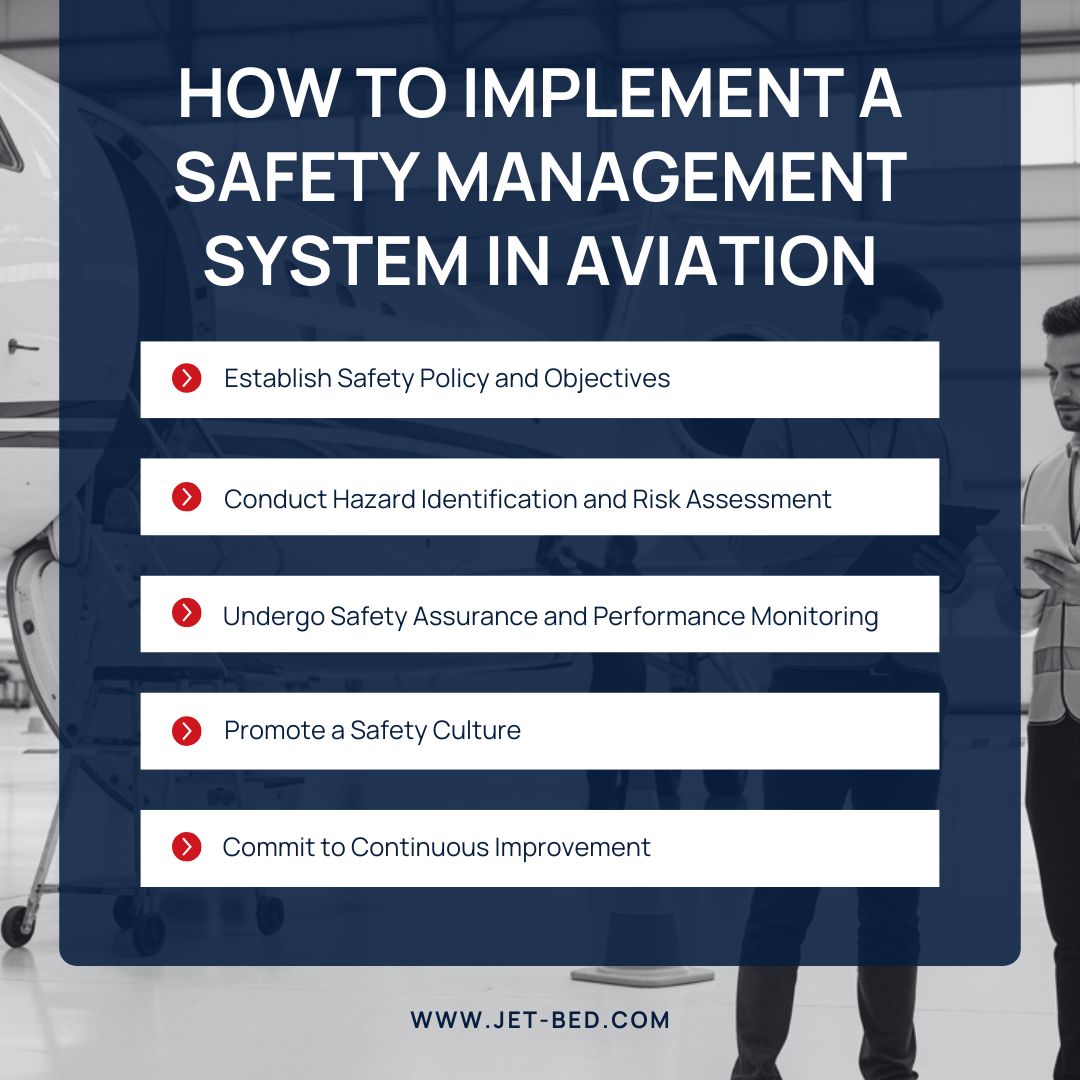
Promote a Safety Culture
An SMS is only as effective as the people who operate it. Ongoing training programs, effective communication strategies, and awareness campaigns reinforce safety culture. All personnel—from pilots to maintenance engineers—undergo thorough training in hazard identification, risk mitigation, and reporting procedures.
For example, flight crews must understand how to manage safety risk in flight operations, while maintenance teams apply risk controls to prevent technical failures. A well-implemented and thorough safety promotion plan ensures that every employee understands their role in supporting these systems.
Commit to Continuous Improvement
Regular management reviews are the key to ensuring that SMS goals are met and that safety objectives remain relevant. These reviews involve analyzing incidents, near misses, and operational data to find any areas where improvements can be made.
By applying a systematic approach to managing safety risk, executives can prioritize resources, refine key processes, and implement changes that strengthen safety culture. Continually improving these practices ensures that the organization remains compliant with ICAO standards while minimizing operational risks.
A safety management system in aviation is the path to safer, more comfortable travel.
A management-level safety process in aviation is not just a requirement. In fact, it’s the cornerstone of effective, reliable, and safe operations every day. From identifying hazards to improving safety performance, management involvement ensures that SMS frameworks are sustainable in the long run. For aviation companies, charter operators, and corporate fleets, this level of oversight translates to fewer risks, stronger reputations, and smoother operations.
At JetBed, we prioritize uncompromising safety and unmatched comfort to deliver true luxury and ensure smoother operations in aviation. Our commitment to supporting operators acknowledges that every great in-flight experience begins with a safe foundation.
For a deeper look at operational essentials, explore our guide “What Is a Flight Manifest,” which is another critical piece of aviation safety. At the end of the day, safety isn’t just a requirement in aviation—it’s the right way to fly. For more insights into aviation safety and comfort, head to the JetBed blog.