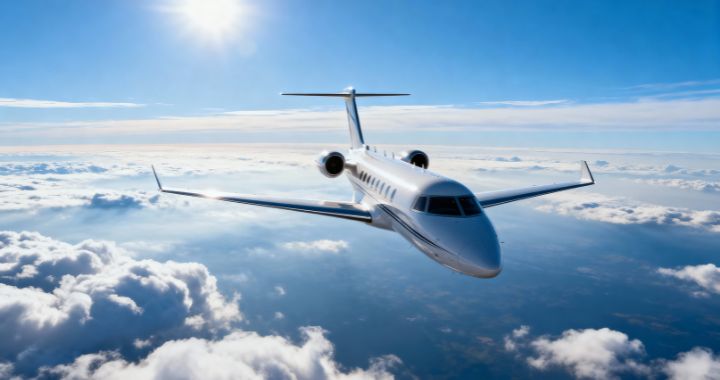
There’s something extraordinary about flying at high altitudes in a private jet. The world disappears in a tapestry of clouds and horizon while the modern aircraft cruises miles above sea level.
While this method of travel is both efficient and luxurious, high altitudes create unique considerations for both pilots and passengers. From fuel efficiency and smoother flights to temperature extremes and reduced air density, understanding proper operational standards is essential for safe travel.
In this comprehensive guide, we will discuss flight and safety at high altitudes for private aircraft. Additionally, we will highlight why high altitude flying is desirable and how pilots carefully manage potential risks.
While traveling in high altitudes, proper rest is essential for body acclimatization and risk prevention. With JetBed, those on board can appreciate true comfort with a patented, custom-fit bed specifically made for their aircraft. Complimented with luxury Italian linens and U.S. manufacturing, rest at 40,000 feet has never felt better.

Flight and Safety at High Altitudes: Risks, Tips, and Insights
While both private and commercial airlines operate at higher altitudes, charter flights soar above typical cruising levels. Therefore, this post outlines everything passengers, pilots, and flight crews should know prior to boarding a high-altitude flight.
We’ve thoroughly discussed altitude in previous posts, such as “How to Relieve Altitude Pressure in Ears” and “How to Read an Altimeter.” Today, however, we will examine why jets operate at high altitudes, the associated risks, and the essential safety measures implemented to ensure passenger security.

Why Do Airplanes Fly at High Altitudes?
Less Air Traffic
As we mentioned previously, private jets generally fly at higher altitudes than commercial aircraft. A private flight will operate between 35,000 feet, while commercial flights operate at 30,000 to 40,000 feet. This results in more flexibility when pilots are planning their flight itineraries.
Additionally, when operating in a less congested airspace, those onboard can enjoy more direct routing, reduced delays, and a strategic advantage against harsh weather. To learn more, visit “What Is a Flight Itinerary and Why Is It Important?”
Improved Fuel Efficiency
The higher the altitude, the thinner the air. Moreover, there is less atmospheric pressure at higher altitudes, resulting in less air resistance. As a result, pilots can travel faster and reduce aerodynamic drag, all while consuming less fuel.
As discussed in “Private Plane Fuel Costs,” various factors contribute to the cost of fueling and refueling private aircraft. Because passengers bear the cost of fuel, the increased efficiency at higher altitudes becomes a significant factor in managing travel expenses. More specifically, efficiency is particularly important for long-range jets flying international routes.
For more information, read our post “How Far Can a Private Jet Fly Without Refueling?” You can also visit “How Far Can Private Planes Fly?”
Reduced Turbulence
When flying at higher altitudes, the air is generally much smoother due to fewer air molecules and fewer atmospheric disturbances. As a result, passengers can enjoy less turbulence and a more comfortable experience.
However, passengers aren’t the only ones who benefit from the additional stability. A reduction in turbulence also allows pilots to maintain steadier control and consistent cruising speeds, enhancing operational efficiency.
To learn about the effects of turbulence, read our post “How to Avoid Getting Motion Sick on a Plane.”
Weather Avoidance
In addition to less turbulence, operating at higher altitudes keeps aircraft above most weather disturbances. Because smaller storms and atmospheric instability are concentrated in the lower layers of the atmosphere, private jets cruise at higher elevations for improved performance.
However, not all disruptions can be avoided. Severe thunderstorms, for instance, can reach up to 69,000 feet. Under these circumstances, a pilot would slightly alter the route, ensuring both passenger safety and efficiency. We further discuss this in “How Are Alternate Minimums Used in Aviation?”
Additionally, learn more about how atmospheric disruptions impact private aviation by reviewing our post, “Can Planes Fly in Thunderstorms?”
More Efficient Travel
Ultimately, flying at higher altitudes offers unparalleled efficiency, luxury, and flexibility. Unlike commercial airliners, private aircraft are engineered to perform reliably under the higher pressures encountered at these elevations.
More specifically, the thinner air allows jets to accelerate smoothly, sustain consistent cruising speeds, and deliver exceptional operational performance throughout long-range flights. As a result, passengers experience a remarkably stable and comfortable experience.
Why Is High Altitude Dangerous for Flights?
Reduced Air Density
Reduced air density, also referred to as high altitude density, can be particularly troublesome for private flights. At higher altitudes, the thinner air provides less lift, which requires pilots to carefully adjust control inputs to maintain stable travel.
The aircraft must then operate at higher true airspeeds to generate similar aerodynamic force—even though maneuverability decreases. These challenges highlight the importance of experienced piloting and meticulous flight planning.
Review “What Is Density Altitude?” and “How to Read an Altimeter” to learn more.
Higher Risk of Hypoxia
Even in private jets, cabin pressurization is critical. As the aircraft continues to climb in elevation, the lower atmospheric pressure results in fewer oxygen molecules. This can result in an increased risk of hypoxia, as discussed in “Does Altitude Affect Blood Pressure in Private Jets?”
Advanced pressurization systems, which we will discuss below, are essential for maintaining both cognitive function and overall well-being at high altitudes.
Temperature Extremes
Cruising at high altitudes exposes aircraft to severe temperature changes. Because of this, aircraft systems must be carefully engineered and insulated to maintain proper functionality. While there isn’t an FAA rule that universally discusses temperature maximums or minimums, 14 CFR Part 97 provides regulatory oversight necessary for safety in all conditions.
Otherwise, pilots may experience performance degradation and decreased engine performance. In more severe cases, however, both fuel combustion and icing can negatively impact performance and safety.

Flight and Pilot Safety at High Altitudes
Aircraft Performance Considerations
At high altitudes, reduced air density impacts crucial factors such as engine performance and maneuverability. Therefore, pilots must obtain all necessary education, training, and certifications to successfully operate under such conditions.
This is essential not only for understanding how high altitude changes impact the aircraft but also for handling the jet with precision. To learn more about the dedication and commitment required, visit “How Long Does It Take to Become a Pilot?”
Adjusting for Density Altitude
Density altitude is directly affected by temperature, humidity, and air pressure, therefore impacting performance, engine power, thrust, and lift. To compensate for this, pilots must account for the differences prior to take off.
In a technical sense, they should utilize performance charts and procedural adjustments to ensure safe and optimal performance. These are just two of the many tools necessary for accurately calculating proper airspeeds, climb rates, maneuverability, and minimizing risks.
Visit “What Is ISA in Aviation?” to learn additional information.
Cabin Pressurization Systems
Generally speaking, private jets climb between 500 feet and 3,000 feet per minute, depending on the stage of travel and type of aircraft. To protect those on board, private aircraft effortlessly stimulate a comfortable cabin atmosphere, known as cabin pressurization.
Essentially, advanced cabin pressurization is a crucial safety mechanism for maintaining sufficient oxygen levels and supporting sustained cognitive function. We discuss this topic in further detail in our post “Why Is An Airplane Pressurized?”
Continuous Instrument Monitoring
While flying in high altitudes, natural flight cues can become misleading due to reduced air density and a thinner atmosphere. Due to this, pilots must rely on continuous instrument monitoring to maintain precise navigation and ensure safe separation.
More specifically, the maintained use of this system allows pilots to respond effectively to any changing conditions. As a result, passengers can have the peace of mind that safety measurements will always be reinforced—even at extreme altitudes.
Redundant Safety Systems
Under AC 25.795-7, the FAA mandates redundant safety systems in private aviation to enhance both reliability and operational efficacy. More specifically, private aircraft must obtain redundant hydraulic, electrical, flight control, and ground and power systems.
Furthermore, Air Traffic Control (ATC) relies on multiple network channels to ensure constant communication—particularly if general safety systems fail. These safeguards are critical for maintaining safety, protecting passengers, and supporting pilots in high-altitude travel.
High-altitude travel maximizes efficiency, safety, and operational reliability.
Traveling in a private jet offers unrivaled flexibility, convenience, and comfort. However, to offer such factors, the aircraft must reliably travel at higher altitudes than commercial airliners. To do so safely and efficiently, pilots must be aware of all necessary adjustments and operational considerations that ensure both passenger safety and overall satisfaction.
Whether chartering a private jet for business or pleasure, proper rest is essential for an optimal experience. At JetBed, our patented inflatable design creates a completely flat, hotel-quality bed within minutes. Your in-flight relaxation should mirror your overall experience—comfortable, unique, and absolutely luxurious.
Contact us today to find out how you can upgrade your experience with JetBed!