
When traveling on a private jet, there’s an inherent sense of convenience, luxury, and flexibility. To acquire this, though, the aircraft must travel at higher elevations, often between 30,000 and 45,000 feet. This is standard practice in private aviation, as high altitudes allow for greater fuel efficiency, speed, and comfort.
However, as we’ve discussed previously in “Flight and Safety at High Altitudes,” the higher elevation causes noticeable physiological changes—particularly in the cardiovascular system. Pilots, passengers, and flight crews may experience an increase in heart rate as the body adjusts.
In this practical guide, we will discuss how passengers can safely and effectively lower their heart rate at high altitudes. Additionally, we will explore why this change occurs and whether it warrants concern. Proper education is essential for safe and comfortable travel.
When navigating high altitudes in private aviation, comfort is of utmost importance. At JetBed, our patented, custom-fit system turns cramped seating into lightweight, hotel-quality beds. Complemented with U.S. manufacturing and premium Italian linens, passengers can experience an unparalleled sleep experience miles high.

How to Lower Heart Rate at High Altitude Safely and Effectively
In this post, we will draw on scientific understanding and aviation expertise to explain why heart rates increase at higher altitudes. Moreover, we will address symptoms of acute mountain sickness (AMS), hypoxia risks, and other factors that can impact the cardiovascular system.
Additionally, we will share actionable advice that all on board can take to reduce the risk of adverse reactions. By following these recommendations, passengers can maintain control—even in prolonged flight conditions.

Does Heart Rate Increase at High Altitudes?
Yes, the heart rate does increase when traveling at high altitude. As elevation increases, the air becomes thinner, pressure decreases, and there are fewer available oxygen molecules. Because of this, the body must work harder to compensate.
As mentioned in “Does Altitude Affect Blood Pressure?”, as the body compensates, blood vessels constrict and blood viscosity increases. This is all in an effort to redistribute blood and carry oxygen to vital organs. While necessary, it often results in symptoms that many passengers, especially first-time travelers, find alarming.
For example, in addition to an increased heart rate, many experience headaches, palpitations, shortness of breath, dizziness, and fatigue. Furthermore, it’s not uncommon for passengers to experience feelings of ear fullness, vertigo, and tinnitus.
For efficient symptom relief of ear pain, review our post, “How to Relieve Altitude Pressure in Ears.”
What Is Normal Heart Rate at High Altitude?
While traveling on a private aircraft, a normal resting heart rate ranges from 80 to 100 beats per minute. According to research, this 10% to 30% increase in heart rate allows the body to maintain adequate oxygen levels. However, this data is based on what is to be considered “healthy adults” without underlying conditions.
For individuals with a history of heart attacks, coronary artery disease, heart failure, or high blood pressure, even slight elevations can be significant and warrant monitoring. In such instances, the heart is already working harder to maintain normal function. An increase in oxygen demand can put additional stress on the heart, thereby increasing the risk of reduced cardiac efficiency during travel.
However, it doesn’t take dramatic elevation changes to trigger a response. Compared to sea level, even elevations around 5,000 feet are classified as high-altitude travel, where oxygen availability begins to decline.
Most passengers can adapt to the adjustment seamlessly. Nonetheless, it’s important to maintain a heart rate that allows the cardiovascular system to function efficiently.
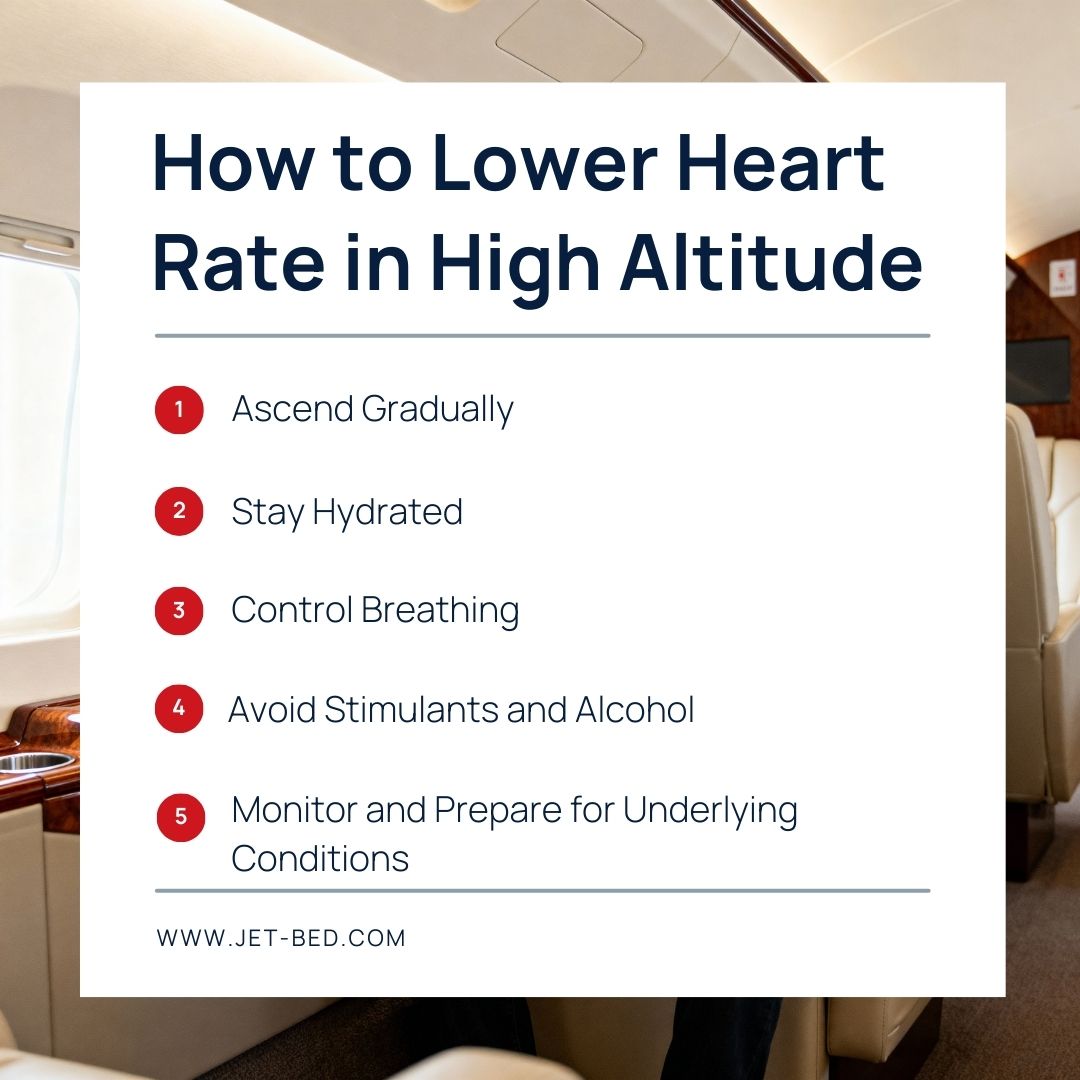
How to Lower Heart Rate in High Altitude
Ascend Gradually
Gradual ascension is essential to safe, comfortable travel—for both the aircraft and those on board. While airplanes are pressurized, the cabin pressure is still affected by external pressure and atmospheric changes. If the aircraft elevates too quickly, rapid changes can increase the risk of hypoxia, decompression sickness, altitude sickness, and additional alarming symptoms.
Furthermore, it can worsen pre-existing conditions, such as heart disease, COPD, and blood disorders. A slow ascent when traveling on a private jet is key to allowing the body time to adjust. Additionally, it reduces health risks by acclimatizing correctly and helping passengers maintain a low heart rate.
To learn more, visit our posts: “What Are the 3 Stages of Acclimatization to High Altitude?” Additionally, to learn more about how pilots ensure safe ascension, review: “How to Read an Altimeter.”
Stay Hydrated
When traveling in high altitudes, staying hydrated is a critical step to both comfort and health. Jet cabins are generally extremely dry with very little humidity. Because of this, it’s significantly easier to become dehydrated in the sky than it is on land.
Additionally, as we mentioned previously, thinner air contains fewer oxygen molecules, which can increase heart rate. When you’re properly hydrated, you’re supporting your body’s ability to maintain proper blood volume, which directly reduces cardiac output.
Control Breathing
Lower oxygen saturation naturally triggers the body’s fight-or-flight response. As you begin to react to this physiological change, the sympathetic nervous system activates. As a result, heart rate, breathing rate, and blood pressure can increase.
To combat this, practice taking deep, slow breaths. By doing so, you then activate the parasympathetic nervous system, promoting relaxation and a lower heart rate. Techniques such as this are excellent for stabilizing the cardiovascular system.
Avoid Stimulants and Alcohol
As we touched on previously, the body can easily become severely dehydrated when flying in high altitudes. In addition to staying hydrated, it’s vital to avoid alcohol and stimulants—such as caffeine and certain medications.
When combined with a lack of hydration, both can increase fluid loss. Without necessary fluids, the dehydration forces the heart to beat faster to continue providing enough oxygen. If you do decide to consume alcohol, ensure you drink double the amount of water and electrolytes to combat worsening symptoms.
Monitor and Prepare for Underlying Conditions
Passengers with underlying conditions should consult a physician prior to boarding the jet. This helps ensure you’re stable, not on medications that counteract high-altitude travel, and are aware of any necessary precautions.
Additionally, continue monitoring your conditions throughout the duration of travel. Heart monitors, blood pressure cuffs, and pulse oximeters can help you track any changes and respond appropriately.
With the proper tools and techniques, you can safely lower your heart rate during high-elevation travel.
When traveling by private aircraft, flying at high altitude is both routine and efficient. While most individuals experience minor discomfort and occasional physiological changes, others experience measurable stress on the heart and lungs. By implementing the above strategies, passengers and crew can enjoy a safe, comfortable, and luxurious experience.
From rigorous safety standards to lavish accommodations, private aviation is unparalleled in delivering an elevated, seamless experience. With this in mind, your in-flight rest should rise to the same standard. At JetBed, our inflatable, patented design turns uncomfortable seating into a flat, hotel-quality bed. Even at 40,000 feet, you can enjoy restorative, fulfilling sleep.
To find out how you can upgrade your experience with JetBed, contact us today!