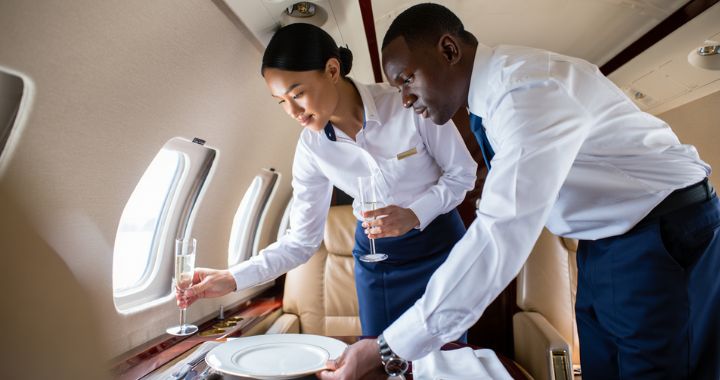
Cabin crew training for private planes is a critical component of preparing for the unique demands of private aircraft operations. More specifically, the requirements differ significantly from those of a commercial airline. From flight service to safety procedures, the cabin crew is responsible for every detail of the onboard experience.
In addition to technical knowledge, cabin crew members are expected to be highly adaptable, detail-oriented, and familiar with all aspects of the job. Passengers anticipate an elevated journey—one defined by discretion, tailored accommodations, and resourcefulness. This level of expertise can only come from substantial experience and specialized training.
For aviation professionals pursuing a career as a cabin crew member on a private jet or plane, this comprehensive guide outlines the essential criteria. We will discuss what training consists of, how much it costs, how long it takes, and which training programs are available.
In-flight comfort is an integral element in private aviation. Without it, crew members risk fatigue-related errors and a reduced passenger experience. At JetBed, our patented inflatable design creates a flat, seamlessbed within minutes. With USA manufacturing and luxury Italian linens, JetBed is more than just bedding—it’s a transformative sleep experience.
What Is Cabin Crew Training for Private Plane?
Cabin crew training in private aviation is specialized training designed to prepare crew members for the unique safety, service, and operational demands of private aircraft. Each program is tailored to the personalized, aircraft-specific procedures and rigorous safety standards that distinguish private aviation from commercial airline operations.
Moreover, training covers an expansive range of topics. As a professional within the private aviation industry, crew members aren’t simply serving food and assisting with seating. They are multi-faceted experts who blend hospitality with advanced expertise. For many, they are the face of private jet travel.
Training programs cover matters such as emergency procedures, in-flight customer service, and luxury flight service standards. Many programs naturally incorporate practical training, allowing crew members to practice real-world scenarios they may encounter during operations.
While cabin crew training is not FAA-mandated for all private operations, many operators and charter companies expect training that aligns with applicable FAA regulations and emergency-procedure protocols. Guidance generally includes 14 CFR Part 91, 14 CFR Part 125, and 14 CFR Part 135. These standards help support operational consistency, safety awareness, and professional competence.
Lastly, among the many sectors within the industry, training is especially relevant to business aviation. This domain prioritizes highly customized experiences that emphasize flexibility, security, and etiquette expertise—a sharp contrast to medical charter flights and utility-based operations.
How Long Is Cabin Crew Training for Private Plane?
The length of cabin crew private aviation training can vary depending on the program chosen. It can also vary depending on the level of expertise an individual brings. Ultimately, however, most programs range from a few days to a few weeks.
Specialized courses, for example, tend to be shorter in duration. These programs focus on targeted skill-building within a specific area of private aviation. Additionally, they are ideal for individuals who have already attended training and obtained basic knowledge.
Longer or extended programs offer a more comprehensive overview and in-depth instruction, lasting 4–8 weeks in duration. Topics generally consist of safety training, emergency procedures, and expected service standards.
Many cabin crew members find that investing time in additional training experiences is considerably worthwhile. Doing so allows them to fully understand expectations of working on corporate jets and in corporate aviation settings.
How Much Does Cabin Crew Training Cost for Private Plane?
Similar to the length of training, the cabin crew training costs in private aviation can vary significantly. Factors that influence this expense include the length and depth of the program, whether hands-on training is required, and the training provider’s reputation.
Moreover, when transitioning to different aircraft, many operators highly recommend additional tailored training to learn aircraft-specific systems and operational nuances. While valuable for career growth and expertise development, it can be costly.
Ultimately, some programs can begin at several hundred or several thousand dollars, while more comprehensive courses cost significantly more. Irrespective of specific roles, it’s important to view training as a professional investment. Much like we discussed in our post, “Private Pilot’s License Cost,” while costly upfront, the private aviation industry is a profitable, advantageous path.
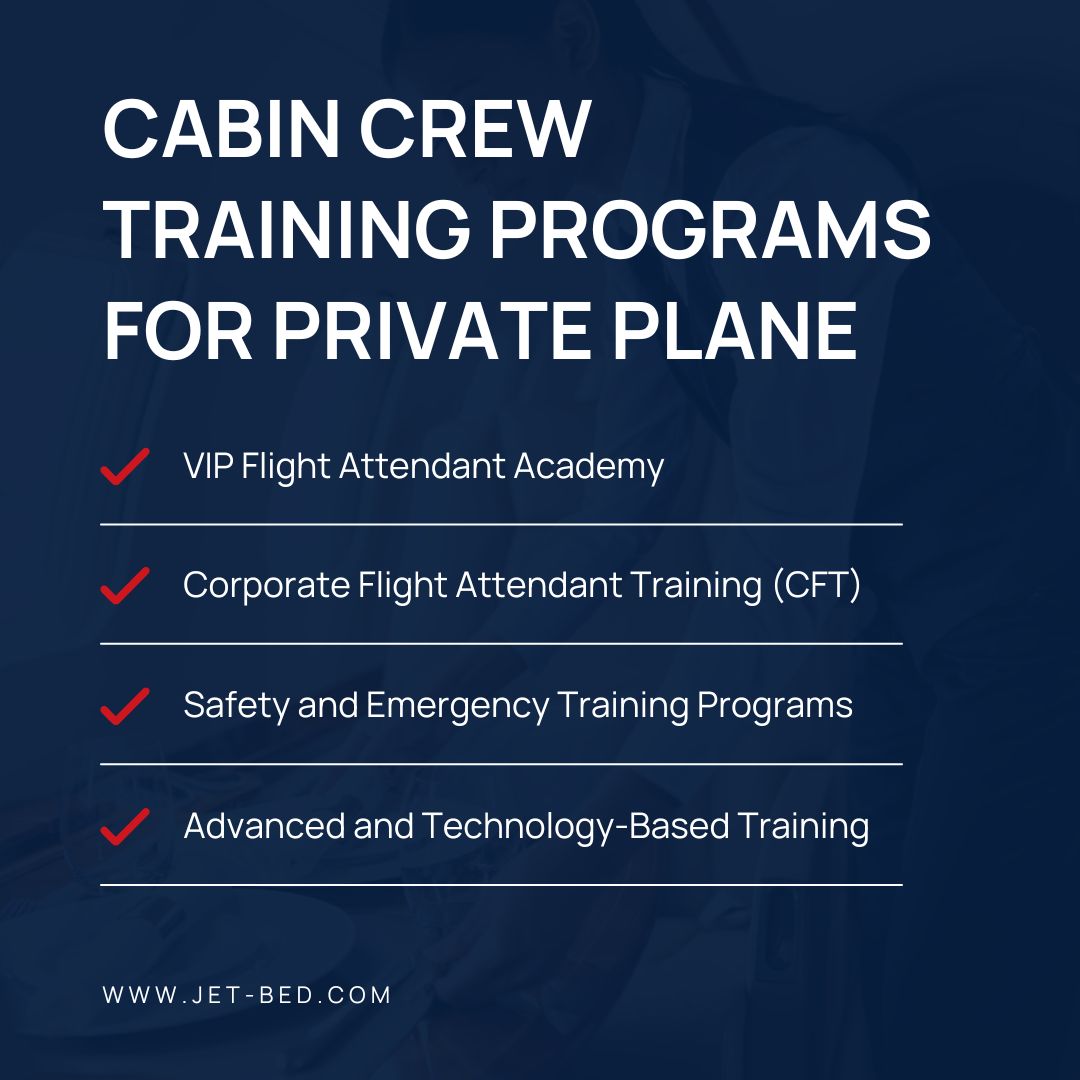
Cabin Crew Training Programs for Private Plane
VIP Flight Attendant Academy
A VIP flight attendant training course focuses heavily on luxury service, discretion, and personalized customer service. These programs teach cabin crew to master the elite professionalism that distinguishes private aviation from commercial airlines.
Moreover, crew members learn how to deliver high-end in-flight experiences while maintaining strict regulatory standards. Service mastery, safety and security, and private aviation expertise are top priorities.
To learn more about specific flight attendant requirements, we recommend visiting:
- How Many Flight Attendants Are on a Plane?
- Flight Attendants for Private Jet: Everything You Need to Know
- How Many Hours Does a Flight Attendant Work?
Corporate Flight Attendant Training (CFT)
Corporate flight attendant training enhances both competence and the necessary knowledge proven indispensable within private aviation. These programs emphasize professionalism, communication, and discretion, as many passengers include executives, CEOs, and government officials.
Additionally, these programs provide hands-on training that builds confidence in professional environments. This simultaneously supports long-term career advancement and industry networking.
Safety and Emergency Training Programs
Some cabin crew training programs focus primarily on safety training—a reflection of the industry’s commitment to preparedness and compliance. Common programs include evacuation procedures, land survival, water egress, decompression, and medical emergencies.
These courses often involve hands-on scenarios, equipping the crew with the necessary skills to respond swiftly and confidently in real emergencies. It’s also often worth noting that operators often require these programs, especially because they can be taken alongside other courses.
To learn more about inflight emergencies, visit our guide: “Emergency Landing Procedures for Passengers.”
Advanced and Technology-Based Training
With the rapid technological advancements in modern aviation, technology-based training is becoming increasingly popular. In fact, many programs commonly include VR/AR to create realistic scenarios, improving skill retention and boosting confidence.
As discussed in our post, “VR Flight Training,” this integration is highly cost-effective, permitting remote training without a physical aircraft. Most importantly, this type of immersion allows cabin crew to practice decision-making in controlled, regulated environments.
Cabin crew training in private aviation is essential for developing the skills, expertise, and confidence needed to succeed in the industry.
Cabin crew training for private plane roles is about far more than learning service basics. It’s about mastering safety, precision, discretion, and professionalism—all requirements for both excellence and future career growth. From luxury flight services to advanced safety procedures, proper training opens doors to rewarding opportunities in business aviation and beyond.
Private aviation is renowned for flexibility, comfort, and tailored luxury. And at JetBed, we deeply understand how sleep contributes to the experience. With an inflatable, custom-fit design, our in-flight system is engineered for uncompromising comfort. Contact us today to learn how you can experience truly restorative, hotel-quality rest at 40,000 feet.