
Fixed-Base Operators (FBOs) are an essential aspect of private aviation. While commonly understood among pilots and professionals, many non-pilots and private aviation passengers remain unfamiliar with the terminology and importance of these providers.
An FBO, or Fixed Base Operator, coordinates aircraft services, manages ground logistics, and creates a smooth transition between air and airport. From passenger lounges and refueling aircraft to premier concierge services and flight planning facilities, FBOs keep operations convenient and efficient. Travelers may not always notice their role, but they experience the results through streamlined departures, discreet arrivals, and consistently professional service.
In this guide, we’ll explain what an FBO is, what services it provides, and why it plays such an important role in airport operations. When you understand the structure behind your journey, the entire experience feels more straightforward and less uncertain.
At JetBed, we recognize the important role that true comfort plays in modern travel. That’s why we developed a patented inflatable design engineered to transform limited cabin space into a refined, hotel-quality sleep experience. Made in the USA and paired with luxury linens, JetBed goes beyond traditional in-flight bedding, improving rest in the air.
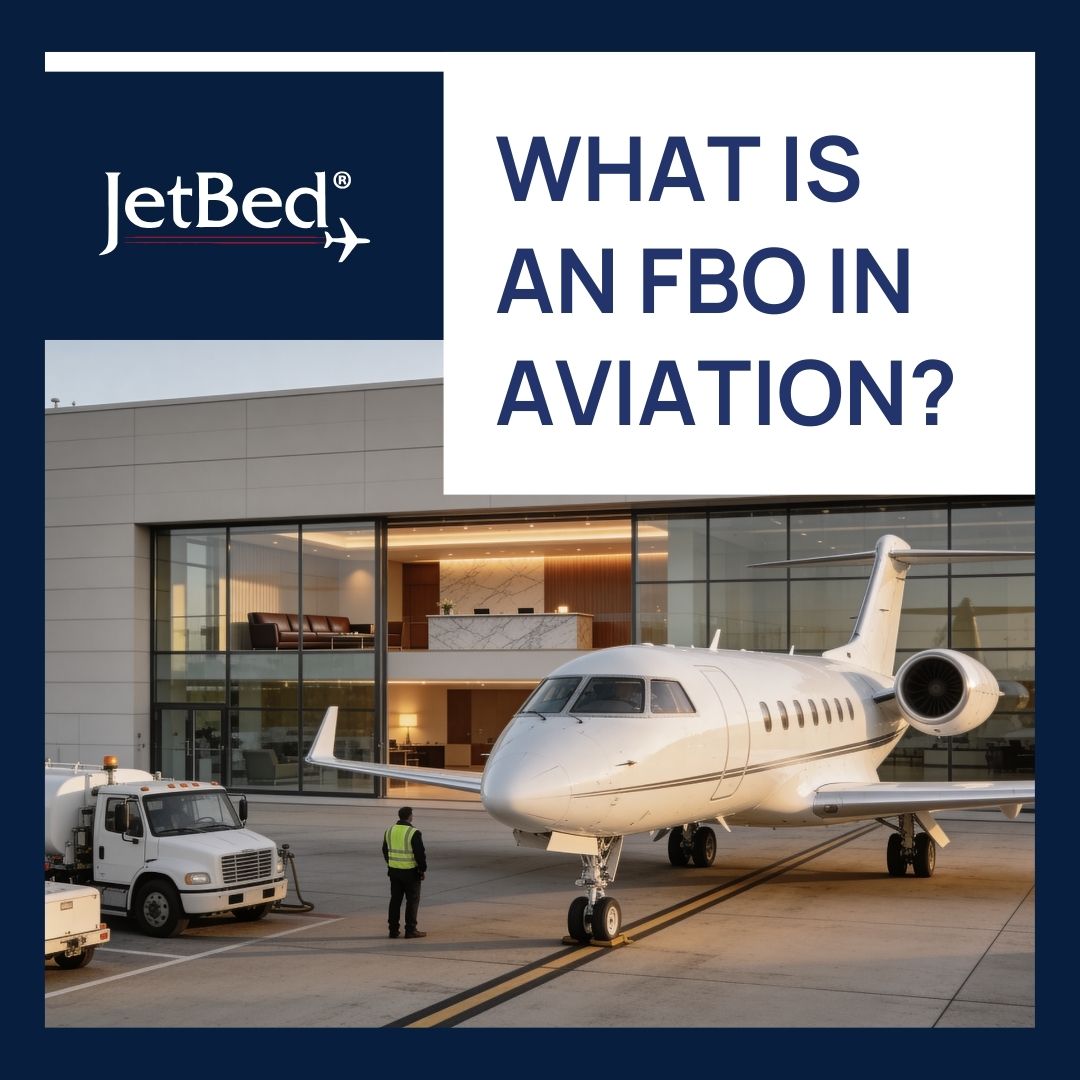
What Is an FBO in Aviation? Key Services and Operational Benefits
An FBO is short for Fixed Base Operator, a company at an airport that supports private and business aircraft alike. It handles ground services rather than flying operations and works independently from the airport itself. Most airports have at least one FBO, as private aviation relies on these services for seamless, dependable travel connections.
FBOs provide ground handling, aircraft parking, refueling, and passenger facilities. Their job is to connect the aircraft with the ground infrastructure so arrivals and departures run smoothly. By managing these services, they help aviation operations stay organized and efficient.
At larger airports, there may be multiple FBOs to manage high traffic volumes and offer diverse pricing. At smaller airports, however, there is usually just one. In every case, FBOs supply the support and infrastructure that private and business aviation need to operate effectively at a high level.
For additional information regarding airports with multiple FBOs, visit our posts, “Private Airports in Atlanta, Ga,” and “Private Airports in Nashville, TN.”
What Is a Fixed Base Operator in Aviation?
The term Fixed Base Operator originates from early aviation operations under the Air Commerce Act, when service providers established permanent bases of operation rather than mobile or temporary arrangements. This fixed location approach enabled consistent delivery of aviation services and operational support.
Companies that operate FBOs lease space within the airport environment, delivering specialized services while separating operations. They’re not actually controlled by the airport authority but function as commercial partners delivering prestigious services to aircraft operators, crews, and passengers. This structure allows FBOs to provide tailored aviation services while integrating with broader airport operations.
FBOs support business aviation and private jet operations through wide-ranging services and operational capabilities. Their role extends beyond basic logistics to include customer service, aircraft support, and passenger amenities, all designed to enhance operational efficiency and travel support.
Below, we will thoroughly discuss services offered by FBOs, highlighting why they remain a crucial aspect in aviation.
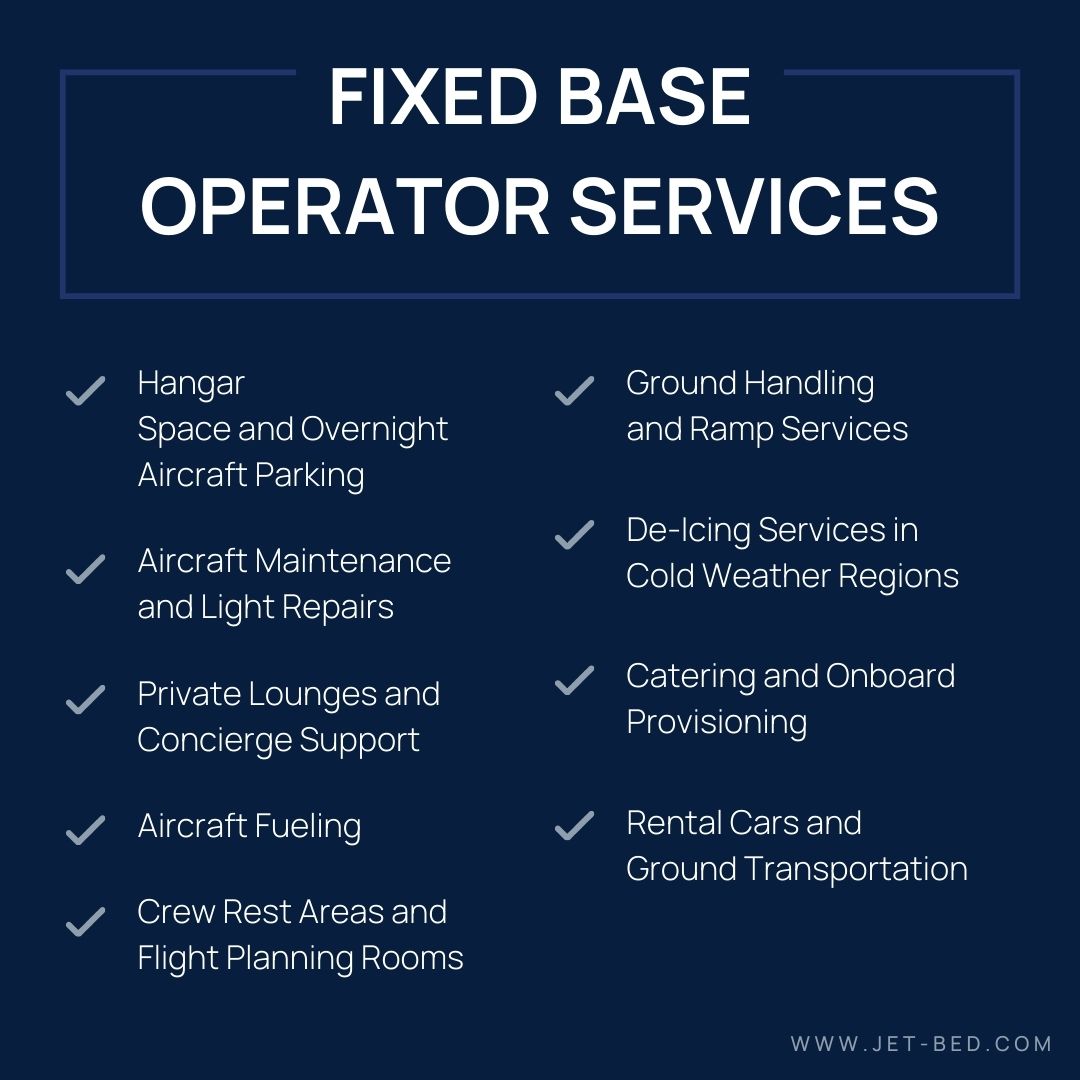
Fixed Base Operator Services
Hangar Space and Overnight Aircraft Parking
Of course, aircraft also need protection when they’re not flying. Hangar space shields them from weather, sun exposure, and general wear that builds up over time. At many smaller airports, the FBO serves as a home base, providing both parking and superior security. Ultimately, it plays a significant role in keeping aircraft in top condition, ready for additional departures.
Aircraft Maintenance and Light Repairs
With consistent travel, aircraft require ongoing servicing. Many FBOs handle light maintenance and repairs—the small fixes and checks that keep larger problems from developing. While passengers may never see this side of operations, it remains essential. Staying ahead of minor issues keeps aircraft reliable, compliant, and ready to fly when the schedule calls for it.
Private Lounges and Concierge Services
Of course, aviation isn’t only about the aircraft. Passenger experience matters too. Instead of navigating a busy commercial terminal, travelers in private aviation typically step into a quiet lounge designed for comfort and privacy.
Moreover, the concierge services offer streamlined operations and amenities that enhance the overall experience. Many travelers, for example, appreciate the ability to make last-minute dinner reservations, arrange ground transportation, and obtain hotel confirmations. FBO staff often coordinate these details behind the scenes, which keeps the travel day feeling smooth rather than chaotic.
For additional information regarding ground services, visit: “Private Cancun Airport Transportation: Luxury Transfer Guide.”
Aircraft Fueling
Fueling isn’t just a quick stop on the checklist; it’s a carefully timed process. FBO teams coordinate closely with flight crews, double-check quality standards, and follow strict safety steps so flights leave when they’re supposed to. When it’s done right, most people never even think about refueling—and that’s the point.
Crew Rest Areas and Flight Planning Rooms
Crews need space to prepare. Flying safely and efficiently requires focus, especially when schedules are tight. Dedicated rest areas and planning rooms give pilots a place to review weather, finalize routing, and coordinate logistics without distraction. It’s practical, but it makes a significant difference in operational flow.
Ground Handling and Ramp Services
Ground handling and ramp services are essential services within aviation. More specifically, this includes passenger boarding, baggage loading, potential catering services, and safety checks.
To aid in this, teams guide aircraft in, position them safely, tow them when needed, and prepare the area for boarding or servicing. It’s steady, coordinated work happening in the background, yet it directly affects how quickly and smoothly a flight can turn around.
De-Icing Services in Cold Weather Regions
When temperatures drop, operations change. Ice can form quickly on wings and control surfaces, and even a thin layer can affect performance greatly. Therefore, before departure, aircraft operating in colder regions undergo a de-icing procedure. FBO teams handle this carefully and methodically, making sure the aircraft meets safety standards before it ever leaves the ground.
Catering and Onboard Provisioning
In private aviation, meals aren’t generic. They’re selected, timed, and tailored to the passengers’ individual needs. FBOs frequently manage this coordination, working with trusted vendors to deliver exactly what’s requested. Private jet catering is yet another detail handled quietly in the background, contributing significantly to the overall experience.
Rental Cars and Ground Transportation
Once the aircraft disembarks, the journey still continues. Rather than searching for transportation, passengers and crew can often walk straight to a waiting vehicle arranged through the FBO. That continuity—from runway to roadway—removes friction from the experience and saves valuable time.
Learn more about the process in our guide, “San Diego Airport Car Service: Executive Transportation.”
How Many FBOs Are at an Airport?
How many FBOs an airport has really comes down to size and demand. Usually, larger airports often have several operating at once. That naturally creates competition, and competition aids in pushing service standards higher. Operators benefit because they have options rather than a single point of contact.
When more than one FBO is available, operators can weigh up pricing, facilities, responsiveness, and overall experience. For business aviation in particular, that flexibility makes a difference. It allows flight departments and crews to choose the provider that best fits their individual requirements. Smaller airports, however, often have just one FBO. In those cases, the single provider handles everything from fuel to passenger support. Even without direct competition, these facilities remain vital.
Whether there’s one FBO or several, the role stays the same: provide the ground services and coordination that keep private and business aviation running smoothly. This flexibility is especially valuable for private charter operators and charter service providers managing tight schedules.

How to Choose the Right FBO
Evaluate Hangar Space and Ramp Fees
Hangar space is practical, but it’s also protective. Keeping an aircraft out of harsh sun, storms, or debris helps preserve its condition over time. In tougher climates, that protection isn’t optional—it’s important.
Ramp fees are simply part of operating through an airport. What makes the difference is knowing those costs in advance. Clear communication and predictable pricing remove friction from everyday operations.
Access Airfield Location and Accessibility
Location affects timing, and timing affects everything else. An FBO positioned close to runways or key areas reduces time on the ground for esteemed travelers. That can mean quicker turnarounds and fewer delays, because, over time, those minutes add up. Accessibility isn’t just convenience—it supports smoother, more efficient operations overall.
Consider Fuel Pricing Transparency
Fuel is one of the most significant operating costs. As a result, pricing always matters.
Operators are constantly balancing performance, scheduling, and budgets. When fuel pricing is clear, it makes those decisions easier. There’s no second-guessing or chasing down extra fees because you know what you’re paying and can plan accordingly.
In a competitive market, transparency also pushes providers to stay fair. That consistency helps operators manage costs without unnecessary surprises.
For those interested, we discuss these factors in our guide, “Private Plane Fuel Costs.”
Review Crew Amenities and Passenger Services
Operations don’t stop with the aircraft—flight crews and passengers are both essential factors of private aviation. A quiet lounge can make a long day easier. Space to work, rest, or reset before departure matters more than it might seem. Concierge support also helps with ground transport and coordination, keeping things moving without extra pressure on the crew. These small details often shape the overall experience.
Understanding terminology helps travelers appreciate the infrastructure that supports efficient, professional air travel.
From aircraft fueling and maintenance to concierge services and transportation arrangements, FBO services integrate aviation services with operational excellence. Their independence and specialization enable them to deliver tailored solutions that meet the needs of private jet operators and business travelers.
Understanding the role of a Fixed Base Operator provides clarity in the aviation ecosystem. FBOs facilitate seamless transitions between air and ground operations, ensuring that private aviation remains efficient, reliable, and professional.
A seamless private travel experience isn’t complete without proper in-flight sleep solutions. At JetBed, our inflatable, patented design evolves into a completely flat, hotel-quality bed in minutes. Smaller and lighter than ever before, your rest can be as seamless as the trip itself. Contact JetBed today to learn more about JetBeds, and how they can accompany you on your next journey.