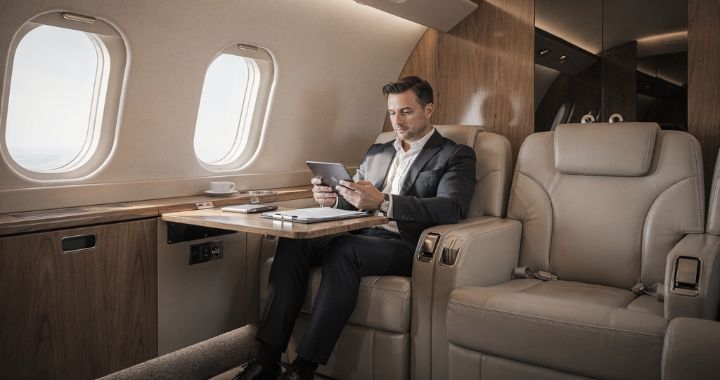
Private jets have moved well beyond transportation. For owners and operators, the interior is a direct extension of how they work, travel, and present themselves. Custom private jet interiors let aircraft owners build a cabin around their specific needs—materials, layout, finishes, and functionality—on their terms. For corporations, a well-designed cabin reinforces brand identity for executives and clients alike.
That said, customization has limits. Aviation regulations govern weight, materials, and structural modifications. A qualified aircraft interior designer understands those constraints and works within them from the start. The result is a cabin that meets your specifications and stays airworthy.
To help you better understand your options, this guide provides a comprehensive overview of custom private jet interiors. We will discuss how they’re designed, what features owners most commonly specify, and where interior design trends are evolving.
Comfort and customization are foundational in private aviation. That’s why at JetBed, we spent years designing and engineering a perfectly flat, uniform sleep solution that custom-fits to aircraft models. Crafted in the USA and complemented with premium Italian linens, JetBed delivers a tailored sleep experience for every traveler.

Custom Private Jet Interiors: From Concept to Cabin
Private aviation is already a premium experience. Custom jet interiors take it further. As cabin technology and design continue to evolve, private aircraft are increasingly measured against luxury residences and boutique hotels—not other jets. The cabin is the product, and customization is how owners make it theirs.
Below, we will describe the key factors that make custom private jet interior design so unique. We will also explore common industry-wide customizations and how private jet interiors are designed. Understanding these elements is essential for those seeking a more refined, personalized in-flight experience.
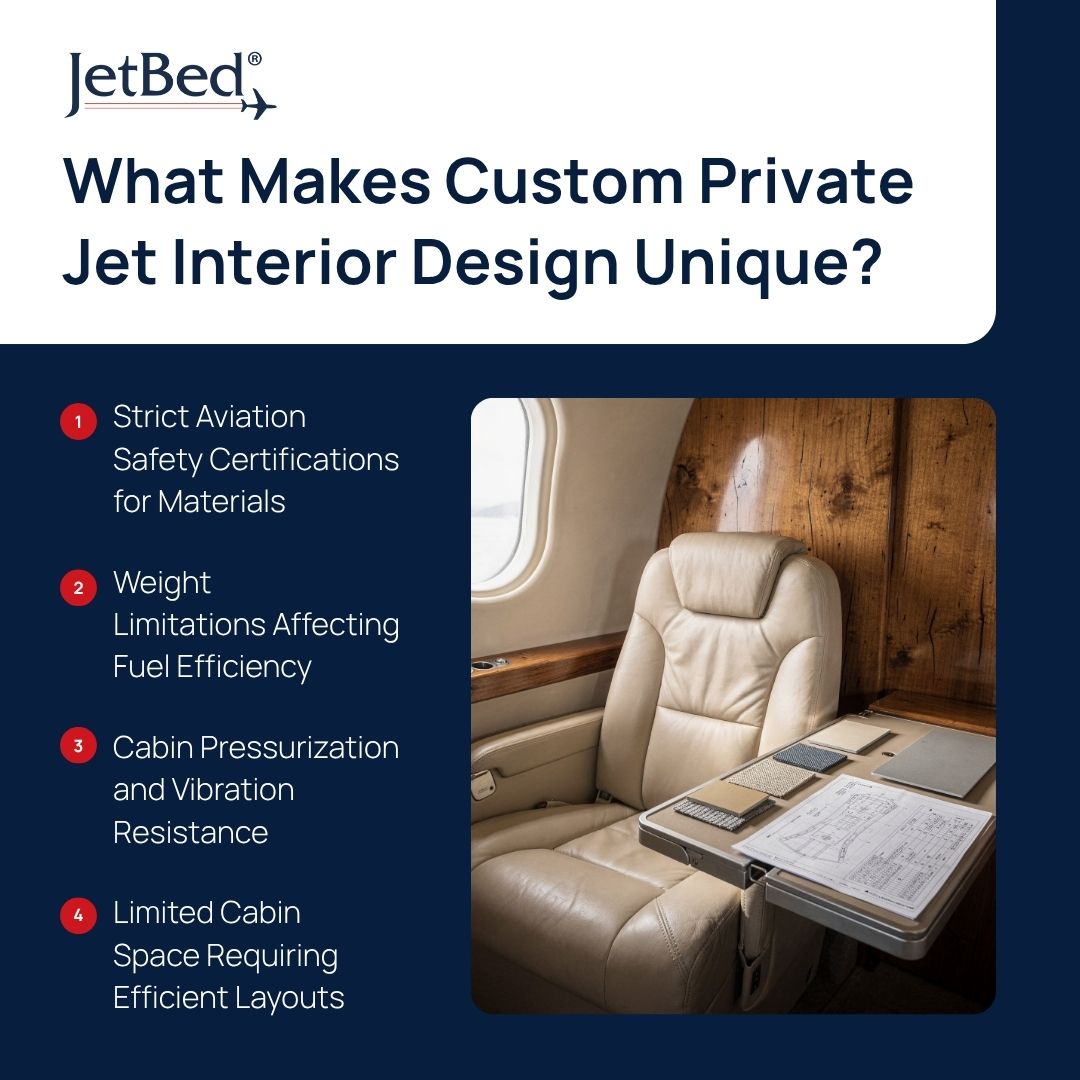
What Makes Custom Private Jet Interior Design Unique?
Strict Aviation Safety Certifications for Materials
Every material inside a private jet cabin must meet FAA certification standards. That applies to fabric, foam, adhesives, carpet, leather, and plastics. Standard automotive or marine upholstery does not qualify.
The governing standard is FAR Part 25, which sets flammability testing requirements for all interior components. Materials must pass burn rate and smoke density tests before operators receive approval for aircraft use. This regulation significantly limits the supplier pool.
This is not bureaucratic overhead. It’s why a certified aircraft interior holds up under conditions that would compromise uncertified materials.
Weight Limitations Affecting Fuel Efficiency
Every pound added to a cabin has a direct cost. Heavier interiors increase fuel burn, reduce range, and affect payload calculations. For flight department managers overseeing a refurbishment, that tradeoff shows up directly in the operating budget.
Designers work within weight budgets set by the aircraft manufacturer, which means specifying materials, furniture, and fittings with mass in mind from day one. A full cabin redesign on a large-cabin jet, for example, can shift the weight equation by hundreds of pounds. It’s essential to account for those additional pounds before installing a single panel.
Cabin Pressurization and Vibration Resistance
A private jet cabin cycles through pressurization and depressurization on every flight. Over time, that repeated stress works on joints, panels, and any component not engineered for flex. Standard furniture cracks, delaminates, and loosens under these conditions. It is not a question of if—it is a question of when.
Vibration compounds the problem. At cruising altitude, airframe vibration is constant and low-frequency. Fasteners back out, panels rattle, and poorly specified interiors become maintenance problems within months of entering service.
Aviation-grade components are built for this environment. Fittings are torqued and safety-wired. Panels are mounted to absorb movement. The design accounts for what happens at 40,000 feet, not just on the ground.
Limited Cabin Space Requiring Efficient Layouts
Cabin size determines what customization is realistic. A large-cabin jet offers roughly 1,500 cubic feet of usable space. A midsize jet offers considerably less. Every design decision—seating, galley, storage, and sleeping arrangements—competes for that space. The right starting point is understanding which type of private planes you’re working with.
Efficient layout design starts with function sequencing, not aesthetics. Where does the crew work? Where does a passenger sleep? How does the cabin shift between day and night use? These questions drive the floor plan. Finishes and materials come after.
Customization Options Available in Modern Private Jets
Common customizations vary by aircraft size and available cabin volume. The features below represent what private jet owners most frequently specify.
- Private Bedrooms or Master Suites: Dedicated sleep spaces offer privacy and quiet on long-haul and red-eye flights. On larger-cabin jets, a proper bedroom with a door changes the nature of the trip entirely.
- Onboard Conference Rooms: Business does not stop at 40,000 feet. A configured conference room with display equipment and proper seating allows passengers to remain productive throughout the journey.
- Lounge Areas: Reclining seats and sofas support comfort on extended flights. Lounge configurations also give the cabin flexibility to shift between work and rest setups.
- Entertainment Systems: 4K OLED displays, gaming, VR systems, and high-speed connectivity are now standard requests on high-end builds. Passengers expect the same technology in the air as on the ground.
- Full Bathrooms or Showers: Private jets with showers are increasingly common on large-cabin aircraft. Arriving clean and rested after a long flight is a practical advantage, not just a luxury.
Not every aircraft has the cabin volume for a dedicated bedroom. JetBed solves that. Our patented inflatable design creates a flat, comfortable sleeping surface in minutes—custom-fit to your specific aircraft model, lightweight, easy to stow, and made in the USA. The comfortable way to fly.
Popular Features in Custom Private Jet Interiors
Seating and Comfort
Seating is the most frequently customized element in a private jet cabin. Configuration comes down to one core decision: seat count versus space per passenger. Common options include divans, club seating, and forward-facing executive chairs. On jets flying longer routes, ergonomics and adjustability are not optional, but part of the specification.
Most owners specify upholstered leather seating that meets flammability requirements. Aviation-grade leather is also built to handle pressurization cycles, UV exposure, and the wear of regular passenger use. Seating material and configuration work together—and on longer routes, how a seat performs during rest matters as much as how it performs during the flight.
Additionally, lie-flat capability is a priority on longer routes. Some aircraft achieve this through dedicated divans built into the floor plan. When cabin geometry works against a fixed solution, JetBed’s patented inflatable design fills the gaps. It creates a flat sleeping surface across the full seat configuration and fits your specific aircraft model for ultimate comfort and space optimization.
Lighting Systems
Ambient lighting sets the tone of the cabin. On modern private jets, LED systems are standard. They draw less power, generate less heat, and last longer than traditional cabin lighting. Cove lighting along the ceiling is the most common choice as it produces even, indirect illumination without glare. Sidewall lighting and floor-level accent strips add depth without competing for attention.
Individual reading lights are a necessary layer on top of ambient lighting. They must be bright enough for focused work without washing out the rest of the cabin. Positioning matters as well. The beam should be directed precisely at the passenger, with sufficient swivel range to provide each seat with independent control.
Hidden Storage and Cabinetry
A cluttered cabin is an uncomfortable cabin. Well-designed cabinetry solves that. Storage integrated directly into the aircraft produces the cleanest result. However, direct integration is a fixed solution. Modular systems offer greater flexibility, allowing owners to reconfigure them for cargo or equipment as needed.
Cabinetry is also one of the heaviest elements on a private jet interior. A full cabin fit-out can account for several hundred pounds of total interior weight. As a result, material selection matters and requires attention to detail. Just a ten percent weight reduction across every unit translates directly into fuel savings over the life of the aircraft.
For additional information, review our guide, “Private Plane Fuel Costs: Fuel Budgeting Made Easy.”

How Private Jet Interiors Are Designed
Client Consultation to Determine Lifestyle Needs
Customization starts with a thorough consultation. The designer needs to understand the mission profile before anything else—the number of passengers, the trip duration, and cabin performance requirements. Lifestyle preferences and operational requirements are both part of this conversation.
From there, the scope expands to cover galley size, storage configuration, and cabin management systems. By the end of the intake process, the designer has what they need to start putting the plan together.
Concept Design and Cabin Layout Planning
Concept design translates the consultation into a workable floor plan. Seating configuration, galley position, lavatory layout, and storage zones are all mapped at this stage. The designer also optimizes for weight and compliance from the start—not as an afterthought.
3D Visualizations and Digital Renderings
With the layout approved, the focus shifts to materials, finishes, and details. Three-dimensional renderings let the owner see the cabin before any physical work begins, allowing them to verify every decision.
It is not uncommon for multiple rounds of revision to take place at this stage. And, fortunately, changes to rendering cost far less than changes during installation. We recommend using this phase thoroughly to design the ideal aircraft interior.
Engineering Review for Safety Compliance
Before manufacturing begins, every design element and structural attachment goes through engineering review. Materials, wiring, and mounting structures must meet FAA and STC requirements. Nothing moves to production until it clears that process.
If those reviewing the process identify issues, the designer then adjusts the layout renderings, returning to the client for approval before proceeding.
Manufacturing and Installation
Manufacturing begins only after engineering sign-off. Cabinetry, seating, and panels are built to the approved design package, leaving no interpretation on the shop floor. More specifically, installation follows a defined sequence. Structural elements and systems go in first, followed by flooring, cabinetry, and panels. Seating comes next, with lighting and soft goods last.
Before the client walk-through, the completed cabin is inspected against the design package and engineering drawings. This attention to detail ensures all safety standards and client expectations are met. The aircraft does not leave the completion center until the interior matches the approved specifications.
Upgrade your custom interior and experience quality rest on board with JetBed.
A custom private jet interior is one of the most demanding design projects in aviation. Every material must be certified, every pound justified, and every component must perform at cruising altitude. Done well, the result is a cabin that works as hard as the people inside it. Productivity, rest, and comfort are no longer compromises—they are built into the floor plans. And for corporate operators, that translates directly into performance. For private owners, it reflects exactly who they are.
A well-designed cabin starts with the right components. JetBed fits that specification. Our patented inflatable design creates a flat, comfortable sleeping surface in minutes and is custom-fit to your aircraft. It’s lightweight, easy to stow, and made right here in California. Contact us to find the right JetBed for your aircraft.