Private aviation is more operationally complex than it appears from the cabin. A private jet flight involves aircraft sourcing, crew scheduling, regulatory compliance, ground coordination, and maintenance. This is all managed before a single private jet passenger steps onboard.
While flying privately is often associated with convenience and luxury, these benefits are the result of highly coordinated operational planning, strict safety oversight, and real-time decision-making. Understanding how that system works is useful for first-time evaluators and fleet managers alike.
This guide covers how private jets work from the ground up. It addresses how to reserve an aircraft, the amenities on private jets, and where charter jets land. Additionally, we will discuss how operators manage safety along with the costs of flying privately. When planning travel, each factor is essential for planning a seamless journey.
Private jets are built for performance. JetBed ensures the cabin meets that standard. Our patented inflatable design creates a flat, comfortable sleeping surface in minutes. It is custom-fit to your specific aircraft model, made in the USA, and finished with luxury Italian linens. With JetBed, your in-flight comfort isn’t optional—it’s a given.

How Do Private Jets Work? From Booking to Landing
Private aviation offers operators control over scheduling, routing, and ground logistics that commercial airlines cannot match. Flights depart on the operator’s timeline, not a published schedule. For business travel—same-day city visits, multi-stop itineraries, or late departures—that flexibility has direct operational value.
The efficiency runs deeper than scheduling, though. Every element of a private flight, from aircraft sourcing to departure, is coordinated around a specific mission. There are no shared terminals, no connection dependencies, and no published timetables to work around.
Corporate flight departments, government offices, and private owners rely on the control of charter jets as a core part of their operations.
What Are Private Jets?
Private jets are aircraft operated for a single person, family, company, or small group rather than the general public. They range from light jets carrying four to six passengers to large-cabin aircraft seating fifteen or more on intercontinental routes. These operations fall under FAA Part 91 for private use and Part 135 for charter.
Commercial flights move hundreds of passengers between hubs on fixed schedules. Private charter jet flights, however, operate differently. Rather than selecting a cabin size for the route map, passengers select it for the trip. Most aircraft cruise between 41,000 and 51,000 feet for smoother, more direct flights.
Similarly, cabin layouts and interiors are configured around the passengers. A midsize jet typically seats seven to nine in a club arrangement with a divan, galley, and lavatory. Larger aircraft add dedicated sleeping quarters, work areas, full galleys, and even showers on board.
The mix of private jet operators is equally varied. Corporate flight departments use private jets to move executives between offices, plants, and client sites. Charter companies, fractional providers, sports teams, and family offices make up the rest. What they share is the same core advantage: aircraft that depart on passengers’ schedules, with access to more than 5,000 US airports.
For additional information, read our post “Private Jets Used by Celebrities.” Here, we discuss how aircraft operations look at the top of the market.
What Are Private Jets Used For?
Private jet travel serves a wide range of operational needs beyond corporate itineraries. The most common use cases include:
- Corporate Travel: Moving executives, board members, and teams between offices, plants, and client sites.
- Business Development: Reaching multiple cities in a single day for meetings, site visits, or deal closings.
- Charter Operations: On-demand flights booked by individuals or companies through Part 135 operators.
- Fractional Ownership Programs: Shared aircraft access through providers like Flexjet or NetJets.
- Medical Transport: Air ambulance flights, organ transport, and patient transfers between facilities.
- Government and Military Use: Transporting officials, diplomats, and personnel on official business.
- Family Office Travel: Private flights for high-net-worth families and their staff.
- Time-Critical Cargo: Moving high-value or urgent shipments faster than commercial freight options allow.
- Humanitarian Response: Delivering aid workers, supplies, and equipment to affected areas.
- Entertainment Industry Travel: Moving talent, crew, and production staff between locations and events.
- Private Leisure Travel: Family vacations, group trips, and access to destinations not served by commercial jets.
How Private Jets Work
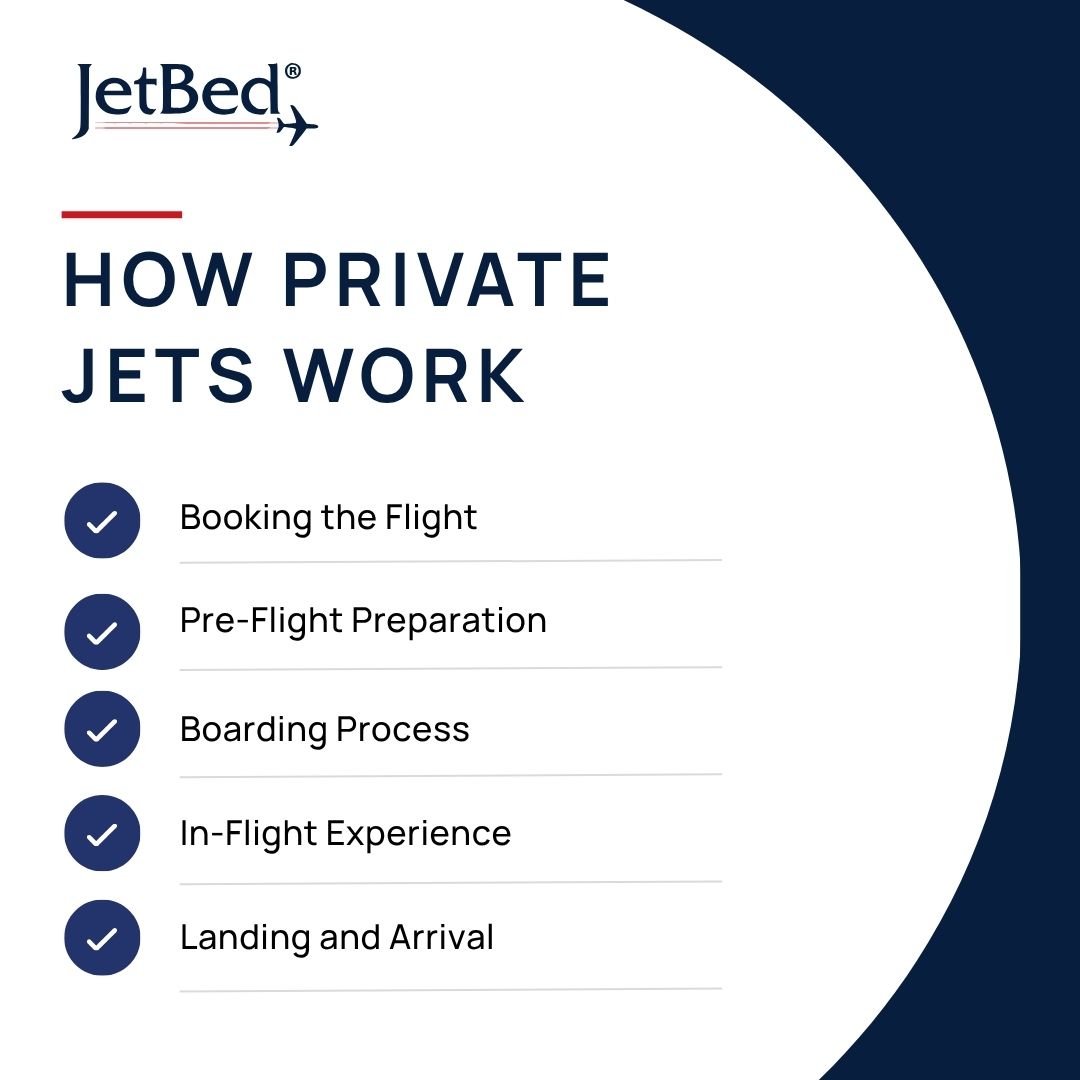
Booking the Flight
Booking a private jet starts with one decision: charter or ownership. To charter a flight, you pay per trip through a broker or Part 135 operator. You provide the route and dates while they price the flight. Conversely, ownership means buying the aircraft outright and bearing all operational costs. Fractional ownership, however, sits between the two. You can buy a share of an aircraft and a set number of flight hours per year.
All options operate on the passenger’s schedule, as departure time is set by the operator rather than a published timetable. Chartered jets can be arranged in as little as a few hours, and owned aircraft can turn even faster.
For a detailed look at the full ownership process, read our guide “How to Buy a Private Jet.”
Pre-Flight Preparation
Pre-flight preparation begins hours before departure. The operator assigns pilots based on aircraft type, route, and FAA duty time requirements. Larger cabins will need to add a flight attendant. Additionally, international trips require the dispatch team to secure permits, customs paperwork, and overflight clearances in advance.
Ground crews fuel the aircraft in accordance with the flight plan, with reserves mandated by regulation. Pilots conduct a preflight inspection covering the airframe, engines, avionics, and safety equipment. Meanwhile, scheduled maintenance follows the manufacturer’s program under Part 91 or Part 135 rules. Afterward, the pilot in command signs off on airworthiness before every departure. Anything outside the limits grounds the aircraft until operators resolve airworthiness concerns.
For a deeper look at pre-flight inspections and maintenance standards, read our guides “Private Jet Inspection and Maintenance Frequency” and “Management Level Safety Process in Aviation.”
Boarding Process
Private flights depart from FBOs, not commercial terminals. These private terminals do not have TSA checkpoints, boarding groups, or jet bridges. Instead, passengers arrive 15 to 20 minutes before departure. They can wait in the FBO lounge, which provides private seating, refreshments, and quiet workspaces.
When the aircraft is ready, your vehicle pulls directly onto the ramp, providing a short walk from the car to the aircraft door. The crew welcomes passengers by name as bags are loaded directly onto the aircraft. This entire process takes less than ten minutes, further highlighting the efficiency of private aviation.
In-Flight Experience
The cabin experience and facilities on a private jet are built around the passenger, not the aircraft’s capacity. Midsize and large jets include lie-flat seating, workstations, satellite Wi-Fi, and full galleys. In many cases, passengers can use a wide range of electronics on a private jet. More specifically, most aircraft offer streaming entertainment, power outlets at every seat, and passenger-controlled climate settings.
Passengers may also configure the catering menu to their preference before the flight. This can range from a simple snack tray to a full multi-course meal. Repeat clients have their preferences on file, so the crew can prepare meals autonomously.
Since private jets fly point-to-point, there are no hub connections or layovers. Operators optimize the routine for time, weather, and fuel. In other words, a trip that takes four hours on a commercial jet could take half that on a direct private flight.
For a closer look at flight routes and travel times, read our guide “How to Track a Private Plane.”
Landing and Arrival
After landing, the aircraft taxis directly to the FBO. Ground transportation is waiting on the ramp when the doors open, creating a seamless transfer to the terminal. There is no baggage carousel, taxi line, or terminal walk. In fact, most passengers are in their vehicles within five minutes of touchdown, especially at smaller airports.
Private jets can land at approximately 5,000 airports nationwide, including regional fields and executive airports inaccessible to commercial jets. That reach means landing closer to the passenger’s final destination, often minutes from the meeting rather than an hour away.
When private jets land at an international airport, they then taxi to a customs area or a general aviation terminal. Officers meet the flight, review passports, and clear baggage on the spot. Officials handle this process directly on the aircraft rather than at a shared terminal.
For a full breakdown of how and where private jets arrive, read our guide “Where Do Private Jets Land?”

How Much Does It Cost to Fly Private?
Private jet pricing is typically quoted by the flight hour. Rates vary by aircraft size, category, and age.
- Very-light jets: $2,500 to $3,500+ per flight hour
- Light jets: $3,200 to $5,500+ per flight hour
- Midsize jets: $4,500 to $7,000+ per flight hour
- Super-midsize jets: $5,000 to $10,000 per flight hour
- Large cabin and heavy jets: $8,000 to $18,000+ per flight hour
Several factors affect the final price beyond the base hourly rate. Fuel costs, repositioning fees, landing and handling charges, catering, crew expenses, and overnight fees all contribute to the total. Moreover, one-way trips often carry a premium because the operator must reposition the aircraft after drop-off.
Private aviation makes financial sense when time, productivity, or access outweigh the ticket price. The operational case is clear, for example, for teams covering three cities in a day or for executives who need to be ready for work upon landing. Additionally, it benefits groups flying to regional airports with no commercial service.
For a full breakdown, review our “Private Jet Pricing Guide,” which includes pricing information and cost factors.
Are Private Jets Safe?
Private jets are safe and operate within a strictly regulated safety framework that ensures adherence to safety and maintenance standards. The FAA oversees these standards, pilot qualifications, and operational procedures for all private aircraft. The key distinction from commercial aviation is accountability. Private jet operators are directly responsible for aircraft safety rather than delegating that responsibility to an airline.
Pilot training in private aviation is aircraft-specific. Because private jets vary significantly in systems and performance, pilots are type-rated for the specific aircraft they fly. Flight attendants working in private aviation also complete specialized training separate from commercial cabin crew programs.
For a deeper look at how safety standards compare, read our guide “Are Private Jets Safer Than Commercial Flights?”
Increase travel efficiency and comfort with private aviation options.
Private aviation is a purpose-built system. Every element—aircraft sourcing, crew scheduling, ground handling, and cabin configuration—is designed around the operator’s needs. For executives managing tight schedules or high-net-worth individuals who prioritize control, understanding how that system works makes the case for private aviation clear.
A well-configured cabin is part of that system. JetBed’s patented inflatable design creates a flat, comfortable sleeping surface in minutes. It’s custom-fit to your specific aircraft model, lightweight, and easy to stow. JetBed is the practical way to rest at 40,000 feet. Contact us to find the right comfort solution for your aircraft today.