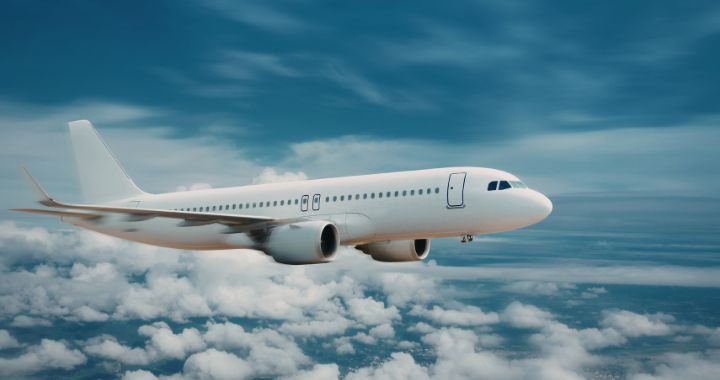
Airplanes are widely considered one of the fastest and most efficient ways to travel long distances. Unlike trains or cars, aircraft can travel hundreds—or even thousands—of miles in a matter of hours. This is one of the many reasons why, whether traveling for business or pleasure, people continuously opt for air transportation.
However, the speed of a plane is not a fixed number. Aircraft accelerate, decelerate, climb, cruise, and descend throughout flights, causing speed to fluctuate consistently. Beyond general operations, factors such as altitude, wind conditions, and aircraft design influence performance in the air.
Below, we will discuss the average speed of a plane during takeoff, landing, and cruise flight. We will also explore what affects a plane’s speed and how these factors can ultimately impact travel time. By understanding this variation, passengers can better prepare for future travel expectations—from departure to touchdown.
When flying, your experience should be as comfortable as it is efficient. That’s why at JetBed, we bridged the gap between air travel and restorative rest. Proudly produced in the USA, JetBed delivers a perfectly flat, groove-free, uniform in-flight sleep surface. Complemented with premium Italian linens, don’t compromise on quality rest—sleep with JetBed.

What Is the Average Speed of a Plane?
Many travelers, especially first-time flyers, often have one similar question: “How fast do commercial jets travel?” Not only is this knowledge essential for understanding how modern air travel operates, but it’s equally valuable for making sense of flight times, planning travel, and comprehending overall efficiency.
In general, many commercial passenger planes cruise between approximately 550 and 600 miles per hour. However, this can vary depending on aircraft type, weather conditions, routing, and altitude. Additionally, private jets often operate within a similar speed range, with some high-performance business aircraft capable of higher speeds.
In this guide, we’re offering a comprehensive breakdown of aircraft speed. We will discuss every phase of flying, including takeoff, landing, and cruising speeds, as well as what factors impact efficiency. Moreover, for a general comparison of private and commercial aircraft, review our guide, “Are Private Jets Safer Than Commercial Flights?”
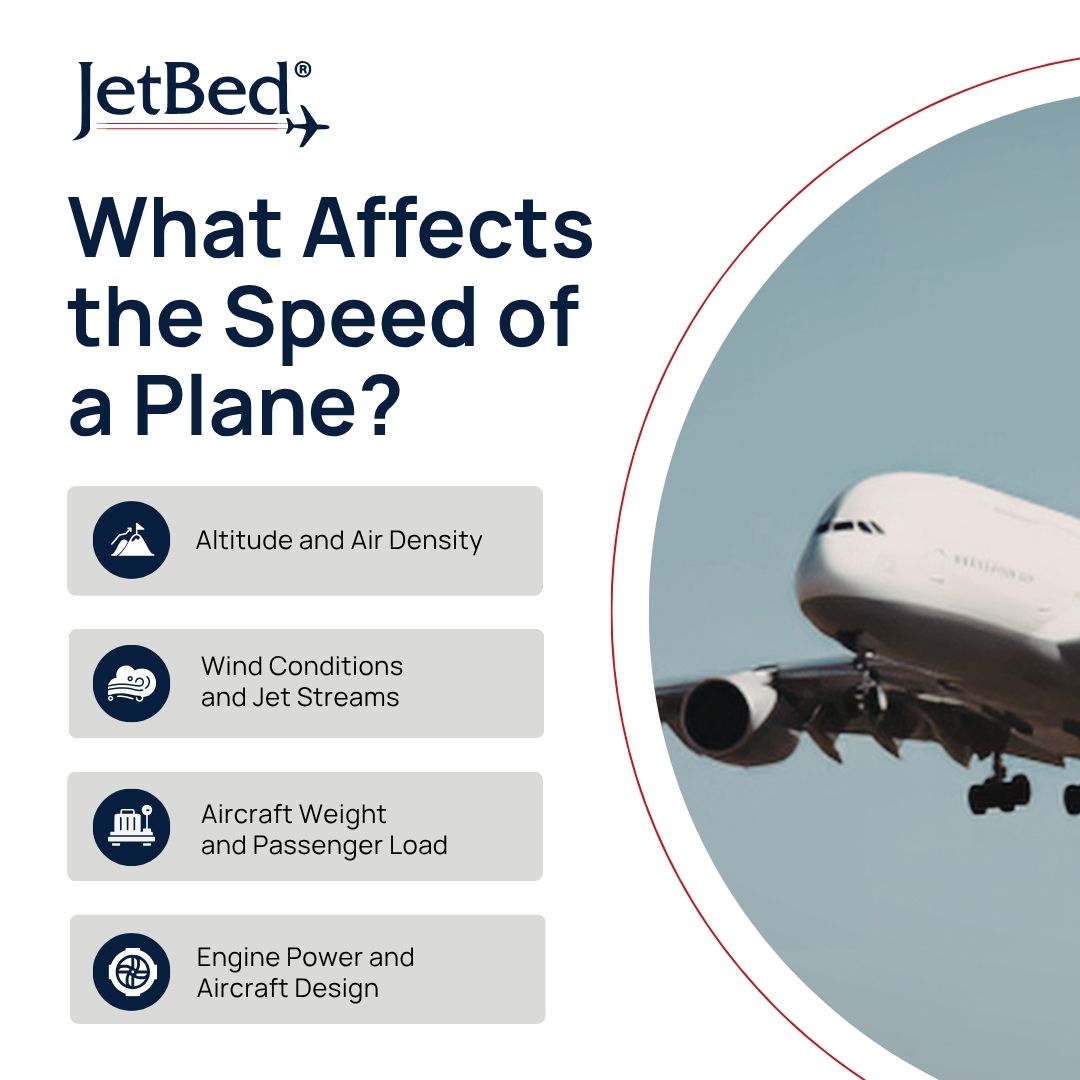
What Affects the Speed of a Plane?
It’s important to understand that, unlike alternative methods of travel, the speed of a plane is measured and communicated in several ways. More specifically, you may find speed referred to as:
- Indicated Airspeed (IAS): The raw, uncorrected speed is measured via the pilot-static system. This reflects the dynamic air pressure, showing how the aircraft feels. Moreover, IAS dictates all regulatory speed limits.
- True Airspeed (TAS): The actual speed an aircraft is traveling at relative to the air mass surrounding it. TAS strongly relies on altitude.
- Mach Number: The ratio’s true airspeed relative to the local speed of sound. Mach is a ratio rather than a single static unit.
- Nautical Miles: The unit of measurement used in air navigation, essential for tracking distance and measuring speed.
- Ground Speed: The speed of an aircraft relative to the Earth’s surface.
By understanding these different aviation terms, you’ll have a much clearer picture of how professionals measure performance.
Altitude and Air Density
Both altitude and air density directly impact flight performance and average speeds. As an airplane climbs to higher altitudes, it simultaneously encounters thinner air. This reduction in air density ultimately results in lower aerodynamic drag, allowing the aircraft to travel more efficiently.
More specifically, this is particularly beneficial during the cruise phase of flight. For commercial aircraft, this is often at a height of 30,000 to 40,000 feet. With these elevations, the combination of reduced drag and optimized engine performance helps maximize fuel efficiency and maintain high speeds.
For further context, we implore you to read our guide, “What Are the 3 Stages of Acclimatization to High Altitude?” The tips discussed in the post can be a valuable tool for future travel.
Wind Conditions and Jet Streams
Wind conditions can dramatically impact a plane’s ground speed and travel time. However, remember the information we provided above—there is a radical difference between airspeed and ground speed. For example, a strong tailwind can increase an aircraft’s ground speed, shortening flight time.
Conversely, headwinds can reduce effective progress, ultimately extending travel times. We discussed this exact concept, along with the importance of jet streams, in our post, “The Difference Between Eastbound and Westbound Flights.” Together, wind and jet streams are one of the main reasons identical routes can have different flight times depending on direction.
Aircraft Weight and Passenger Load
Many travelers often forget that both aircraft design and passenger load directly affect a plane’s average speed. For example, a fully loaded aircraft containing passengers, cargo, fuel, and baggage can reduce overall speed. Beyond this, an increase in in-flight weight can contribute to climb performance, fuel efficiency, and the aircraft’s ability to reach optimal cruising conditions.
Aircraft weight, while similar, can influence plane speeds differently. Modern aircraft are designed to maintain consistent speeds regardless of load. However, a heavier aircraft, such as the Boeing 747-8, requires a higher Angle of Attack (AOA) to maintain optimal altitudes. These considerations are particularly important during takeoff, where pilots calculate precise performance data.
This is one of the many reasons why choosing an appropriate aircraft is crucial for overall safety and efficiency. You can learn more in our post, “How Many People Can Fit in a Private Jet?”
Engine Power and Aircraft Design
Together, engine power and aircraft design play a significant role in a plane’s average speed. Everything from wing shape and engine technology to fuselage aerodynamics and weight distribution influences how efficiently an aircraft moves through the air.
Commercial jets are optimized for balancing speed, fuel efficiency, passenger capacity, and operating costs. Business jets, on the other hand, often prioritize speed and range, allowing some models to cruise faster than larger commercial aircraft.
For example, a Cessna 172 Skyhawk often cruises at 120 to 144 miles per hour (105–125 knots). Conversely, modern commercial jets operate at several times the speed of sound. This demonstrates that the difference in aircraft design and purpose can influence performance variations.
What’s the Average Speed of a Plane?
As mentioned previously, the average speed of a plane varies by flight phase. A commercial aircraft will not travel the same speed at takeoff as it does while in the air. To better understand how this process works, below, you can find average speed calculations based on aircraft position:
What Is the Average Speed of a Plane Taking Off?
Commercial planes often reach speeds between 150 and 180 miles per hour during takeoff. However, exact figures vary depending on aircraft type, weight, runway length, weather conditions, and airport elevation.
To prioritize safety and efficiency, pilots will precisely calculate intended takeoff speeds for each unique flight. More specifically, they will analyze factors such as air density, wind speed, runway conditions, and flap configuration. It only takes commercial aircraft approximately 30–45 seconds to become airborne, making accurate pre-flight calculations critical.
If you’re interested in learning more, read our detailed guide, “How Fast Do Airplanes Go When Taking Off?”
What Is the Average Speed of a Plane When Landing?
Many travelers may be surprised to learn that commercial planes often reach speeds of 130–160 miles per hour when landing. However, as with takeoff speeds, pilots carefully calculate safety margins before touchdown. They’re able to do so by analyzing aerodynamic design and utilizing automated safety systems.
Moreover, aircraft design directly affects landing speeds. The flaps and slats lower as planes reach the ground, allowing the aircraft to generate lift at significantly slower speeds. Additionally, landing gear features high-impact shock absorbers to sustain impact loads.
Learn more about these modern tools in our comprehensive post, “Private Aircraft Landing Gear.”
What Is the Cruising Speed of a Plane?
As discussed earlier, many commercial aircraft cruise at speeds between 550 and 600 miles per hour. Because pilots maintain this speed consistently for much of the flight, commercial planes can quickly cross continents without compromising efficiency or passenger comfort.
More specifically, many commercial aircraft operate at cruising speeds near Mach 0.85—the “sweet spot” for widebody passenger airlines. This number represents approximately 80% of the speed of sound under typical atmospheric conditions.
For those interested, we discuss similar concepts in our detailed post, “What Is Cruising Altitude?”

How Plane Speed Affects Travel Time
Wind direction can shorten or extend flight duration.
Wind direction and speed can directly influence how efficiently a commercial plane can travel across the Earth’s surface. Tailwinds, strong winds that blow in the same direction the aircraft is traveling, increase speed and optimize fuel efficiency. Many airlines will specifically choose routes that offer tailwinds to shorten flight times.
Conversely, headwinds, strong east-to-west altitude air currents, can extend flight duration. In these cases, pilots will take detours to avoid time spent in the air. However, each unique wind direction has notable benefits.
Many pilots favor headwinds during takeoff and landings, as they help increase lift and slow touchdown. Alternatively, tailwinds are most beneficial during cruising, as they improve fuel economy and allow for quicker arrivals.
Flight paths are optimized for efficiency, not just speed.
While increased speed can enhance efficiency, performance relies on far more than speed alone. Airlines must consistently evaluate factors such as weather systems, jet streams, airspace restrictions, and operational regulations when planning routes.
Passengers tracking their flight live may notice curved paths or indirect routes that seem to complicate travel. However, many don’t know that while the screen may show a longer route, that path is often the most efficient option based on pilot analysis.
Delays and air traffic control also affect total travel time.
Ultimately, flight time is simply one minor component of a much larger structure. Factors such as air traffic control restrictions, airport congestion, runway availability, weather delays, and gate assignments can all influence how long a trip actually takes.
In many cases, travelers perceive their overall flight process as “slow,” even when the aircraft maintained normal cruise performance throughout the journey. By knowing that delays may be happening behind the scenes, you can better appreciate the level of coordination required to move thousands of flights safely and efficiently each day.
By understanding operational demands, you can better understand why a plane’s average speed can vary frequently.
The average speed of a plane depends on much more than a stagnant number. Instead, it relies on a combination of carefully analyzed factors, including wind direction, aircraft design, passenger load, and weather conditions. With this, passengers can appreciate the operational efficiency and safety integrated into daily journeys, whether during takeoff, landing, or cruising.
At JetBed, we understand the importance of quality comfort in the air—especially on extended trips. This is why, after years of designing and engineering, we developed a patented sleep solution that delivers a uniform space custom-fit to your private aircraft model. Lightweight and simple to set up, comfort and convenience can go hand in hand.
Contact the JetBed team to learn more about ordering a custom JetBed today. Or, if you’d like to spend time looking at your options, review our wide selection of custom-made JetBeds for your unique aircraft.