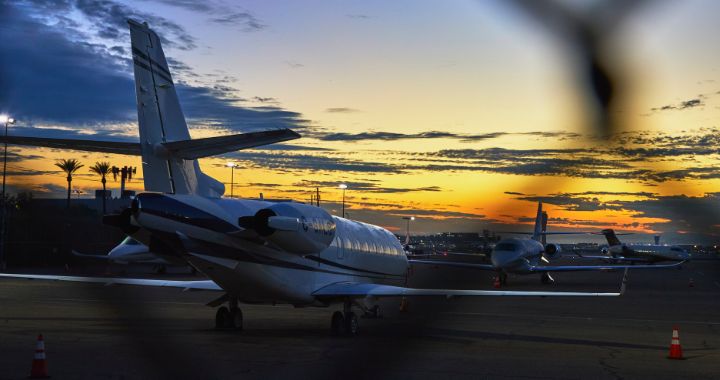
Las Vegas draws more private flight traffic than almost any other leisure destination in the country. High-net-worth travelers visit year-round for concerts, championship fights, Formula 1, and major conventions. In these instances, a Las Vegas private jet charter isn’t simply a convenient option—it’s the right way to arrive.
However, when chartering to Las Vegas, it’s important to understand your options. Factors such as passenger count, baggage limitations, range, runway availability, and comfort all impact which aircraft category best suits your needs. Choosing the right model helps ensure the flight aligns with your budget, expectations, and overall preferences.
This guide covers how to charter a private jet to Las Vegas and which airports handle private aviation. We will also explain which aircraft suits the trip and what to expect in terms of cost. Whether you are organizing a corporate event or a private group getaway, the information here gives you a clear starting point.
Las Vegas flights from the East Coast and Midwest run four to five hours. JetBed’s patented inflatable design creates a flat, comfortable sleeping surface in minutes. They’re custom-fit to your specific aircraft model, made right here in the USA, and finished with luxury Italian linens. Arrive ready for whatever the city has planned.

Private Jet to Vegas: Cost, Airports, and Top Aircraft
Las Vegas handles around 500 private flights on a typical weekend. That number climbs to 1,000 or more during major events—the 2024 Super Bowl being a recent example. The volume reflects a consistent pattern. Luxury travelers and corporate operators choose private jet charter flights for the flexibility and efficiency that commercial flights cannot offer.
Ultimately, airport selection, aircraft category, and operator choice all impact trip efficiency and passenger satisfaction. Therefore, before booking, understanding your options makes the process straightforward. Additionally, being informed puts you in a better position to get the right aircraft at the right place.
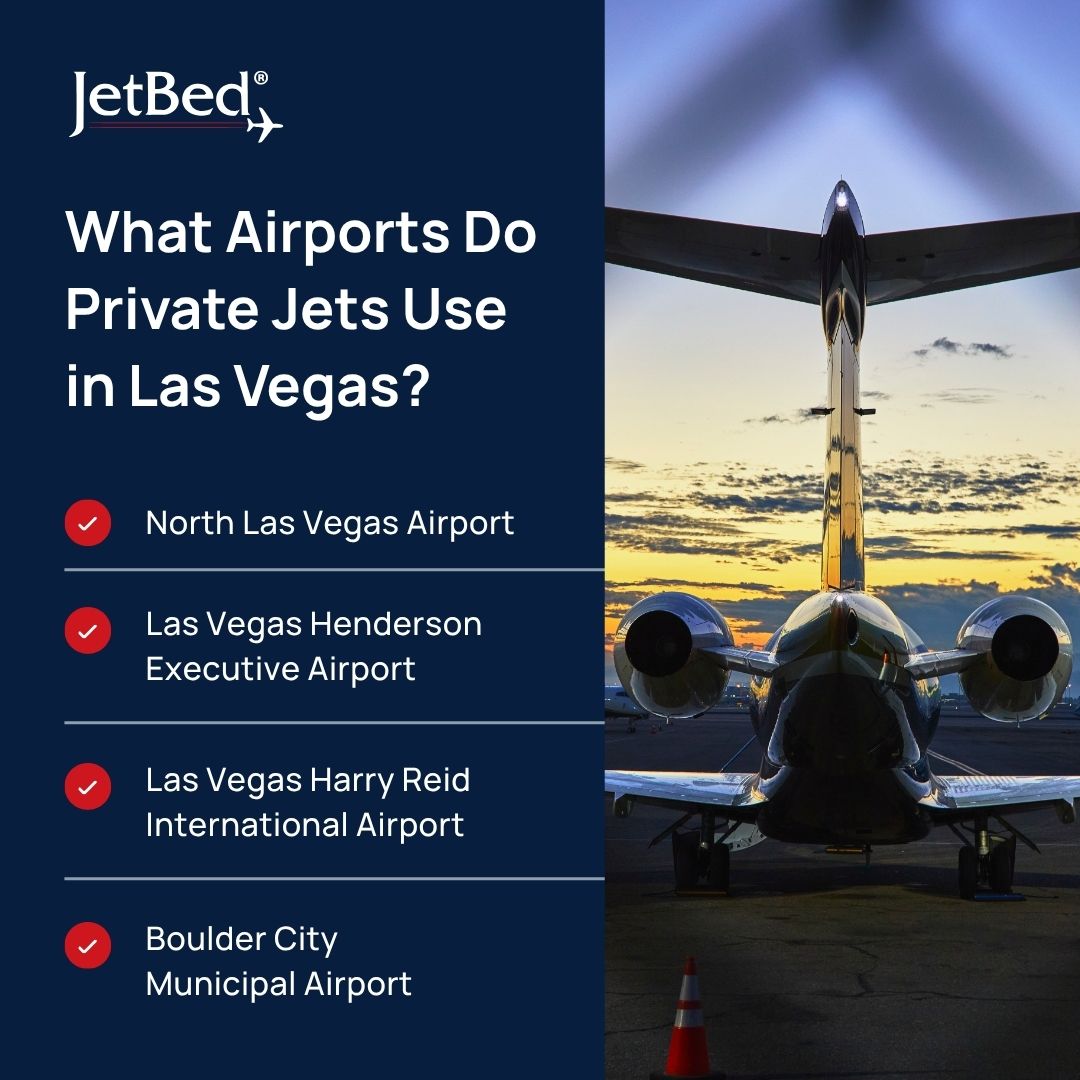
What Airports Do Private Jets Use in Las Vegas?
North Las Vegas Airport
North Las Vegas Airport (VGT) sits about 10 miles from the Strip, roughly 20 minutes by car. It handles no scheduled commercial traffic, which means private arrivals bypass Harry Reid’s congestion entirely. The airport-owned FBO provides fuel, parking, and hangar space. Hours run from 6:00 am to 10:00 pm year-round, with 24-hour self-serve fuel available.
The two runways top out at 5,000 feet, which limits VGT to lighter aircraft. Midsize jets and larger jets are often better accommodated at Harry Reid or Henderson Executive. For short-haul West Coast arrivals on light jets, VGT is a practical, low-friction option that keeps ground transfer time to a minimum.
Understand the key role of an FBO in private aviation and why they are essential in our post “What Is an FBO in Aviation?”
Las Vegas Henderson Executive Airport
Henderson Executive Airport (HND) sits about 12 miles south of the Strip, with direct access to I-15 and the 215 freeways. The drive runs 15 to 20 minutes under normal traffic conditions. That proximity makes it a practical choice for business travelers.
The primary runway measures 6,501 feet, handling large-cabin business jets without issue and putting HND well ahead of VGT for heavier aircraft. Two FBOs operate on the field—Atlantic Aviation and Signature Flight Support—both offering full ground handling, fueling, and passenger amenities. The airport runs 24 hours a day, 7 days a week.
HND has no customs or immigration services on site. As a result, international arrivals must clear customs at Harry Reid before proceeding. For domestic corporate traffic, HND is the more capable of the two reliever airports serving the Las Vegas market.
Explore the amenities of an executive airport in our guide “What Is an Executive Airport?”
Las Vegas Harry Reid International Airport
Harry Reid International Airport (LAS) sits about 5 miles south of the Strip—the closest of the three Las Vegas-area airports to the major hotels. Drive times to central Strip properties run 10 to 15 minutes under normal traffic conditions.
Four runways range from 8,988 to 14,515 feet, meaning every class of private aircraft can operate here without restriction. That range capacity is the key advantage over both HND and VGT for heavy and ultra-long-range jets.
Two FBOs operate on the west side of the field, both open 24 hours and offering dedicated private terminals, VIP lounges, and full ground handling. Additionally, private arrivals avoid the commercial terminals, offering utmost privacy and efficiency.
Customs facilities are on site, making LAS the only Las Vegas airport that handles international private arrivals directly. This feature ranks LAS as one of the busiest private jet airports in the world. For large-cabin jets, late-night arrivals, or any international inbound, it is the default choice.
If you’re planning to arrive in Las Vegas from an international destination, review our guides “International Flight Plan Format” and “Can Private Jets Fly Internationally?”
Boulder City Municipal Airport
Boulder City Municipal Airport (BVU) is the most remote of the four Las Vegas airports, sitting roughly 30 minutes southeast of the Strip. While it requires a longer ground transfer than some of the region’s other airports, it offers a quieter operating environment and convenient access to destinations in the surrounding area.
Two runways measure 5,100 and 3,800 feet, limiting operations to turboprops and light jets. Additionally, two FBOs operate on the field, though neither offers full-service capabilities in the traditional sense. Instead, they rely on third-party partnerships for maintenance and broader support.
BVU serves two distinct markets: general aviation and light corporate traffic on one side, and air tour operations on the other. Grand Canyon Airlines and Papillon Air Services operate from here, running tourist flights over Lake Mead, Hoover Dam, and the Grand Canyon. For private operators, that context is worth knowing.
In this case, BVU doesn’t serve as a traditional Las Vegas private jet airport. However, it remains an important consideration for those interested in visiting the city, among other surrounding destinations.
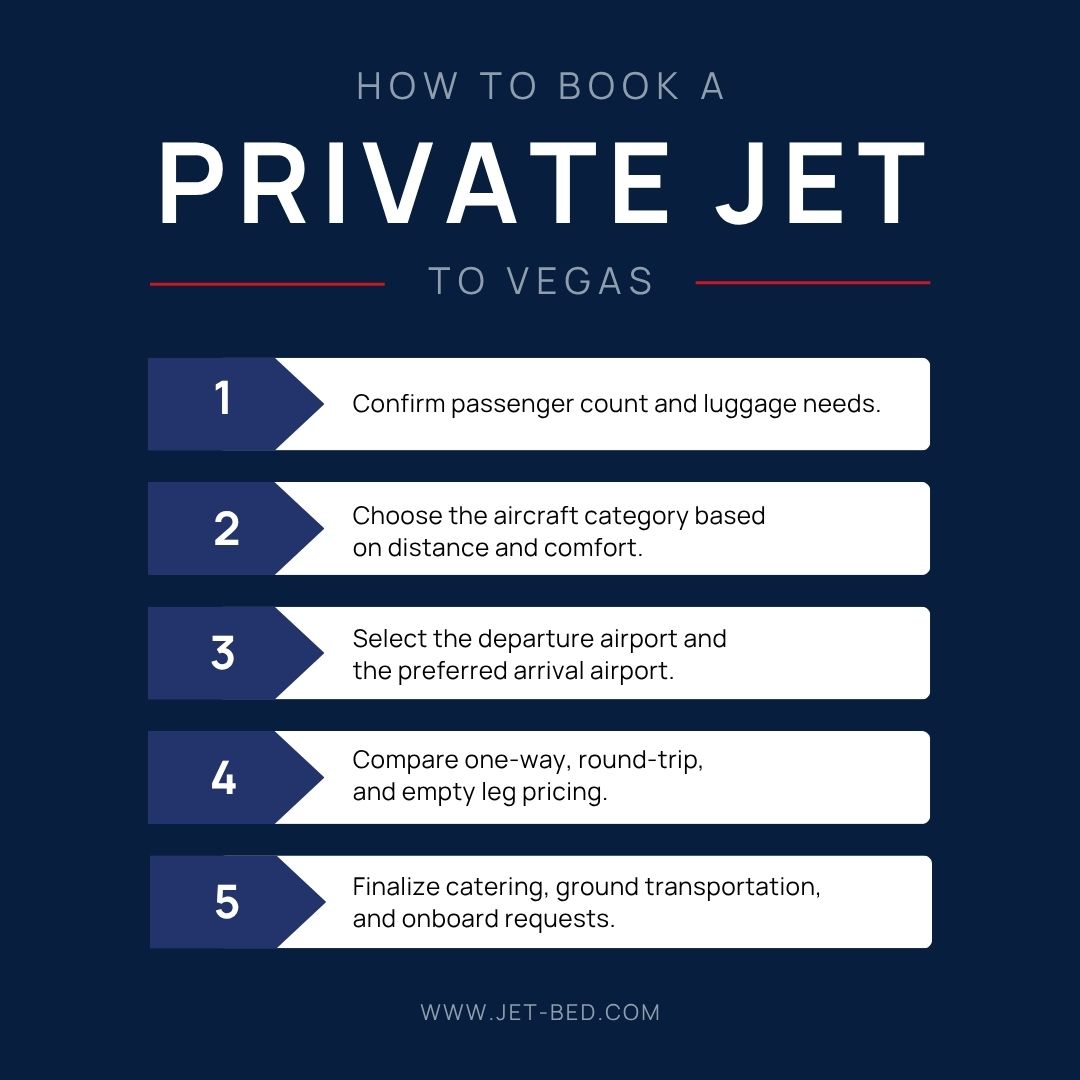
How to Book a Private Jet to Vegas
Confirm passenger count and luggage needs.
Know the number of passengers before contacting a broker or operator, as passenger count determines the aircraft category. Additionally, luggage, especially oversized items like golf bags, affects which jets are actually viable for the trip.
A light jet that seats six may comfortably carry only four passengers with full bags. A firm headcount and realistic bag count upfront save time and avoid aircraft changes later.
Unsure of how many people you can bring? Review our guide “How Many People Can Fit in a Private Jet?”
Choose the aircraft category based on distance and comfort.
Departure city drives aircraft selection more than any other factor. West Coast flights to Las Vegas run under an hour flight time, so a light jet covers the route cleanly. Conversely, cross-country routes from New York or Miami require a super-midsize jet to meet nonstop range and cabin comfort requirements. Matching the aircraft to the mission matters for both safety and operations.
Familiarize yourself with private aircraft models in our guide “Types of Private Planes” to better understand their capabilities.
Select the departure airport and the preferred arrival airport.
Airport selection depends on the aircraft’s size and the final destination on the Strip. For example, Harry Reid handles any jet and offers the shortest transfer to major hotels. Henderson Executive, on the other hand, serves midsize and larger aircraft, while North Las Vegas works for light jets on West Coast routes.
Decide on both your departure and arrival airports before requesting quotes from private jet services. Pricing and availability vary by field, and changing airports after receiving a quote can affect both.
Compare one-way, round-trip, and empty leg pricing.
One-way charters often carry a repositioning fee, which adds to the base cost. Booking a round trip on the same aircraft can eliminate that expense. However, empty legs—repositioning flights that the operator must run regardless of passengers—can significantly reduce fares. The only thing to consider is the fixed routes and dates.
If your schedule has flexibility, ask your broker specifically about empty legs into or out of Las Vegas. The savings are real, but availability closes fast.
Finalize catering, ground transportation, and onboard requests.
Confirm ground logistics at least 48 hours before departure. All Las Vegas airports offer plane-side limousine service, but they require advance notice. Meanwhile, standard car service does not.
FBOs handle the catering, with standard options reliably available and custom catering menus requiring additional lead time. Confirm any specific onboard requests, Wi-Fi confirmation, or special arrangements in writing before the day of the flight. Considering these small details and planning ahead can significantly elevate the in-flight experience.
How Much Does a Private Jet to Vegas Cost?
Route drives cost more than any other variable in private aviation. Flights from Los Angeles to Las Vegas run $4,900 to $6,400 on a very light jet and up to $12,000 on a light jet one-way. From New York, a super-midsize runs $32,000 to $45,000, and a heavy jet up to $60,000. The distance requires a larger aircraft, which burns more fuel per hour, increasing the cost.
Aircraft type is the single biggest cost variable within a given route. Turboprops run $2,000 to $3,000 per hour and light jets $4,000 to $6,000, with larger aircraft climbing from there. Custom catering, ground transfers, and onboard Wi-Fi all incur separate charges in addition to the base rate.
Fuel surcharges, landing fees, and the 7.5% federal excise tax on domestic charters are typically excluded from initial quotes. Moreover, event weekends push all of these numbers higher across every category due to demand.
What Type of Private Jet Is Best for Vegas Trips?
Phenom 100
The Phenom 100 seats four passengers with a range of 1,178 nautical miles. That’s enough to reach Las Vegas nonstop from Los Angeles, Phoenix, or San Diego without a fuel stop.
The cabin interior has a fit and finish that stands out in its category. It cruises at 390 knots and climbs to 41,000 feet, comfortably above weather on short West Coast hops. For a small group flying in from Southern California, the Phenom 100 is a practical, cost-efficient choice.
Learjet 45
The Learjet 45 seats up to eight passengers in a double-club configuration. With approximately 1,971 nautical miles of range, it supports nonstop routes from Denver, Dallas, and Chicago. The aircraft cruises at 464 knots and climbs to 51,000 feet, well above commercial traffic and weather. This helps cabin noise stay under 72 dB, and two-zone temperature control keeps both ends of the cabin comfortable.
External baggage capacity is 50 cubic feet, enough for a group traveling with larger luggage. For six to eight passengers flying from the West Coast or Mountain West, the Learjet 45 is a capable and comfortable choice.
Hawker 800XP
The Hawker 800XP seats eight passengers and offers one of the largest cabins in the midsize category. The interior allows stand-up headroom across the full cabin length for maximum comfort. Additionally, the standard layout pairs a four-seat club section at the front with a three-person divan and a single seat in the rear. This provides a full group with a genuinely comfortable cross-country environment.
The range runs 2,470 to 2,540 nautical miles at a cruise speed of 447 knots. That puts Las Vegas within nonstop reach of New York and Miami. Takeoff requires 5,200 feet of runway, which works at Harry Reid and Henderson Executive. For a full cabin cross-country, the Hawker800XP is a practical midsize option with elevated comfort.
Arrive in Las Vegas well-rested and in style with JetBed.
Las Vegas is one of the highest-demand private aviation markets in the country, and the airport infrastructure reflects that. Four airports serve the region, covering every aircraft category. Knowing your passenger count, luggage situation, departure point, and preferred arrival airport gives a broker everything they need to prepare a quote.
The rest is straightforward. Choose the right aircraft for the route and confirm the details in advance. The trip handles itself from there.
Remember, the flight to Las Vegas is part of the entire experience. JetBed’s custom-fit inflatable sleeping surfaces make in-flight rest easy, allowing you to arrive at your destination well-rested. Contact our JetBed team to find the right fit for your aircraft today.