
Whether taking a charter flight to Orlando for sunny, seaside getaways or an Alaska charter flight for scenic adventures, private travel is one of the most efficient ways to reach your destination. Yet, even with luxury amenities and a quiet cabin environment, the body still experiences changes at high altitudes.
Reduced oxygen levels, cabin pressure, and subtle shifts in humidity and temperature can all trigger noticeable effects. Recently, we discussed most of these side effects in “What Are the 3 Stages of Acclimatization?” However, today, we will explore one of the most important aspects of high-altitude travel: how flying can influence blood pressure.
For both passengers and crew members, understanding the physiological effects of private flying is essential for safe and restful travel. Therefore, this guide will help you understand how altitude influences your blood pressure—and how to maintain health and wellness in flight.
When traveling in high altitudes, blood pressure spikes can cause extreme fatigue. However, with JetBed, passengers can experience true comfort with a patented, custom-fit bed, luxury Italian linens, and U.S. manufacturing. You don’t have to sacrifice restoration for convenience—and JetBed proves that.
Does Altitude Affect Blood Pressure in Private Jets?
Yes, altitude can affect blood pressure—even in a private jet.
Modern cabin pressurization systems work to maintain a comfortable and safe air pressure. However, passengers can still experience mild physiological changes. As a jet climbs higher, the atmospheric pressure decreases. To compensate, the body responds with increased heart rate, blood volume, red blood cell production, and breathing rate.
For most travelers, these changes are minimal and often go entirely unnoticed. For those flying with high blood pressure, though, it’s important to understand how hypertension and air travel interact.
To learn more, review our posts: “Why Is an Airplane Pressurized?” and “What Is Density Altitude?”
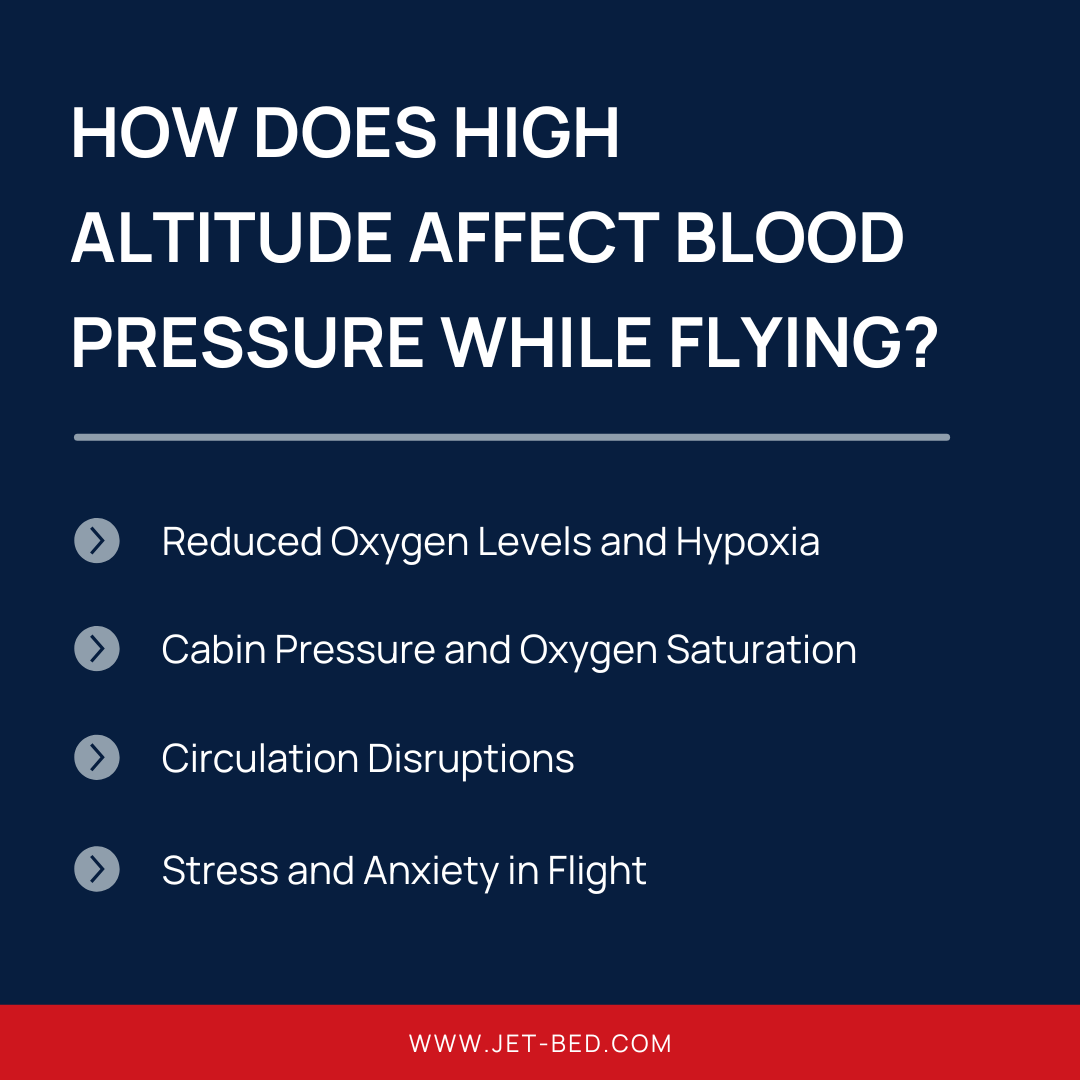
How Does High Altitude Affect Blood Pressure While Flying?
Reduced Oxygen Levels and Hypoxia
When flying in high altitudes, the lower atmospheric pressure results in fewer oxygen molecules. While pressurization moderates this, even well-pressurized cabins have lower oxygen levels than those at sea level.
As a result, passengers can experience increased heart rates and breathing rates, therefore increasing cardiac output. This can lead to mild hypoxia, especially in passengers with preexisting cardiovascular conditions.
For more information on atmospheric changes, visit: “What Is ISA in Aviation?”
Cabin Pressure and Oxygen Saturation
Private jets maintain cabin pressure at an altitude between 6,000 and 8,000 feet above sea level, slightly lower than the 8,000-foot equivalent of most commercial aircraft. This is yet another example of how flying privately offers the safest and most enjoyable environment for travel.
However, the oxygen saturation in the blood is still slightly reduced, even with the lower cabin altitude. While healthy passengers generally experience minor symptoms, those with hypertension may be more sensitive.
To learn about flight and safety at high altitudes, read this post.
Circulation Disruptions
When the air becomes thinner, the body compensates to bridge that gap. As a result, blood vessels constrict, blood viscosity increases, and the body redistributes blood to vital organs rather than the extremities.
Therefore, it’s not uncommon to experience circulation issues at altitude. Combined with limited mobility, a passenger with hypertension is at increased risk for cardiac events, blood clots, and blood pressure spikes.
Stress and Anxiety in Flight
The cabins on private jets are naturally much quieter and more tranquil than those of a commercial aircraft. That said, passengers, especially ones that don’t fly frequently, can still experience increased stress and anxiety.
Anxiety naturally triggers stress hormones, such as adrenaline and cortisol. When this happens, combined with reduced oxygen, it causes the body to constrict blood vessels. Although this is to help preserve oxygen delivery to the heart and brain, it also causes blood pressure to increase.

How to Control Blood Pressure in High Altitude While Flying
Consult with a Doctor Before Flying
For those traveling with preexisting conditions, such as high blood pressure, it’s essential to consult your doctor before flight. Above all, a healthcare professional can properly assess whether your condition is stable enough to travel and provide guidance on necessary adjustments.
Additionally, a physician plays a key role in medication management. As we will discuss further below, continuing medication during travel isn’t always necessary, and, in some cases, can worsen symptoms.
To ensure a safe and comfortable journey, review travel precautions for hypertension with a doctor prior to departure.
Bring a Blood Pressure Monitor
When planning a flight with high blood pressure, it is recommended to bring a blood pressure monitor. This allows you to track your levels before, during, and after takeoff, ensuring that everything is in safe range.
This is particularly important when departing on a longer flight or a route with higher altitudes. However, passengers can also take comfort in knowing that most modern private jets are already equipped with blood pressure monitors. This highlights the rigorous safety standards in private aviation, which protect both passengers and crew members in the event of an emergency.
To learn more about expected standards, read: “What Is a Management Level Safety Process in Aviation?”
Manage Sodium and Caffeine Intake
Individuals with high blood pressure may already be accustomed to specific dietary restrictions. Moreover, continuing to avoid certain foods and beverages is essential when flying in higher altitudes.
Travelers should be mindful of their sodium/salt intake, as well as abide by caffeine and alcohol restrictions. High-sodium foods cause the body to retain water, thereby increasing blood volume and putting strain on the blood vessels. Additionally, alcohol can lower blood oxygen levels and increase heart rate, while caffeine raises blood pressure and leads to dehydration.
By consuming any of the items mentioned, those with hypertension increase their risk of cardiovascular events. Choose hydrating, low-sodium snacks and limit stimulants before and during the flight.
Additionally, flying privately means access to accommodations, such as in-flight dining. Review “Private Jet Catering” and “The Ultimate Guide to Food on Private Jets.”
Avoid Certain Medications
As noted above, passengers should always consult with a qualified physician regarding which medications to continue or avoid before boarding. That said, it’s highly encouraged to avoid decongestants if you deal with hypertension or other similar conditions.
When flying at a high altitude, blood pressure naturally rises due to lower oxygen levels. Simultaneously, common decongestants construct blood vessels throughout the entire body. When combined, the blood vessels then force the heart to work harder, which can become particularly dangerous for those already managing hypertension.
Move Around During Flight
Sitting for long periods of time can increase the risk of blood clots, swelling, stiffness, and improper blood flow. Therefore, individuals with hypertension are encouraged to move around during flight to prevent prolonged immobility.
This is not as much of a concern on short flights, as passengers won’t be seated for extended periods. For longer flights, however, passengers with high blood pressure are encouraged to take short walks around the cabin and stretch their legs whenever possible.
Wear Compression Stockings
For individuals with limited mobility or who desire additional protection, compression stockings are a wise choice. Again, as mentioned above, this isn’t always a concern when traveling short distances or taking quicker flights.
For longer flights, though, compression stockings can help improve circulation, reduce swelling, lower the risk of deep vein thrombosis (DVT), and increase comfort.
Learn more about circulation in our post, “Benefits of Sleeping with Legs Elevated.”
Stay Hydrated
When flying privately, staying hydrated is essential for combating fatigue, headaches, and dizziness. (These are also all symptoms of increased altitude pressure.) Furthermore, hydration is increasingly important when managing hypertension to maintain stable blood pressure.
Dehydration, naturally, worsens blood pressure symptoms. When combined with lower oxygen, drier air, and additional fluid loss, passengers can experience blood pressure spikes and frequent imbalances. Proper hydration counteracts the negative effects, ensuring a safe and comfortable flight.
For further help with in-flight relief, visit: “How to Relieve Altitude Pressure in Ears.”
Reduce Stress and Get Proper Rest
Flying privately is the pinnacle of luxury and convenience. Therefore, taking advantage of the quiet cabin environment and reduced noise can greatly reduce stress and anxiety in flight. Passengers can listen to calming music, practice meditation, or utilize breathing exercises to lower anxiety and, therefore, lower blood pressure.
Additionally, rest in flight can be significantly beneficial for individuals with hypertension, as it helps regulate hormones and naturally reduces stress. Fortunately, JetBed offers a range of comfortable, high-quality beds that are custom-made to your specific aircraft. View all your JetBed options here!
For more information about sleeping on private jets, review: “How to Sleep on Long Flights.” Also, make sure to read “Airplane Sleeping Hacks” to learn expert tips for rejuvenating sleep—even while 40,000 feet up.
Properly managing blood pressure during high-altitude travel is essential for safe and comfortable flights.
When chartering a private jet, passengers can enjoy features such as quicker transit, spacious cabins, and convenient scheduling. However, for an optimal in-flight experience, it’s crucial to manage hypertension. When following necessary precautions and consulting with a physician, you can enjoy safe and efficient travel without dangerous blood pressure spikes.
When managing hypertension, proper in-flight rest can help mediate symptoms and provide relief. At JetBed, we understand the importance of high-quality sleep—whether for convenience or health. Contact us today to find out how you can upgrade your private flying experience with a flat, hotel-quality bed!