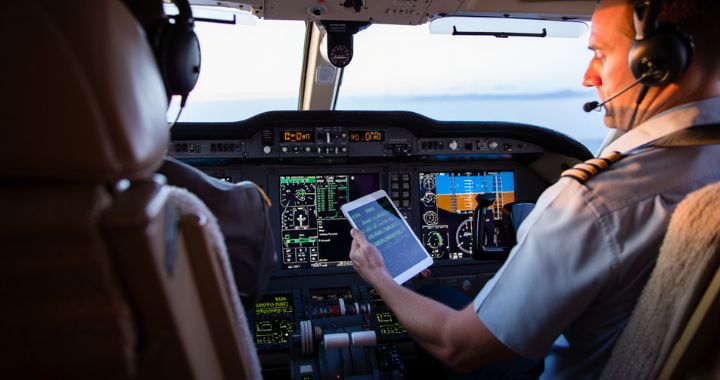
First officer pilots sit at the center of private flight operations. On any given trip, first officer pilots work alongside captains to ensure safe, efficient flights for passengers. Their responsibilities generally include assisting with flight planning, monitoring aircraft systems, communicating with air traffic control, and supporting the captain throughout the flight.
It’s a role built on trust and competence, and for that reason, a first officer pilot’s salary reflects these standards. Compared to traditional airline pay scales, first officers can expect compensation to vary based on experience and operational requirements.
Moreover, salary often depends on aircraft type, schedule demands, location, company size, and overall experience. To provide a more comprehensive explanation, this discusses first officer pilot salaries. These insights are essential for those curious about how pilot career pathways develop and what operational structures look like.
For those who prioritize comfort and functionality, JetBed is a must-have addition to elevate in-flight experiences. Our patented design transforms uncomfortable seating into luxurious, custom-made beds. Don’t let proper rest feel like another maintenance cost when JetBed can deliver the rest you deserve.

First Officer Pilot Salary for Private Planes
In recent years, private aviation has experienced substantial growth due to increased demand for charter flights and corporate travel. Business leaders, high-net-worth individuals, and companies increasingly rely on private aircraft for flexibility, convenience, and privacy. As a direct result, demand for first pilots has simultaneously increased. More specifically, there is a persistent, growing need for first officers to execute fractional ownership programs, corporate flight departments, and business jets.
In terms of salary, unlike in commercial aviation, pilot pay scales are far less transparent. They do not abide by standardized, publicly available pay rates, but rather by aircraft type, geographic location, pilot experience, cost of living, and schedule. Because of this variability, understanding salary ranges and career progression is essential. This knowledge ensures that aspiring first officers can make informed decisions when evaluating job opportunities within the private aviation industry.
Therefore, in this guide, we will explore exactly what a first officer pilot is and what career responsibilities entail. We will also explore how salaries vary by experience and discuss what it takes to become a first officer pilot in today’s aviation landscape.
For additional information, we implore you to read “First Officer Pilot Jobs for Private Planes” next.
What Is a First Officer Pilot for Private Planes?
A first officer pilot in private aviation is the pilot who sits in the right seat, working alongside the captain on business jets and corporate aircraft. However, the job certainly isn’t passive. On most flights, the first officer helps review weather, prepare the flight plan, and monitor aircraft systems. The captain has the final say, but the flight is very much a shared effort between the two pilots.
To successfully achieve this status, pilots generally need to meet several key qualifications, including:
- Private Pilot License (PPL). This is the first and arguably the most important step to becoming a professional pilot. A PPL is what allows a pilot to legally fly an aircraft—but not for compensation or hire. During this stage, pilots will learn foundational skills regarding navigating, aircraft systems, flight maneuvers, and communication.
- Instrument Rating. An instrument rating allows pilots to fly in conditions with limited visibility. In these scenarios, they must rely on cockpit instruments rather than visual references. This is an essential skill for first officers, as it enables them to navigate clouds, poor weather, and controlled airspace.
- Multi-Engine Rating. Most business jets and turboprops have two engines, requiring first officer pilots to obtain a Multi-Engine Land (MEL) rating. This training allows pilots to manage engine failure, asymmetric thrust, and, most importantly, multi-engine aircraft systems.
- FAA Medical Certificate. Professional pilots must maintain an FAA medical certificate, requiring periodic renewal. More specifically, most first officers hold a second-class medical certificate. This document verifies the pilot has passed vision, hearing, cardiovascular health, and neurological fitness exams.
Additional qualifications, while not always required, include a type rating, airline transport pilot (ATP) certificate, crew resource management (CRM) training, and background checks.
For additional information, review our guide: “How Many Pilots Are Required for One Aircraft?”
What Does a First Officer Pilot Do for Private Planes?
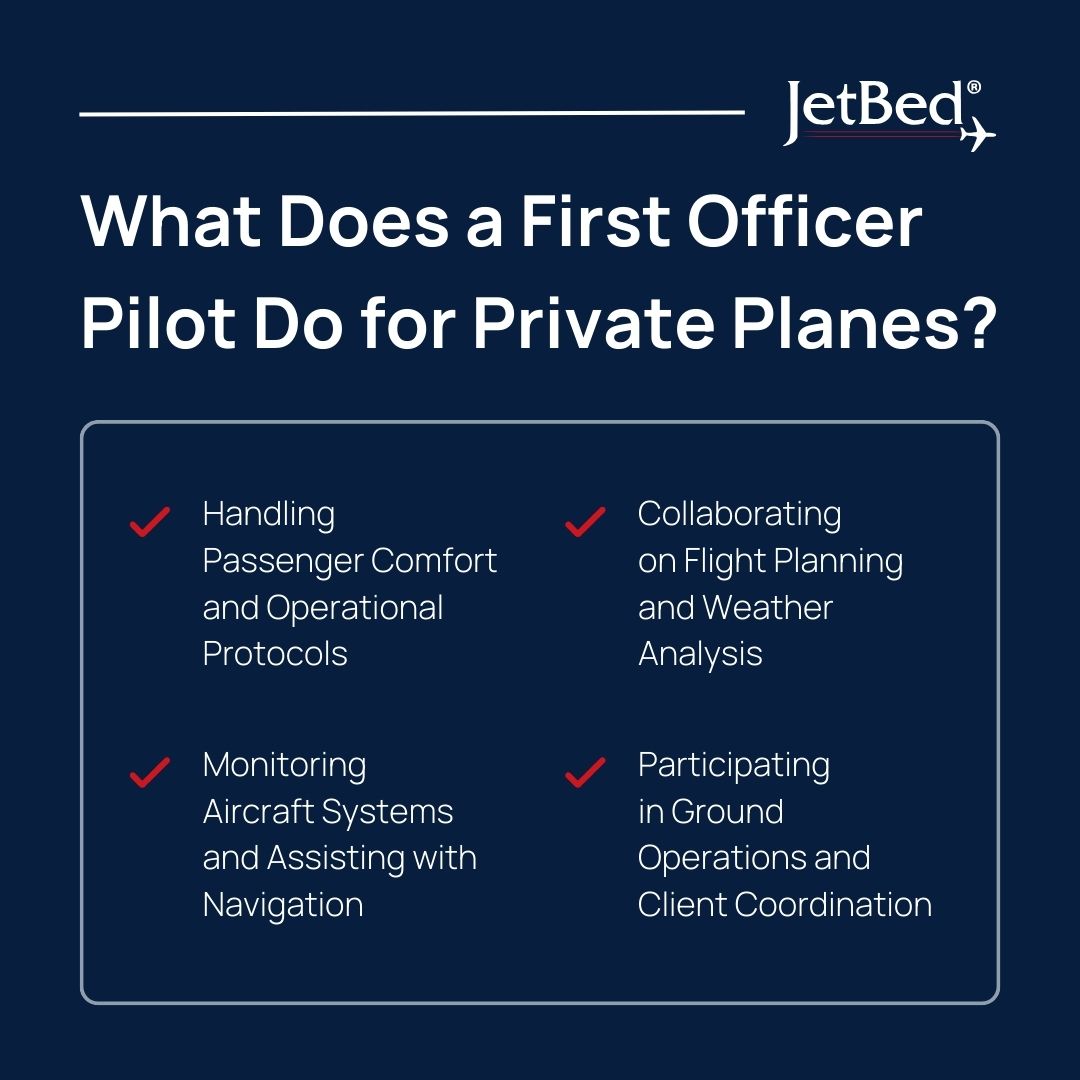
Handling Passenger Comfort and Operational Protocols
Handling passenger comfort and operational protocols is a significant aspect of private aviation. Sometimes, first officers help with client interactions or logistics, but it’s not about hospitality in the traditional sense. The main focus is still the flight and operations. Nonetheless, private aviation passengers expect a certain standard—and first officers must understand how to abide by those expectations.
Monitoring Aircraft Systems and Assisting with Navigation
During flight, first officers must monitor aircraft systems and assist with navigation. They aren’t doing it in isolation—the crew works together to make sure everything operates as expected. If something looks unusual, the first officer helps identify the issue and works with the captain on solutions. This collaborative approach, combined with technical awareness, is what supports safe and effective operations in private aviation.
Collaborating on Flight Planning and Weather Analysis
First officers work alongside the captain when planning flights and reviewing weather. It’s a team effort. They help assess routes, evaluate conditions, and use available tools to make sensible operational decisions. Because weather conditions can change rapidly, good planning allows the crew to respond safely and effectively. Private aviation relies on professional judgement and technical knowledge, not just checklists.
Participating in Ground Operations and Client Coordination
Ground operations are critical in private aviation. First officers may work with ground teams or assist with coordination so flights transition without issues. It keeps things organized and efficient. Moreover, private aviation schedules can be flexible and varied, in stark contrast to those of commercial operations. As a result, this creates diverse opportunities and enhances career growth.
How Much Do First Officer Pilots Make for Private Planes?
According to data, the average salaries of private vs. commercial airline pilots in general can vary greatly. Here’s what you may expect for first officer pilots in the United States:
Entry-Level Salary Ranges
Starting pay for first officers in private aviation depends on the operator and aircraft. Unlike commercial airlines, private aviation does not use a single pay scale. Therefore, pay can vary by location and company needs. Entry-level roles may not pay top dollar, but they offer valuable flying experience and exposure to real operations. For new pilots, it’s about building skills and progressing over time. Private aviation varies a lot, and compensation reflects that diversity.
Roughly, entry-level private jet pilots might earn about USD $40,000–$70,000 per year.
Mid-Level Compensation and Career Growth
With some experience, first officers often see better pay and opportunities. Some operators offer benefits such as health coverage, while others focus on performance incentives. Additionally, private aviation tends to reward operational expertise. This encourages pilots to continue learning and improving, leading to stronger opportunities and higher salaries.
Salary at this level, however, reflects experience and the contribution pilots make to safe operations. Career pathways can lead to more advanced roles as skills develop.
Mid-level first officers typically earn around USD $70,000–$120,000 per year, depending on responsibilities and aircraft type.
Senior-Level and Experienced First Officer Salaries
Experienced first officers generally earn higher salaries due to their operational knowledge and capabilities. Senior positions, for example, may include added responsibilities and performance-based incentives. And while ultimately pay varies by operator and location, private aviation often provides competitive opportunities for skilled pilots. Long-term career growth rewards expertise and professional contribution within flight operations, and opportunities for advancement typically expand as experience builds.
Senior first officers can typically earn about USD $120,000–$180,000+ per year, depending on the operation and level of responsibility. Private jet pilots can expect to earn competitive incomes depending on experience and operational responsibilities.
For more information, refer to our posts: “How Much Does a Private Pilot Earn?” and “Corporate Pilot vs Airline Pilot: Similarities and Differences.”
How to Become a First Officer Pilot for Private Planes
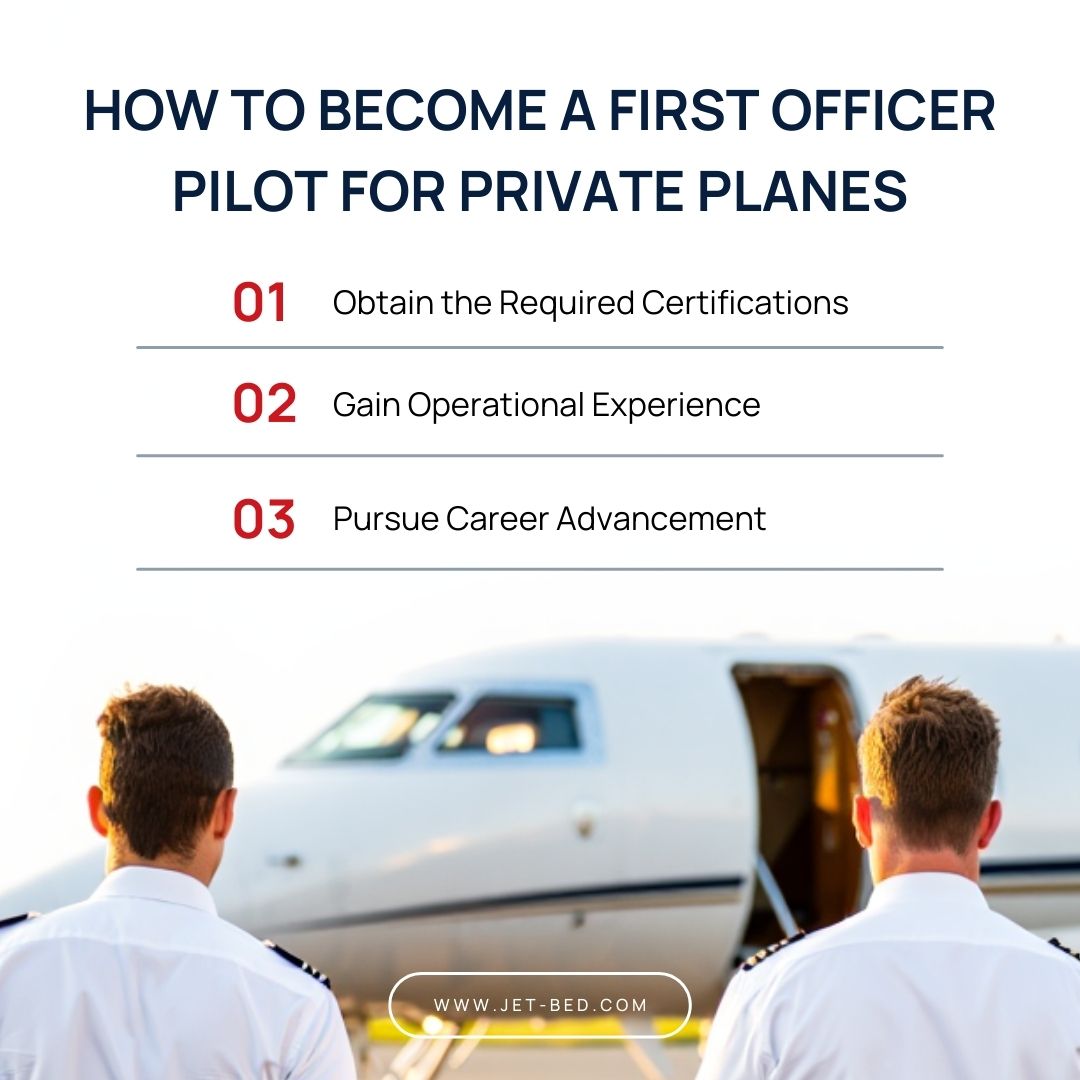
Obtain the Required Certifications
Private aviation pilots need certifications and training before they can work as first officers. You usually need an airline transport pilot certificate (ATP) certificate and type ratings for the aircraft. It essentially proves you can fly the machine safely. Requirements change depending on where you work and who the employer is, so checking the details early helps.
Gain Operational Experience
Experience matters. Entry-level roles let pilots build skills in real operations. However, no two flights are exactly the same. As a result, this teaches professional judgment and adaptability. Over time, opportunities tend to improve as experience grows. Private aviation can be varied, and pilots who keep learning usually find better career paths.
Pursue Career Advancement
Career progression happens through learning and taking on new responsibilities. Additional qualifications and professional growth can help open doors for pilots. Networking and aviation industry connections are another valuable attribute. Private aviation offers pathways through corporate flight departments and charter operations, so pilots can progress as they gain expertise.
First officer pilots are essential in private aviation, operating alongside captains on business jets, corporate flight departments, fractional ownership programs, and charter services.
As you consider career paths in aviation, it’s essential to look at the broader ecosystem that surrounds private flying. Consider salary ranges, your lifestyle, retirement plans, flexible schedules, amongst other things. Understanding the full picture–from what private aviation first officers can expect in salary and career progression, to how innovations like JetBed enhance the passenger experience–helps make private aviation one of the most rewarding careers.
JetBed continues to elevate the in-flight experience itself, because true rest and comfort shouldn’t feel like an additional aspect of maintenance. And with JetBed, it doesn’t have to. Our innovative approach helps transform cramped, uncomfortable cabins into luxurious sleeping environments that prioritize rest and refinement. Regardless of what your journey looks like, JetBed provides comfort every step of the way.