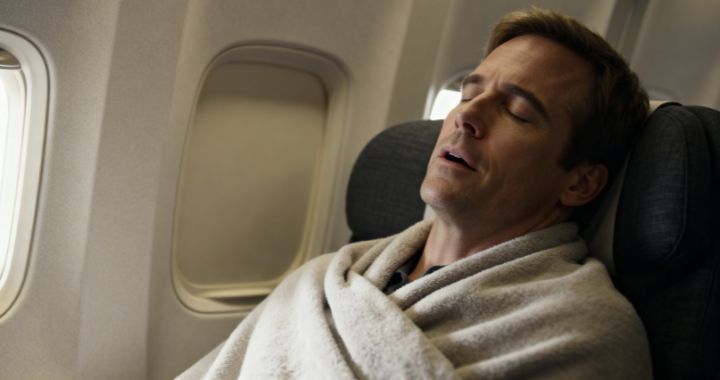
Flying is a practical way to travel, but it can be difficult to rest comfortably in the air. Many passengers try to take naps to arrive at their destination refreshed, but often end up dealing with snoring.
However, it’s worth noting that flying makes passengers tired for various reasons. For example, reduced hydration, lower cabin pressure, and dry air all contribute to flight fatigue. Nonetheless, understanding why this happens allows passengers to plan ahead, improve their rest, and maintain a courteous travel environment.
Therefore, in this post, we will explore why passengers commonly snore and introduce effective ways to prevent it. Additionally, consider learning how to sleep on a long flight to optimize comfort and rest.
We know that comfortable rest dramatically reduces snoring. That’s why many private aviation travelers choose JetBed—a patented, high-quality in-cabin bed system designed specifically for private jets. JetBed supports the spine, opens the airway, and provides a stable sleeping surface that helps reduce snoring and improve in-flight rest. If comfort and professionalism matter in the air, investing in the right sleep setup can make a measurable difference.
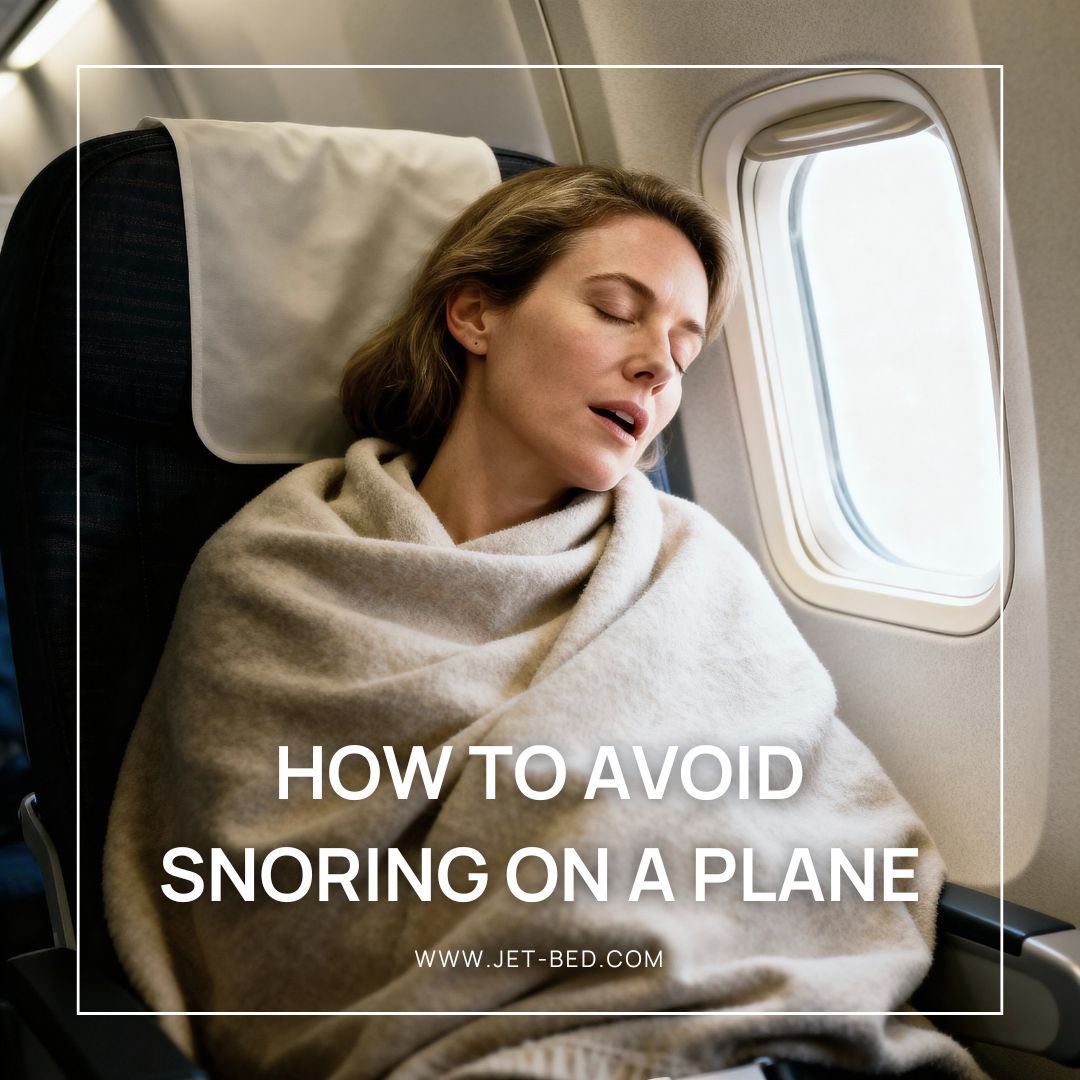
How to Avoid Snoring on a Plane: Expert Tips for Private Flyers
This guide provides practical strategies for eliminating snoring in-flight. It covers physiological causes and environmental factors, with solutions suitable for all passengers. Implementing these techniques improves the travel experience, supports rest, and helps maintain a calm cabin environment.
Can You Snore on a Plane?
Yes. Snoring on a plane is common due to the dry cabin air, limited mobility, and general fatigue. Changes in air pressure can also narrow the nasal passages, increasing the likelihood of snoring. Even passengers without a history of snoring may experience it while flying. For passengers with sleep apnea, the risk is significantly higher.
Is It Rude to Snore on a Plane?
While snoring isn’t intentional, it can disrupt other passengers nonetheless. Light snoring is typically tolerated, while louder episodes may create discomfort. Taking steps to reduce snoring demonstrates consideration for others and contributes to a courteous cabin environment.
However, it’s important to note that snoring is also an indication of a restricted airflow. As a result, sleep becomes less restorative and isn’t ideal for overall health. This makes it even more valuable to adopt simple in-flight strategies that support clear breathing and more comfortable rest.
What Happens If You Snore on a Plane?
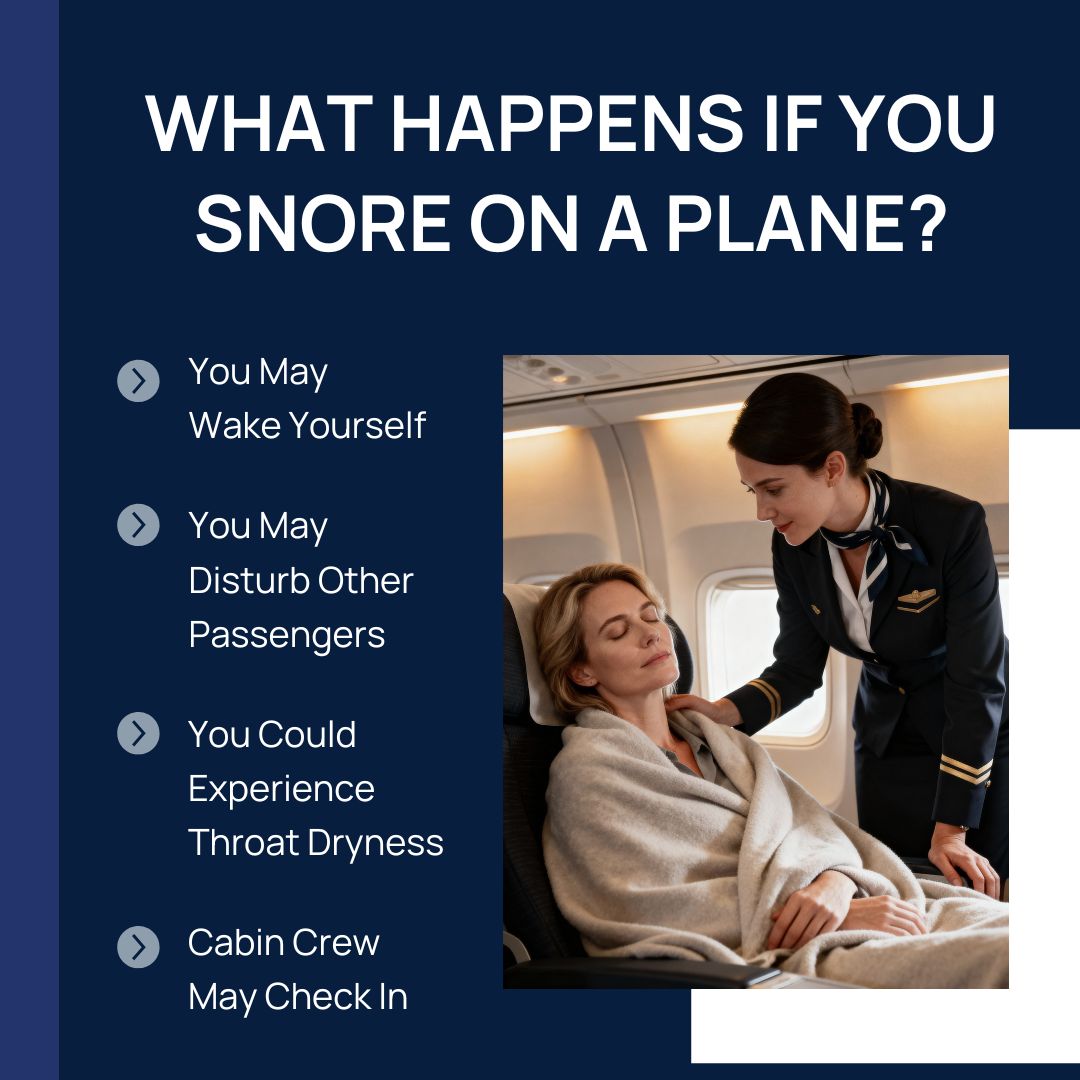
You May Wake Yourself
Sudden snoring episodes can cause brief, involuntary awakenings—often without the passenger even realizing it.
These micro-arousals interrupt the body’s natural sleep cycles, therefore limiting time spent in restorative stages of sleep. As a result, you may feel groggy and fatigued rather than alert and refreshed.
You May Disturb Other Passengers
Loud snoring can interrupt nearby passengers. More specifically, smaller cabin environments can carry sound more noticeably. Even moderate snoring can become distracting during quiet nighttime flights.
As a result, this can make it more difficult for other passengers to work, sleep, or relax. In private aviation, comfort and discretion are prioritized. Minimizing noise helps maintain this environment for all on board.
You Could Experience Throat Dryness
Cabin air is naturally very dry due to high altitudes and very low humidity levels. As a result, this can easily dry the throat and make snoring more pronounced. Because snoring forces more airflow through the mouth, the tissues lose moisture at a faster rate than they would with nasal breathing. This increased hydration can lead to noticeable amounts of discomfort upon waking.
Cabin Crew May Check In
At times, snoring can indicate a potential health condition, such as nasal obstructions, sleep apnea, or upper airway resistance. Because of this, flight attendants may monitor passengers whose snoring appears excessive.
Additionally, they may try to gently wake snoring passengers to ensure they are comfortable, safe, and not experiencing symptoms that require assistance.
How to Not Snore on a Plane
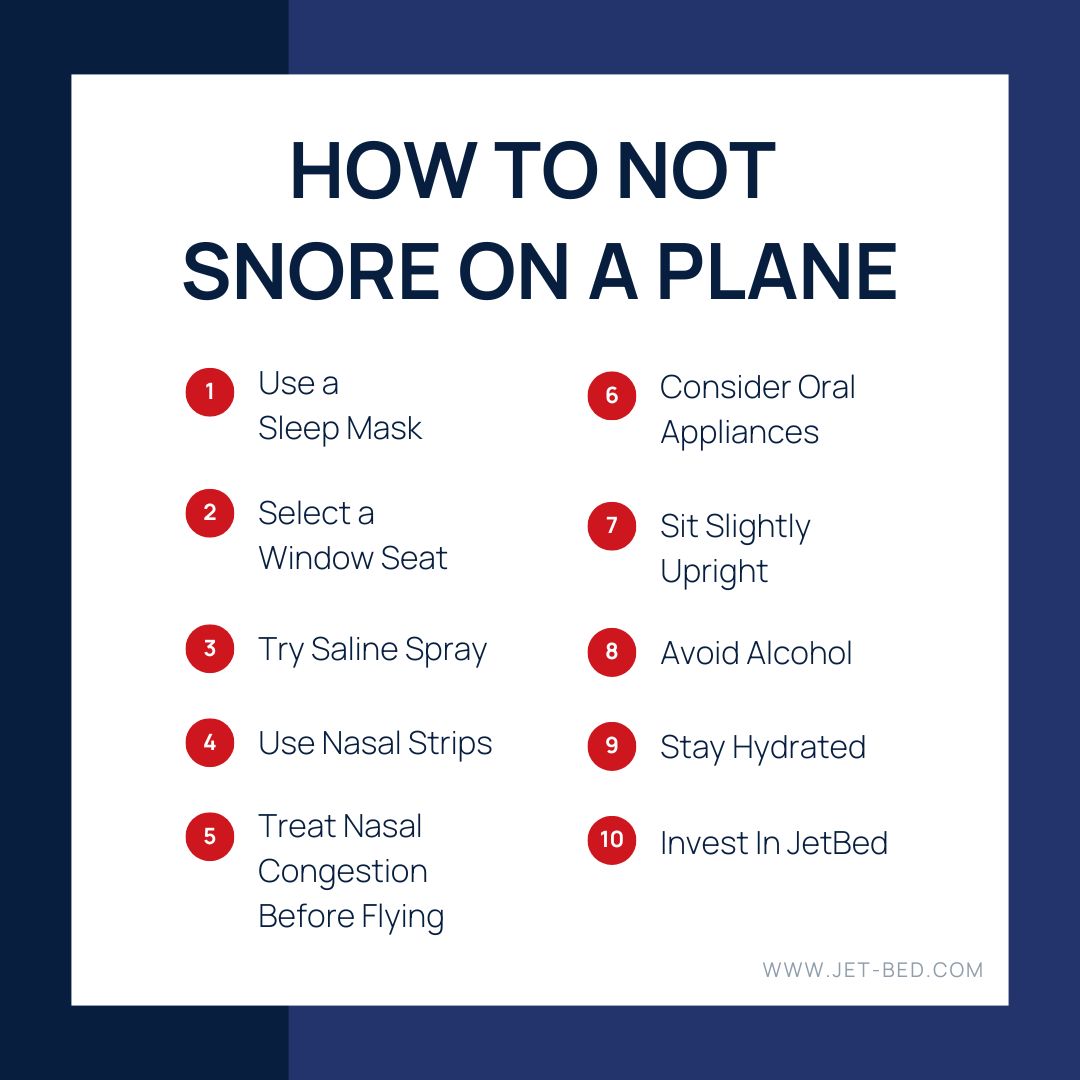
Use a Sleep Mask and Restorative Tools
A sleep mask blocks ambient light, promoting deeper, more restful sleep. Additionally, for passengers worried about snoring in-flight, an anti-snoring mask can be a helpful investment. This mask works by detecting snoring sounds, thereby sending a vibration to encourage wearers to shift positions.
Additionally, many who snore can greatly benefit from using a neck pillow. This simple tool maintains proper head and neck alignment, helping to keep the airway open and unobstructed.
Select a Window Seat
For those without a neck pillow, choosing a window seat allows them to rest against the side of the cabin. As a result, passengers then have a solid surface to keep both their head and neck upright. The more you are able to resist slouching or tilting, the better you can breathe and the less you will snore.
Try Saline Spray
Saline spray alleviates nasal dryness and congestion, both of which are common on aircraft due to low cabin humidity. By moisturizing the nasal passages, saline helps restore smoother, more natural airflow. Furthermore, clearer nasal passages reduce the chance of snoring because the body is less likely to switch to mouth breathing.
Use Nasal Strips
Nasal strips lift the side of the nose, opening the airway and increasing airflow. By widening the airway, they make it easier to breathe through the nose rather than the mouth—a necessity when trying to prevent snoring. They’re simple, non-invasive, and effective.
Treat Nasal Congestion Before Flying
Addressing colds, allergies, sinus issues prior to departure is essential for comfortable in-flight rest. Nasal congestion forces the body to breathe through the mouth, which will increase the chances of snoring. Taking decongestants and saline products can ultimately improve airflow and reduce snoring.
Consider Oral Appliances
An oral appliance works by gently repositioning the jaw to maintain open airways. These dives are especially beneficial for those who experience sleep apnea or frequent snoring on the ground. By maintaining proper alignment of the tongue, oral appliances promote smoother airflow.
Try Sitting Upright
Slightly reclined seating prevents the tongue and soft palate from collapsing backwards. Therefore, passengers who frequently snore should remain sitting upright to maintain openness within the airway.
Avoid Alcohol
Alcohol relaxes the throat muscles, making them more prone to collapse during sleep. This increased relaxation can intensify snoring and lead to frequent airway obstruction. Avoiding alcohol before and during the flight can help maintain stronger muscle tone in the airway.
Stay Hydrated
Proper hydration is key to preventing dryness in the throat and nasal passages—two factors that significantly increase snoring. Drinking water helps maintain moisture in the tissues, thereby reducing nasal congestion and supporting smoother airflow during the flight.
Invest in JetBed
A dedicated JetBed provides a firm, supportive surface that maintains spinal alignment as you fall asleep. Unlike standard seat cushions, it reduces pressure points, minimizes airway obstruction, and helps support your neck position. Consistent use of a JetBed can significantly lower the likelihood of snoring on longer flights.
Beyond snoring prevention, it enhances overall rest quality, leaving passengers alert and ready upon arrival. For private jet passengers and frequent travelers, a JetBed is an investment in comfort, wellness, and productivity.
It’s crucial to enjoy quality in-flight rest to avoid snoring on a plane.
Reducing snoring is only one part of optimizing in-flight rest. JetBed’s patented products provide stable, ergonomic support that improves comfort for every passenger. Each bed is lightweight, easy to store, and crafted for private aviation environments.
Custom linens and adjustable surfaces ensure that both leisure travelers and executives can rest efficiently and wake up refreshed. You can explore the full range of JetBeds here to upgrade your in-flight rest.