
Becoming a private pilot is an exciting, prestigious goal—one that requires precision, discipline, and a deep understanding of aviation standards. As discussed in “How to Obtain a Pilot’s License,” this career path demands significant commitment to training and licensure preparation.
Before earning a certification, however, aspiring pilots must pass both a written and a practical test. This is where a comprehensive understanding of the Airman Certification Standards (ACS) becomes essential. More than a benchmark FAA document, the ACS provides the risk management, knowledge, and practical skills necessary for effectively operating aircraft.
Considering this, today’s post serves as a thorough overview of the Airman Certification Standards. We will provide a clear explanation of its structure and purpose, equipping aspiring pilots with the confidence and skill set necessary in this industry.
Private aviation is a highly demanding profession—both on the ground and in the sky. And at JetBed, we understand the importance of reliable in-flight sleep solutions. Our patented, custom-fit system deliversa perfectly flat, uniform surface forseamless, hotel-quality rest. With USA-manufacturing and premium Italian linens, pilots can comfortably fight pilot fatigue.
Private Pilot for ACS: Guide to Airman Certification Standards
Aspiring pilots have countless questions as they work toward their license—from training timelines to overall investment fees. We’ve covered many of these topics in “Private Pilot License Cost” and “How Long Does It Take to Become a Pilot?”
Today, however, we’re shifting the focus to one of the most essential components of pilot readiness: the Airman Certification Standards. We will explore the framework and discuss why this model is essential for every pilot in the field—both novel and seasoned. Before diving deeper, it’s vital to first understand what the ACS is.
What Is ACS for Private Pilots?
The Airman Certification Standards (ACS) serve as the FAA’s official guide, outlining the risk management, knowledge, and practical skill requirements evaluated during a private pilot checkride. The document demonstrates the exact tasks essential for certification—from preflight procedures to emergency operations.
Beyond listing test criteria, the ACS also helps lead education and performance evaluation. Flight instructors use these standards to structure lesson plans, guide student practice, and set clear expectations for proficiency. Likewise, FAA examiners reference the ACS throughout the checkride, ensuring assessments align with National Airspace System (NAS) standards.
However, it serves a far larger purpose than confirming pilot competency and general memorization skills. Rather, it verifies a pilot’s ability to be a safe, experienced decision-maker in real-life scenarios.
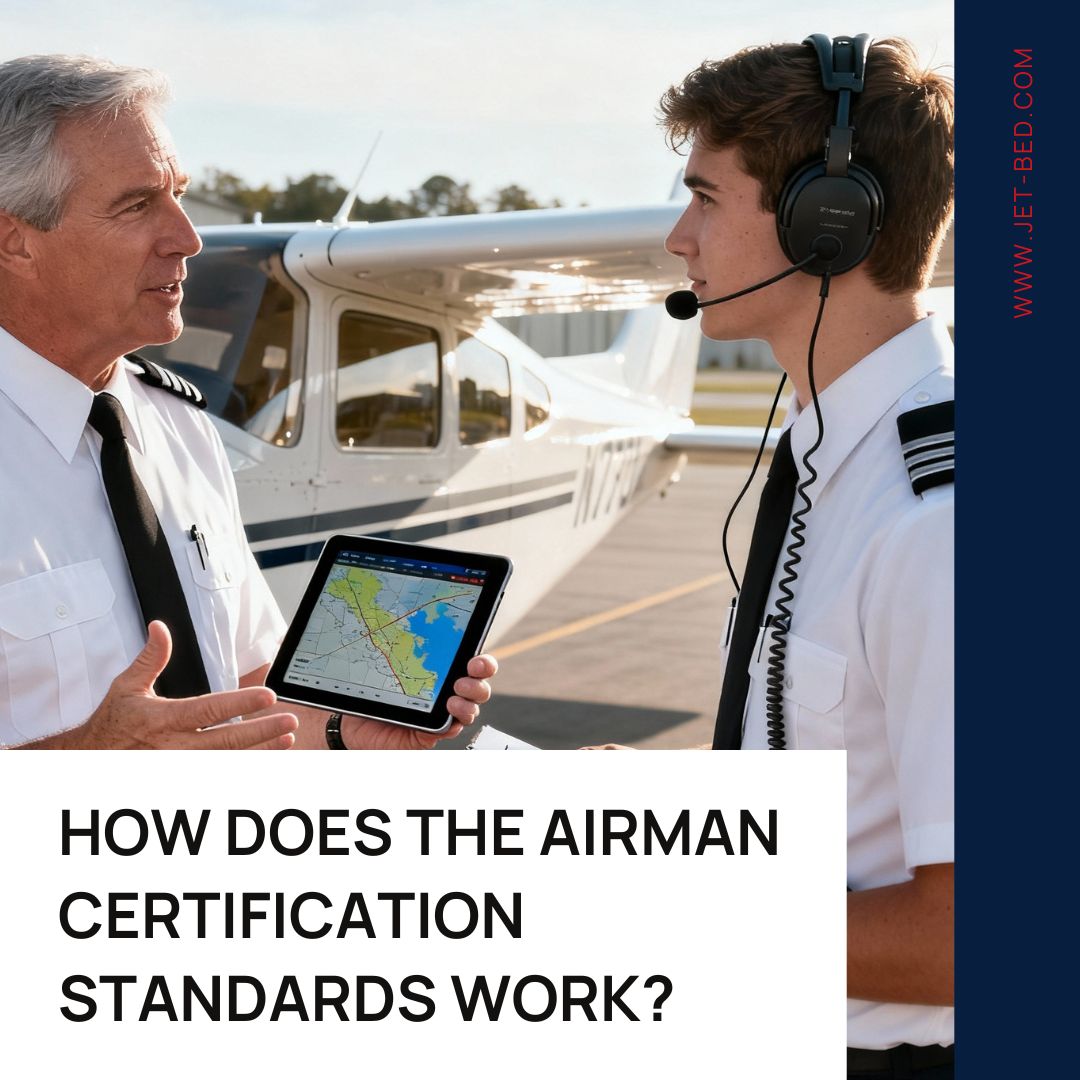
How Does the Airman Certification Standards Work?
Standard Evaluation Criteria (Knowledge)
The knowledge element of the ACS outlines the theoretical and factual criteria that all aspiring pilots must know for operation. More specifically, it answers the following: “What does a private pilot need to know before managing an aircraft?”
Key elements include weather theory, aerodynamics, aircraft systems, regulations, and performance calculations. When pilots understand why each procedure matters, they’re better able to integrate this conceptual knowledge to make sound decisions in the cockpit.
For additional information, visit the following:
- Can Planes Fly in Thunderstorms?
- What Is Ground Effect in Aviation?
- Private Pilot Privileges and Limitations in Operations
Integration of Knowledge and Risk Management (Consider)
This portion of the ACS evaluates a pilot’s ability to apply conceptual knowledge while actively assessing and mitigating risks. Rather than strictly relying on memorization techniques, pilots must consider and manage real-world variables that influence decision-making.
Risk management is embedded into every facet of the profession, reinforcing the FAA’s requirements of proactive safety. For private pilots, this involves demonstrating situational awareness, identifying potential hazards, and selecting the safest course of action—before, during, and after every flight.
Strong aeronautical decision-making directly impacts the safety of all onboard. To learn more about essential elements covered within this sector, visit:
Task-Based Performance Requirements (Do)
The final component of the ASC outlines measurable tasks that pilots must perform during training and the practical test. This includes preflight procedures, takeoffs and landings, navigation, emergency operations, and post-flight responsibilities.
Each task reflects a combination of knowledge and risk management, evaluating how a pilot can translate these elements into real-life aircraft handling. In aviation, pilots must maintain precision and judgement during routine operations. However, it’s equally significant to apply these standards in both abnormal and emergency situations.
For further information, visit “Emergency Landing Procedures for Passengers” and “Emergency International Flights in Private Jets.”
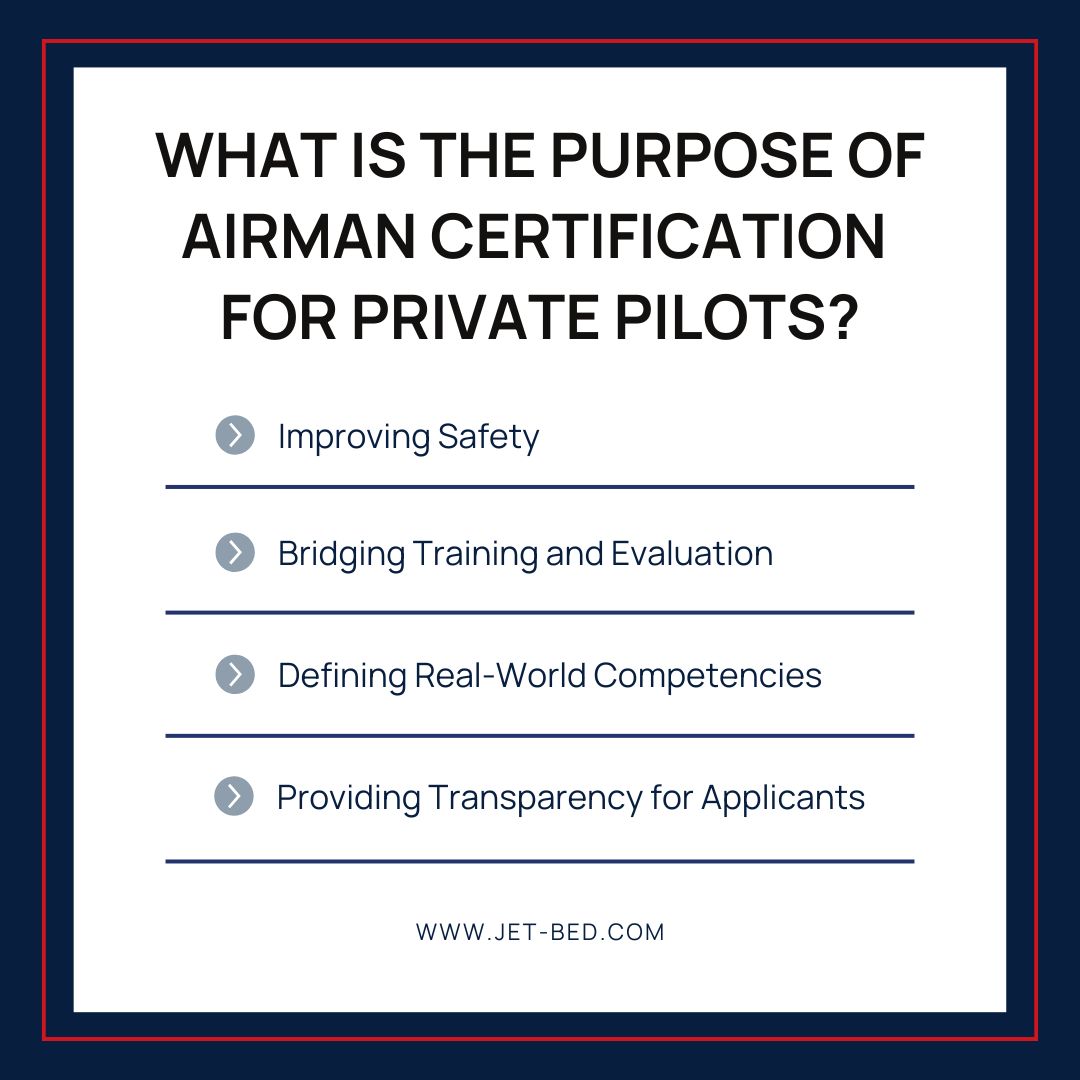
What Is the Purpose of Airman Certification for Private Pilots?
Improving Safety
Unlike the prior Practical Test Standards, the ACS enhances aviation safety by combining aeronautical knowledge, risk management, and skill set into a single system. In this case, pilots are better able to understand why certain information is vital to the profession. Furthermore, they’re more capable of applying it to everyday operations.
This structure exceeds discussing basic technical flying skills, as it analyzes both critical thinking and risk assessment. In other words, pilots understand far more than basic maneuver techniques. They have the comprehensive knowledge needed to address external threats that compromise aircraft safety.
Bridging Training and Evaluation
Training is essential in aviation, and the ACS ensures it does not vary based on where an applicant receives instruction. It provides consistent standardization across the board, acting as a roadmap for the entire aviation spectrum.
This uniformity improves communication between flight schools, instructors, examiners, and applicants. It also guarantees that every aviation professional is equipped with the necessary skills for safe, successful operation.
To learn more about the significance of systematic communication, read: “ATA Codes for Aviation: Interpreting Language of Aircraft Systems.”
Defining Real-World Competencies
A significant part of the practical tests involves scenario-based training. Therefore, pilots must understand the importance of combining teamwork, decision-making, and professional integrity in today’s modern aviation space.
Additionally, the course serves as a means of learning communication, leadership, and conflict-resolution skills necessary for the profession. This integration of skills, knowledge, and considerations forms the foundation of sound aeronautical judgment.
Providing Transparency for Applicants
Understanding industry requirements is essential to determining whether this position aligns with an applicant’s goals and lifestyle. In light of this, the ACS and the Pilot’s Bill of Rights (PBR) ensure all documentation, rules, and standards are both easily accessible and aligned with real-world needs.
Additionally, councils such as the Aviation Rulemaking Advisory Committee provide open-access documentation for procedures, certifications, operations, and industry qualifications. With this level of transparency, candidates can strategically prepare for necessary training and certifications.
The Airman Certification Standards ensure all private pilots have the necessary skills and knowledge to operate aircraft safely.
There are many rigorous standards, qualifications, and regulations within private aviation. However, the Airman Certification Standards provide clear expectations and aligned instructions necessary for both seasoned and aspiring private pilots. These guidelines serve as the foundation for continual competency throughout an individual’s entire career.
In addition to maintaining the high standards expected in private aviation, an inherent sense of luxury stems from the confidence and precision of a well-trained, focused pilot. However, this level of focus isn’t possible without adequate rest. At JetBed, we recognize that sleep isn’t a luxury—it’s a necessity.
With an inflatable, custom-fit design, pilots can experience quality, restorative rest—even while in the air. Contact us today to find out how JetBed can support safer, smoother, and more comfortable in-flight performance.