
Companies choose private aviation for control, and security is one of the clearest advantages that control delivers. When you fly private, you decide who is on the aircraft, where it departs, and when it moves. That level of oversight is difficult to replicate on a commercial flight, where schedules, passenger lists, and terminals are shared with thousands of strangers.
Corporate travelers often need more than a comfortable seat. They need privacy for sensitive conversations, flexibility when plans shift, and protection for the people and information moving with them. Private aviation answers all three, and it does so without the friction that makes business travel exhausting.
We’ve spent years inside private aviation, designing custom-fit beds for specific aircraft and working alongside the owners, flight departments, and crews who run them. That hands-on perspective shapes how we think about security, comfort, and the full travel experience from wheels-up to arrival.
Security is only part of what makes flying private feel different. Every JetBed is custom-fit to the exact make, model, and floor plan of your aircraft, crafted in the USA, and finished with premium Italian linens for hotel-quality rest at 40,000 feet. It turns the cabin into a completely flat surface where executives, families, and crew can actually sleep. That’s the most comfortable way to fly private.
Security Advantages of Corporate Private Flights
The main security advantages of corporate private flights come down to control. Private aviation gives businesses authority over scheduling, passengers, travel environments, and logistics that commercial travel simply cannot match.
On a commercial flight, you follow the airline’s timetable, share the cabin with the public, and pass through crowded terminals. With a private charter, the flight plan is built around your needs. You know every name on the manifest, the aircraft is staffed by a vetted crew, and the travel environment stays contained from the moment you arrive to the moment you land.
This matters because business travel often carries more than executives. It carries strategy, confidential documents, and the reputation of the company itself. Keeping that contained is a genuine security benefit, not a luxury add-on.
What Are Private Corporate Flights?
Private corporate flights are trips operated on a private aircraft rather than a commercial airline, arranged specifically for a company’s people and priorities. Businesses use them for executive travel, board meetings, client visits, site inspections, and international operations across multiple time zones.
Unlike commercial options, a private charter delivers a customized travel experience. The schedule bends to the meeting, not the other way around. Companies flying corporate jets and other private aircraft gain a workspace, a private cabin, and the ability to conduct business at altitude without an audience.
The result is meaningful time savings. Fewer connections, shorter ground processes, and direct routing mean leaders spend hours working or resting instead of waiting in line.
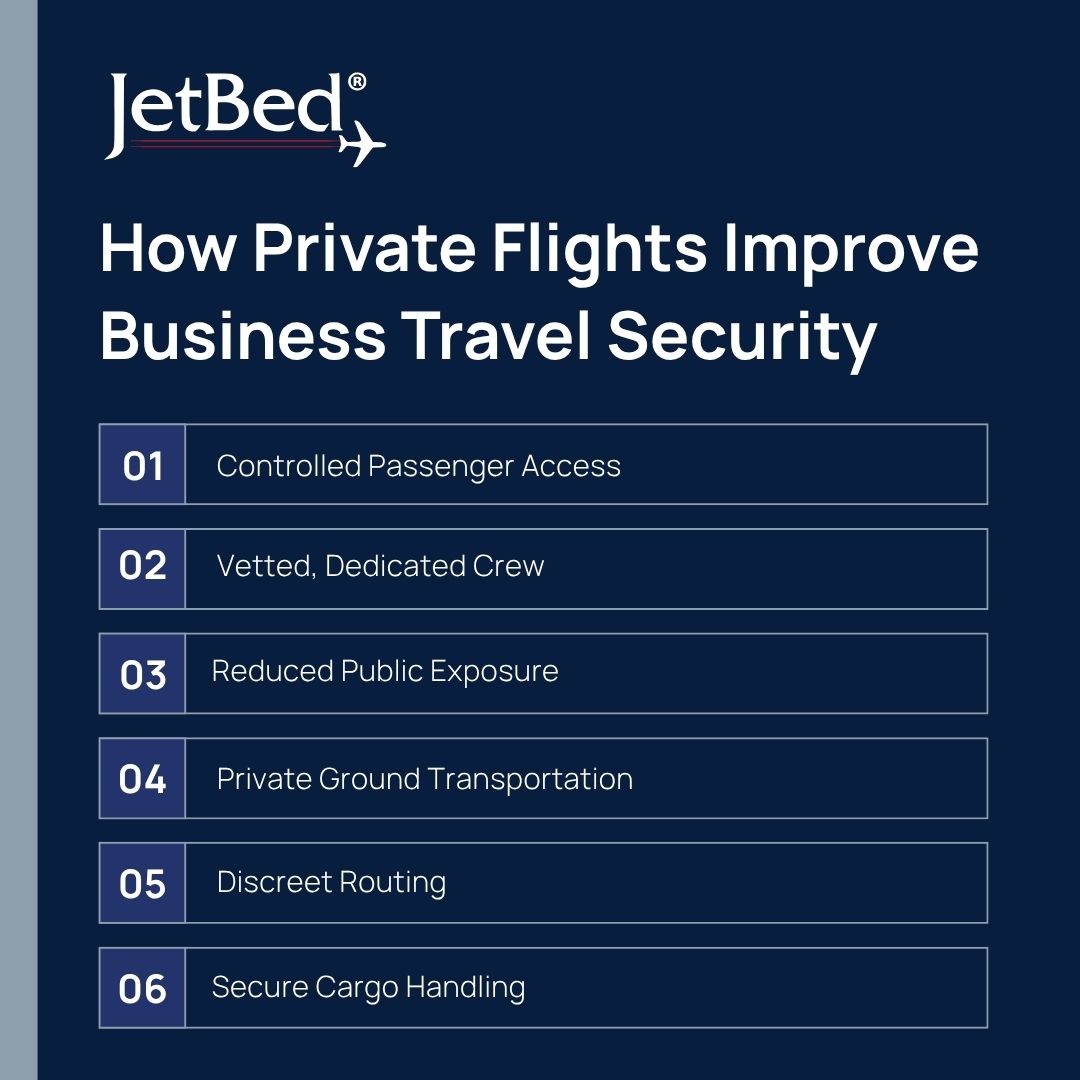
How Private Flights Improve Business Travel Security
Private flights improve security for business travelers in several concrete ways, including:
- Controlled passenger access. Only approved individuals board, so every person aboard is known before departure.
- Vetted, dedicated crew. The same trusted crew supports the trip, unlike the rotating staff on commercial airlines.
- Reduced public exposure. Travelers avoid crowded terminals and long public queues, which limits observation and risk on the ground.
- Private ground transportation. Coordinated cars can meet the aircraft directly, shortening the exposed window between plane and destination.
- Discreet routing. A private flight plan can favor smaller airports and quieter approaches, keeping movement low-profile.
- Secure cargo handling. Sensitive equipment and documents travel with the principals rather than through shared commercial handling.
Each of these points reduces the number of unknowns in a trip, and fewer unknowns mean a safer, calmer travel experience for everyone involved.
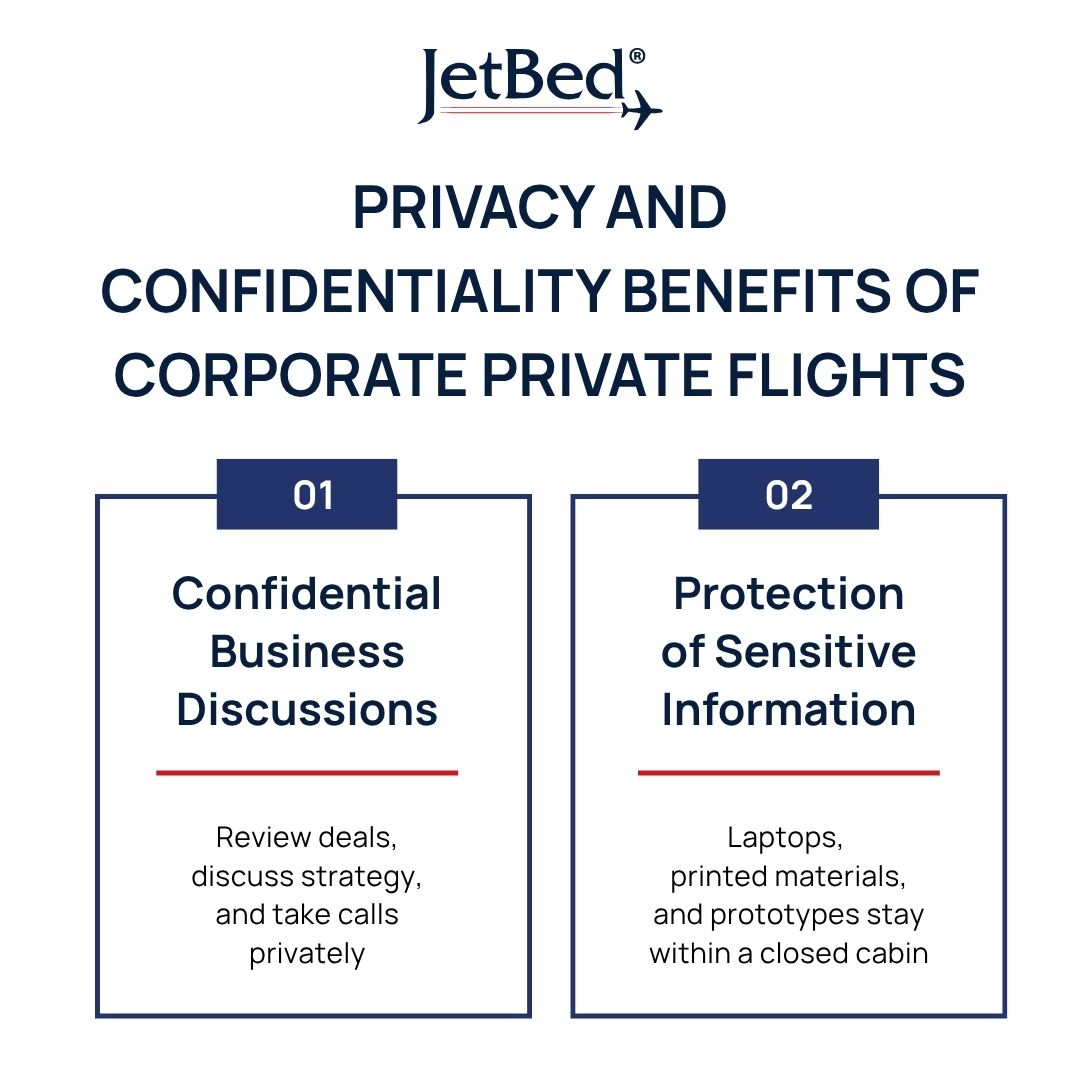
Privacy and Confidentiality Benefits of Corporate Private Flights
Private aviation protects the conversations and information that commercial aviation exposes. When the cabin belongs to your team alone, sensitive work can continue in the air.
Confidential Business Discussions
On a commercial flight, the seat beside you belongs to a stranger. On a private aircraft, it belongs to your team. Executives can review deals, discuss strategy, and take calls without worrying who may be listening. That freedom to conduct business openly is one of the quiet reasons companies keep chartering a private jet for their most sensitive travel.
Protection of Sensitive Information
Laptops, printed materials, and prototypes stay within a closed cabin from departure to arrival. There is no shared overhead bin, no public gate, and no risk of documents being seen by other passengers. For private jet travelers carrying proprietary work, that containment is a real safeguard.
Operational Security Benefits of Private Charter Travel
Beyond privacy, private charter travel gives businesses operational control that shapes how safely and smoothly a trip runs.
Control Over Routes and Airports
Private charter operators can plan routes that favor smaller airports closer to the final destination. These fields are less congested than major commercial hubs, which shortens ground transportation and reduces time spent in exposed public areas. More airport options also mean a company can reach destinations that commercial airlines do not serve directly.
Flexible Timing and Scheduling
Travel plans change, and private aviation adapts. If a meeting runs long, the aircraft waits. If it ends early, departure moves up. This flexibility keeps executives on schedule and limits the unpredictable delays that create risk and lost hours in commercial travel.
Coordinated Logistics and Safety Oversight
Operators coordinate every detail of a trip, from the flight plan to ground handling, and reputable ones run structured safety programs. Additionally, understanding the importance of safety management systems in aviation helps corporate teams see how operators build oversight into charters for business. That coordination is what makes private aviation feel effortless while remaining tightly managed.
Rest completes the security and comfort of private corporate travel.
Security, privacy, and control are why companies fly private, but the trip only fully pays off if the people on board arrive ready to work. A long international leg spent upright in a seat undoes some of that advantage, no matter how private the cabin.
That is where genuine flat rest matters. Over 90% of travelers are side sleepers, which is why a completely flat, even surface with no grooves or pressure points changes how someone feels on arrival. A JetBed turns a controlled, private cabin into a place executives and crew can actually lie down and sleep.
Picture a red-eye to close a deal on another continent. The manifest is contained, the routing is quiet, the ground car is waiting, and your leadership team walks off the aircraft rested because the cabin was built for real sleep. When you’re ready to add that final advantage, see how a JetBed is built to fit your aircraft.
Gary Bosstick, Founder of JetBed