
Many people associate private aviation with luxury. While premium amenities are certainly part of the experience, they’re simply a minor fraction. The biggest advantages of a private jet experience have far less to do with finishes and, instead, far more to do with convenience, privacy, and flexibility.
When you fly private, you skip crowded terminals, long security lines, most delays, and the rigid schedules that shape commercial travel. More than anything, private aviation gives you back two things commercial travel often takes away: control and rest. By controlling the schedule and the cabin, travelers create the exact experience they’re seeking from a private flight.
Below, we’re discussing what the private jet experience is truly like. Additionally, we’ll walk you through how to make the most of your private flight experience, from the moment you charter to the moment you land.
JetBed brings the comfort of home to the private jet experience. Every JetBed is made in the USA and custom-fit to the exact make, model, and floor plan of your aircraft, creating a completely flat, uniform surface with no grooves or pressure points. Dressed in premium Italian linens, it delivers hotel-quality rest at 40,000 feet. Learn more about how a JetBed works and why the cabin is where the real difference is made.

Making the Most of Your Private Jet Experience
A private jet experience begins long before takeoff and extends well beyond landing. More specifically, private aviation makes travel more seamless and productive, allowing you to work, relax, or rest while you’re in the air instead of simply waiting to arrive. However, understanding what to do before, during, and after a flight is essential. It allows you to make more informed decisions about whether flying privately aligns with your needs and travel goals.
Here’s what many often overlook in private aviation: the value shows up in the details. This includes who’s in the cabin, how the time is used, and how you feel when you leave the jet. We explore every aspect of this below, discussing how private aviation compares to commercial, and what to keep in mind to get the most out of each trip.
What Is It Like Flying on a Private Jet?
Flying private feels less like catching a charter flight and more like stepping into a space that’s yours. The pace is calm, the cabin is quiet, and everything is arranged around you. Here’s what stands out most:
Cabin Privacy and Space
When flying privately, the cabin is exclusive to you and your group. There are no strangers, no shared aisles, and no divided seating classes, creating a private space where you can relax, work, or talk freely. Seating is more spacious, and many aircraft offer fully reclining or lie-flat options. (Learn more about how JetBed can enhance private charters.)
Personalized In-Flight Service
Service onboard is built around your preferences rather than a fixed airline menu. Catering, beverages, and meal timing are arranged in advance. Moreover, on larger aircraft, flight attendants provide attentive, discreet service throughout the flight. The goal is simple: you shouldn’t have to ask for what you need, because it’s already there.
Learn more about premium accommodations by reading our guide, “Private Jet Catering: The Ultimate In-Flight Dining Experience.”
Productivity and Work Environment
One of the most overlooked advantages of private aviation is productivity. Quiet cabins, reliable Wi-Fi on many aircraft, and uninterrupted space let you hold meetings, make confidential calls, or work efficiently in transit. For many owners and executives, the flight becomes one of the most productive parts of the day. When the work is done, the same cabin becomes the place you rest before you land.
We discuss these benefits in more depth in our article, “What Is a Corporate Jet?” For businesses and executives in particular, private charters aren’t an additional cost; they’re an investment in productivity.
Aircraft Size and Comfort Differences
The onboard experience depends heavily on the aircraft category. Light jets are built for shorter flights with compact seating. Midsize jets balance comfort and range. Heavy jets offer full stand-up cabins, dedicated sleeping areas, and sometimes separate lounge or conference spaces.
Regardless of aircraft size, how well you’re able to rest often has a bigger impact on your overall experience. If you’re weighing capacity and layout, our guide on how many people can fit in a private jet breaks it down by aircraft class.
Amenities and Customization Options
Flying privately allows you to customize much of the experience before departure, including catering, entertainment, cabin temperature, and seating configuration. Additionally, larger aircraft may include entertainment systems, private lavatories, and sleeping berths for long-haul flights. For overnight travel in particular, bedding designed to fit the aircraft can make it easier to rest comfortably throughout the flight.

Benefits of Private Jet Travel Over Commercial Flights
The advantages of private travel are practical before they’re indulgent. Here’s where flying private separates itself from commercial, and why each benefit matters once you’re actually in the cabin:
Time Savings
Private flights eliminate long security lines, boarding delays, and baggage waits, which significantly reduces total travel time. The benefit isn’t just the time you save at the airport; it’s arriving with more energy and less travel fatigue. As a result, passengers are able to spend that time working in the air or resting before landing.
Access to More Airports
Unlike commercial aviation, private aircraft often have access to a broader network of airports. In many cases, this includes executive airports, smaller regional airports, and remote airstrips. As a result, flying privately directly places you closer to your final destination, eliminating lengthy ground time on both ends of your trip. Regardless of the reason for traveling, those time savings can make a noticeable difference in the overall experience.
Are you new to flying private? Explore the unique level of flexibility by reading “What Is an Executive Airport? Services and Benefits.”
Scheduling Flexibility
Private flights run on your timeline, which allows last-minute changes and multi-stop itineraries. You depart when you’re ready and route the trip around your day rather than an airline’s hub. That flexibility also gives you the option to use the flights to work, relax, or recover before your next stop.
Privacy and Productivity
When flying privately, you can conduct meetings, work uninterrupted, or simply travel without public exposure. For high-profile passengers, that privacy is non-negotiable, particularly during busy periods and confidential discussions. For those interested in the operational aspect of private aviation, read our guide, “How Do Private Jets Work?”
Reduced Travel Disruptions
Private aviation avoids many delays tied to airline hub congestion and commercial scheduling limits. Fewer disruptions mean a more predictable arrival, which is what long-haul travelers value most.
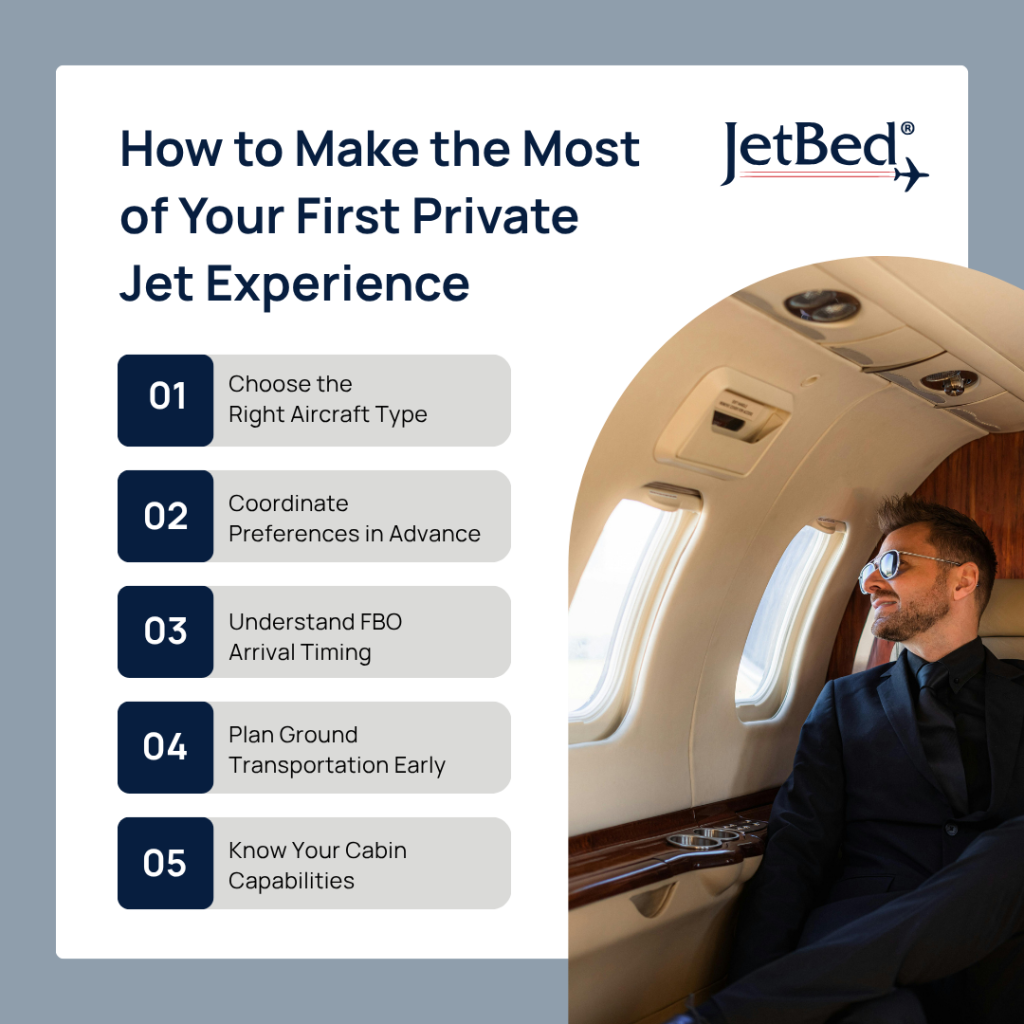
How to Make the Most of Your First Private Jet Experience
A little planning turns a good first flight into a great one. These steps help you get the full value of a private charter, especially on longer legs where rest becomes the priority.
Choose the Right Aircraft Type
Select an aircraft based on passenger count, luggage needs, and travel distance, not just luxury level. The right category keeps the trip comfortable without paying for a cabin you won’t use. If you’re planning a longer or overnight flight, it’s also worth considering the aircraft’s sleeping accommodations and overall cabin comfort.
Coordinate Preferences in Advance
Arrange catering, beverages, cabin setup, and special requests before departure. The more the crew knows ahead of time, the more effortless the flight feels once you board. More importantly, thoughtful planning before departure makes for a smoother, more comfortable experience.
Understand FBO Arrival Timing
Most passengers only need to arrive 15 to 30 minutes before takeoff, depending on the location. That short arrival window is one of the biggest conveniences of flying private, and it’s worth confirming with your operator. Arriving relaxed rather than rushed sets the tone for how the rest of the flight goes.
Are you unfamiliar with FBOs? Read our post, “What Is an FBO in Aviation? Key Services and Operational Benefits.”
Plan Ground Transportation Early
Coordinate pickup and drop-off so the transition between air and ground is seamless. A car waiting at the FBO keeps the whole trip moving without gaps. Coordinating transportation in advance keeps your trip running smoothly from departure to arrival.
Know Your Cabin Capabilities
Confirm Wi-Fi availability, seating configuration, and onboard work or rest options before flying. Knowing what your cabin can do lets you plan the leg around it, whether that means working through or sleeping across. For long-haul flights, the most important capability to confirm is whether you have a proper flat surface to sleep on, because that’s what decides how you feel when the doors open.
Create a seamless private jet experience by planning every detail in advance.
At its core, the private jet experience is about having greater control over how you travel. From your schedule and aircraft selection to your onboard environment, every detail is designed around your needs. With the right planning, your flight becomes more than transportation; it becomes a comfortable, productive part of the journey.
That’s where JetBed lives. As the industry leader in custom beds for private aircraft, we build a patented inflatable bed to the exact make, model, seat dimensions, and floor plan of your aircraft, so it sets up in minutes into a completely flat surface with no grooves or pressure points. Dressed in Milan linens and made in the USA, it’s the most comfortable way to fly.
When you’re ready to turn your cabin into a place you can lie flat and truly rest, see how a JetBed is built to fit your aircraft.
Gary Bosstick, Founder of JetBed