Houston, Texas, is one of the largest and busiest cities in the United States, welcoming approximately 54 million visitors annually. Between its global business presence, energy sector, and growing luxury travel market, the city sees a consistent flow of commercial and private aviation traffic.
To accommodate this, Houston is served by a large airport system that includes major international hubs, regional airport options, and several facilities dedicated to private and general aviation aircraft. However, for travelers, choosing the appropriate airport can make a significant difference in convenience, ground transportation time, and overall flexibility.
Below, we will discuss the most popular airports in Houston, Texas, across both commercial and private aviation. Through each option, we will explore its unique advantages, primary uses, and location within the greater Houston area. With this information, you’re better equipped to determine which airport will best suit your travel needs.
Airport convenience matters, but so does in-flight comfort. At JetBed, we developed a patented, custom-fit sleep solution that delivers a perfectly flat surface in just minutes. Space-conscious, lightweight, made in the USA, and complemented with luxury Italian linens, your flight to Houston can be just as enjoyable as the trip itself.

What Airports Are in Houston, Texas? Major and Private Airports
When traveling to Houston, Texas, you’ll find that the city boasts several major airport options. More specifically, each serves a different purpose within the city’s broader aviation network. For example, while George Bush Intercontinental Airport and William P. Hobby Airport both serve commercial travelers, one is significantly closer to downtown Houston.
Similarly, Houston Executive Airport and Sugar Land Regional Airport both accommodate private aircraft, though they differ in location, facility sizes, and FBO operators. Ultimately, these differences are essential when creating a seamless travel experience. Choosing the wrong airport in Houston can quickly result in unnecessary delays, limited flight availability, or minimal transport options.
Below, we will discuss how many airports Houston has and which are the most popular. Whether you’re traveling with United Airlines on an international flight or arranging private aircraft operations through a dedicated general facility, Houston offers several well-positioned options.
For additional information, review our guide, “Where Do Private Planes Land?” This can give you valuable insight into what to expect before booking travel.
How Many Airports Are in Houston, Texas?
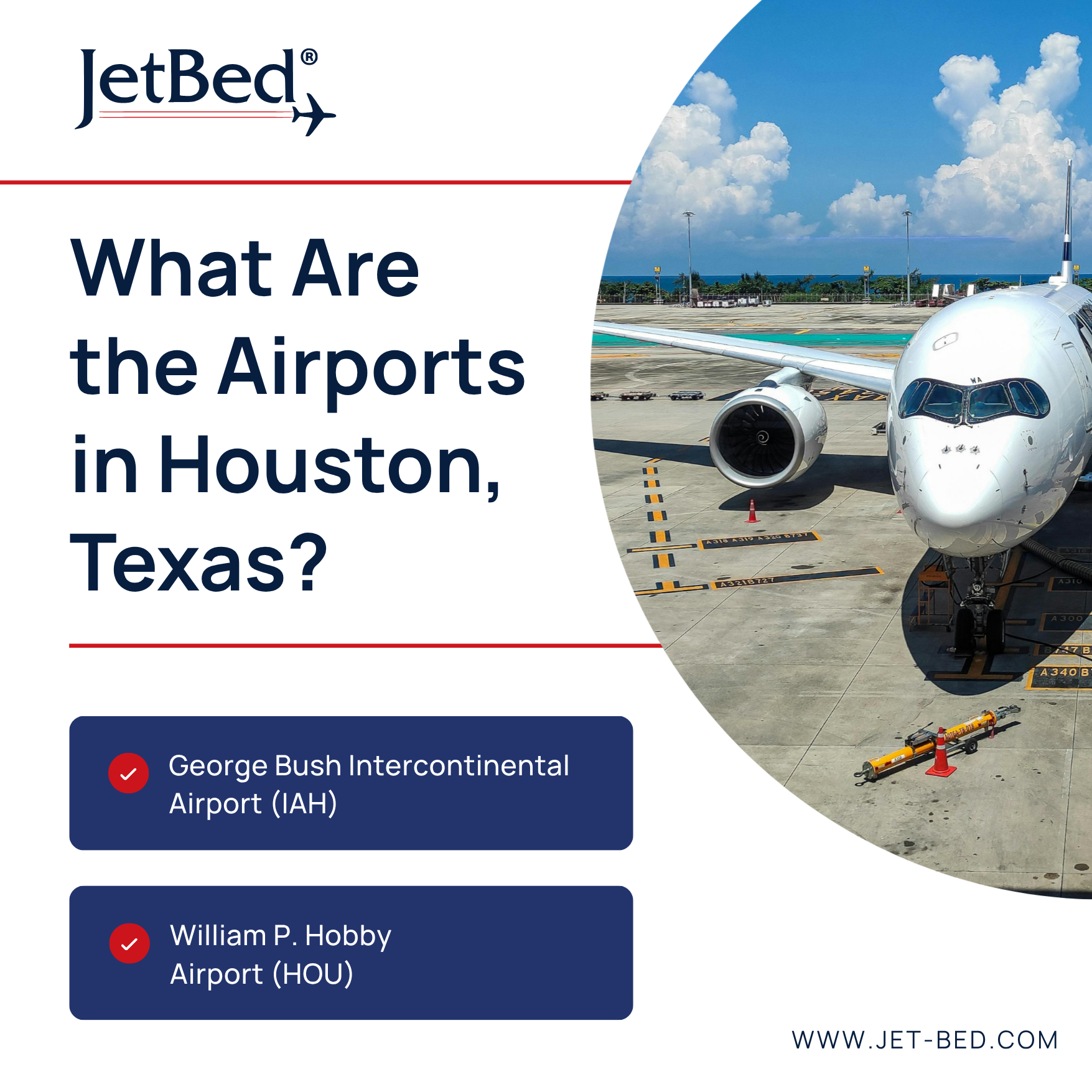
Houston has two major commercial airports and several smaller regional and private facilities throughout Southeast Texas. Most travelers arriving on scheduled airline service, such as flights operated by Delta Air Lines or Southwest Airlines, will use either George Bush Intercontinental Airport (IAH) or William P. Hobby Airport (HOU).
However, Houston also features multiple airports that specifically serve corporate and charter operations. In addition, many support FAA-certified flight schools, sophisticated avionics-based curricula, cargo travel, and maintenance operations.
For many, private aviation offers the most streamlined experience. Travelers often benefit from shorter taxi times, faster arrivals and departures, easier ground access, and more personalized services through private terminals and FBOs.
For a more comprehensive overview, review our guide, “What Is an FBO in Aviation? Key Services and Operational Benefits.” In this, you can better understand the full scope of what private airports offer beyond general travel services.
What Are the Airports in Houston, Texas?
George Bush Intercontinental Airport (IAH)
George Bush Intercontinental Airport (IAH) is the largest airport in Houston, Texas. Located approximately 23 miles north of Downtown, IAH handles extensive domestic and international flights across North America, Europe, Asia, and Latin America. More specifically, it serves as a major hub for United Airlines, featuring five terminals connected by an above-ground Skyway and below-ground subway. Here is a brief breakdown of what each terminal is used for:
- Terminal A: This terminal serves non-domestic carriers, including American Airlines, Delta Airlines, and Spirit Airlines. Additionally, it commonly serves international routes operated by Spirit.
- Terminal B: Dedicated to United Express, Terminal B handles regional and smaller domestic flights.
- Terminal C: This is the main hub for United Airlines domestic operations. Terminal C generally serves mainline flights as well as some partner connections.
- Terminal D: This terminal serves non-United international carriers, including Emirates, Air France, British Airways, and Air Canada.
- Terminal E: Serving United Airlines’ international long-haul flights, Terminal E provides gates for incoming international arrivals. This is standard across all carriers, including Air Canada, WestJet, KLM, and ZIPAIR.
Because of its scale, George Bush Intercontinental offers extensive amenities, including complimentary Wi-Fi, premium lounges, dedicated children’s play areas, pet relief areas, and over 50 dining and beverage outlets.
William P. Hobby Airport (HOU)
William P. Hobby Airport (HOU) is Houston’s secondary commercial airport, sitting approximately 11 miles southeast of Downtown. For travelers seeking closer proximity and quicker ground transportation, HOU remains an attractive option. Beyond convenience, however, Hobby Airport is a primary operating base for Southwest Airlines, offering extensive service throughout Texas and other major U.S. destinations.
While smaller than George Bush Intercontinental, William P. Hobby offers several unique amenities that set it apart from larger facilities. Its compact, easily navigable layout, for example, consistently results in shorter wait times and fewer crowds. Moreover, it was awarded the Skytrax 5-Star Rating for cleanliness, comfort, and staff service.
Due to its smaller size, travelers won’t find traditional airline lounges in larger airports such as IAH. However, the facility does offer complimentary Wi-Fi, local Texas cuisine, chapels, and a shoeshine service.
What Is the Main Airport in Houston, Texas?
The main airport in Houston, Texas, is Georgia Bush Intercontinental Airport (IAH). This facility handles the majority of Houston’s international flights and serves as one of the largest airline hubs in the Southern United States.
Additionally, as a major operational hub for United Airlines, the airport offers extensive nonstop connectivity both domestically and internationally. This extensive flight network ultimately makes it an industry-leading airline among both business and leisure travelers alike.
Beyond efficiency, many travelers appreciate its acclaimed amenities that many similarly-sized airports don’t offer. This includes local cuisine favorites, dedicated yoga studios, a productive shuttle system, and family-friendly services. Although IAH is considered a commercial airline, it accommodates general aviation just as effectively.
For those traveling outside of Houston, visit our guide, “Dallas Executive Airport Review,” for comparable options.
Private Airports in Houston, TX
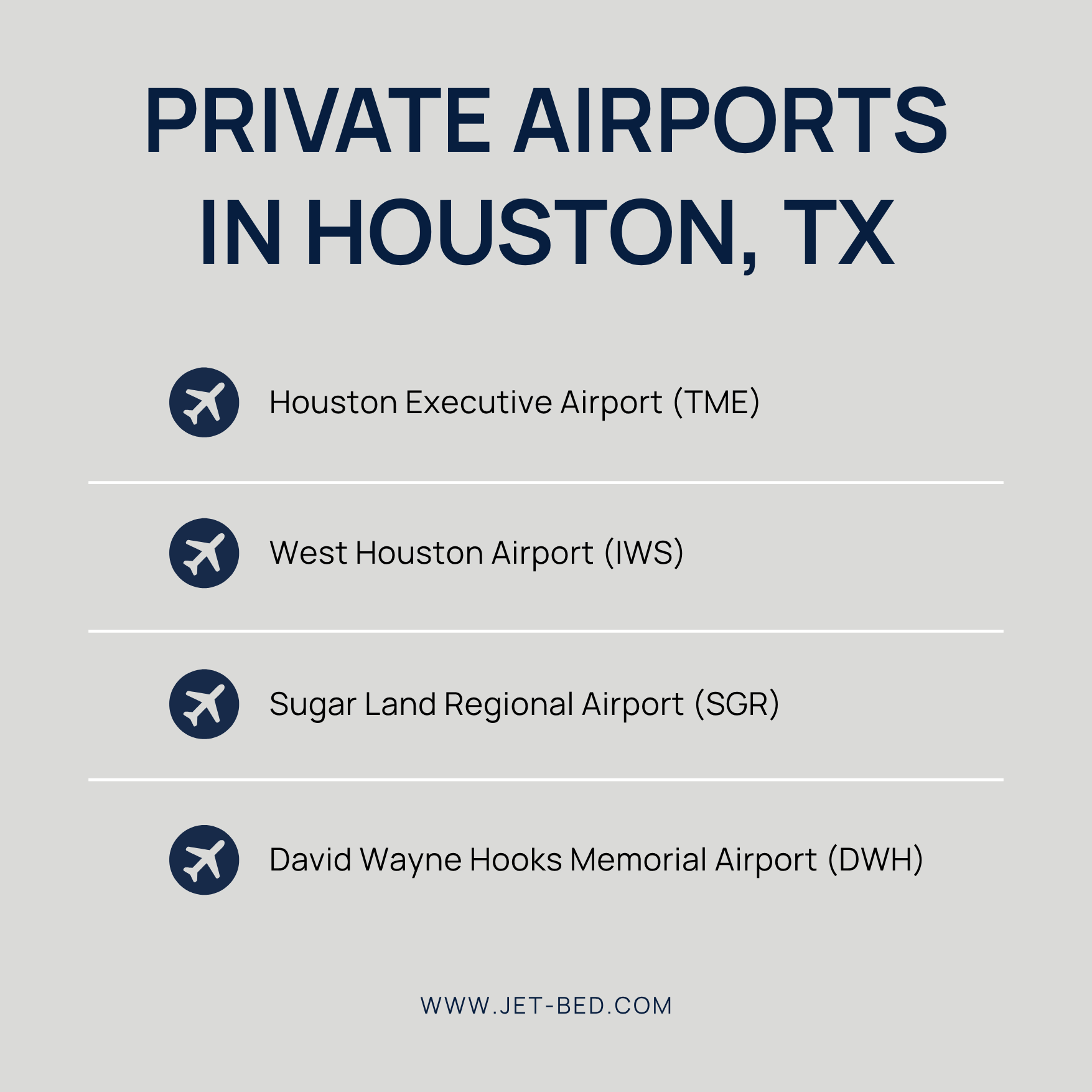
Houston Executive Airport (TME)
Houston Executive Airport was developed solely to serve private, corporate, and general aviation. Located approximately 25 miles from Downtown Houston, TME offers an unconstrained alternative to local commercial hubs.
While Houston Executive’s location is markedly farther from business hubs, its streamlined services compensate for the distance. Travelers can expect faster arrivals and departures, proximity to Interstate 10 for efficient access to Houston’s business districts, and convenient on-site transportation services.
Additionally, TME boasts Henriksen Jet Center—a full-service FBO that features crew lounges, executive conference rooms, and one of the world’s largest arrival canopies. For private travelers expecting both premium capabilities and efficient operations, TME remains a favorable choice.
West Houston Airport (IWS)
West Houston Airport is an exclusive general aviation facility 15 miles west of Downtown Houston. For travelers specifically prioritizing proximity, IWS is currently the closest general aviation airport to Downtown. This makes streamlined ground transportation considerably easier than comparable options.
Beyond location, West Houston features premium amenities for both passengers and flight crews. Many of these facilities include a luxury VIP terminal, a cinema room, a flight planning room equipped with weather stations, and on-site aircraft maintenance. Above all, IWS prioritizes quick “in-and-out” service.
Sugar Land Regional Airport (SGR)
Sugar Land Regional Airport is one of the most prominent private aviation airports in the greater Houston area. Located just 24 miles southwest of downtown, travelers can quickly access business hubs, the Energy Corridor, River Oaks, and the Galleria with minimal disruptions. Moreover, SGR is particularly popular among corporate and business travelers.
Sugar Land Regional’s FBO, GlobalSelect, is commonly rated among the best operators nationwide. This is showcased through the facility’s 20,000-square-foot terminal, premium lounges, private offices, conference rooms, expansive hangar space, and on-site U.S. Customs and Border Protection.
For private travelers seeking a more efficient alternative to the region’s larger commercial airports, SGR is a top choice.
David Wayne Hooks Memorial Airport (DWH)
David Wayne Hooks Memorial Airport, located 23 miles northwest of Houston’s business district, serves as a premier reliever for IAH. For private aircraft passengers, DWH prioritizes discretion, efficiency, and cost-effectiveness. More specifically, it’s substantially close to Downtown Houston without the congestion associated with commercial facilities.
However, David Wayne Hooks Memorial is known for far more than its performance. Their award-winning FBO, Gill Aviation, offers executive conference rooms, on-site dining through Aviator’s Grill, flight planning rooms, complimentary Wi-Fi, VIP passenger lounges, on-site rental cars, and premium concierge services.
Additionally, DWH is one of the few privately owned airports in the United States with an FAA-licensed Air Traffic Control Tower. Because of this, it serves as a crucial corporate, pilot-training, and military hub.
Choosing a designated Houston airport is an important factor in an overall seamless travel experience.
While Houston remains one of the busiest cities in the nation, their aviation infrastructure powers everything from global commercial routes to highly specialized private aviation operations. As a traveler, however, it’s important to understand each facility’s unique accommodations and location advantages. By doing so, you can create a seamless, enjoyable experience—both in-flight and upon arrival.
For passengers flying privately, comfort on the flights is equally important. JetBed designs patented in-flight sleep systems custom-fit for private aircraft cabins, helping travelers arrive more rested and prepared for demanding itineraries. To learn more, contact the JetBed team or fill out an online form today.