
When you step onboard a private jet or commercial aircraft, you may notice the wide variety of advanced systems and sophisticated equipment needed to safely transport passengers through the skies. From the navigation radios and autopilot computers to the emergency oxygen tanks and de-icing systems, there is no shortage of complex technology involved in aviation. However, not every single component needs to be 100% operational for a flight to take place.
Aircraft manufacturers recognize that, occasionally, minor items can fail inadvertently. With safety as the top priority, they have established Minimum Equipment Lists (MELs) that allow pilots and operators to determine if certain non-essential items can be inoperative without compromising the mission. In this post, we will explore the purpose of MELs and how they provide valuable guidance to the aviation industry.
While safety is, of course, the priority, what about comfort? Before we get started, have you been searching for the right tool to give comfort and rest while coursing through the skies? Well, don’t miss another good night’s sleep! Instead, invest in a Jetbed: The Most Comfortable Way to Fly. With Jetbeds to fit all major aircrafts and the highest quality linens, you can rest easy and without hassle wherever you go.
Let’s begin.

What is a Minimum Equipment List?
As mentioned earlier, a Minimum Equipment List, or MEL, outlines the specific equipment that may be inoperative on an aircraft and allowable dispatch conditions for safely conducting a flight with the deficiency. At its core, the MEL serves to maintain operational flexibility for pilots and operators while continuing to uphold crucial safety-of-flight requirements.
The MEL allows flights to proceed despite minor system malfunctions, reducing costly downtime and cancellations. This is especially valuable for private jet users and commercial operators who prioritize reliability. It also offers guidance for handling equipment failures in-flight, ensuring safe flight completion when conditions allow.
For pilots, having a standard MEL reference aboard acts as a valuable checklist during pre-flight inspections and technical log reviews. It allows quick confirmation on whether write-ups like inoperative cockpit lights, windshield rain repellents, or altitude-reporting transponders can be deferred, or require maintenance action prior to departure. In unforeseen inflight emergencies, pilots have a trusted procedure to analyze equipment faults against continued safe operation assessments.
MELs also assist maintenance personnel to determine appropriate aircraft release paperwork after repairs versus items needing a delay. Technicians are able to efficiently assess if deferring a fix is acceptable per the limitations specified by the MEL rather than grounding the jet. This proves important for flight department schedulers and owners needing reliable transport solutions.
Overall, the Minimum Equipment List supports the expert development of each aircraft model’s Master Minimum Equipment List (MMEL) published by manufacturers. It serves as a global standard for national regulators like the FAA to approve individual operator’s custom compliance with airworthiness requirements based on safety analyses factors like aircraft location, crew experience, area flying conditions, and more. In essence, the MEL is a dynamic, tailored roadmap for operational safety under non-normal but deferrable equipment defect situations.

When is the Minimum Equipment List Required?
There are a few key situations when referring to the MEL becomes necessary:
Pre-Flight Planning
During pre-flight planning and aircraft inspection, any inoperative items found are checked against the MEL to see if operation with that deficiency is permitted. As long as the conditions and limitations in the MEL are followed, the aircraft may legally be dispatched with items deferrable by the MEL.
En-Route Discrepancies
If a system breaks or becomes inoperative after departure, pilots can use the MEL to assess if the aircraft may continue to its destination as scheduled or needs to divert. Having a MEL onboard gives vital guidance on what failures the aircraft can tolerate.
Maintenance Delays
The MEL enables aircraft operators and maintenance crews to quickly assess if an aircraft with minor issues can safely return to service, giving them the green light to fix the problem at a later time. This prevents costly aircraft downtime.
Special Flight Authorizations
In rare situations, a national aviation authority may issue a Special Flight Permit allowing an aircraft with equipment beyond the MEL capability to fly under specified limitations for ferry or repair flights.
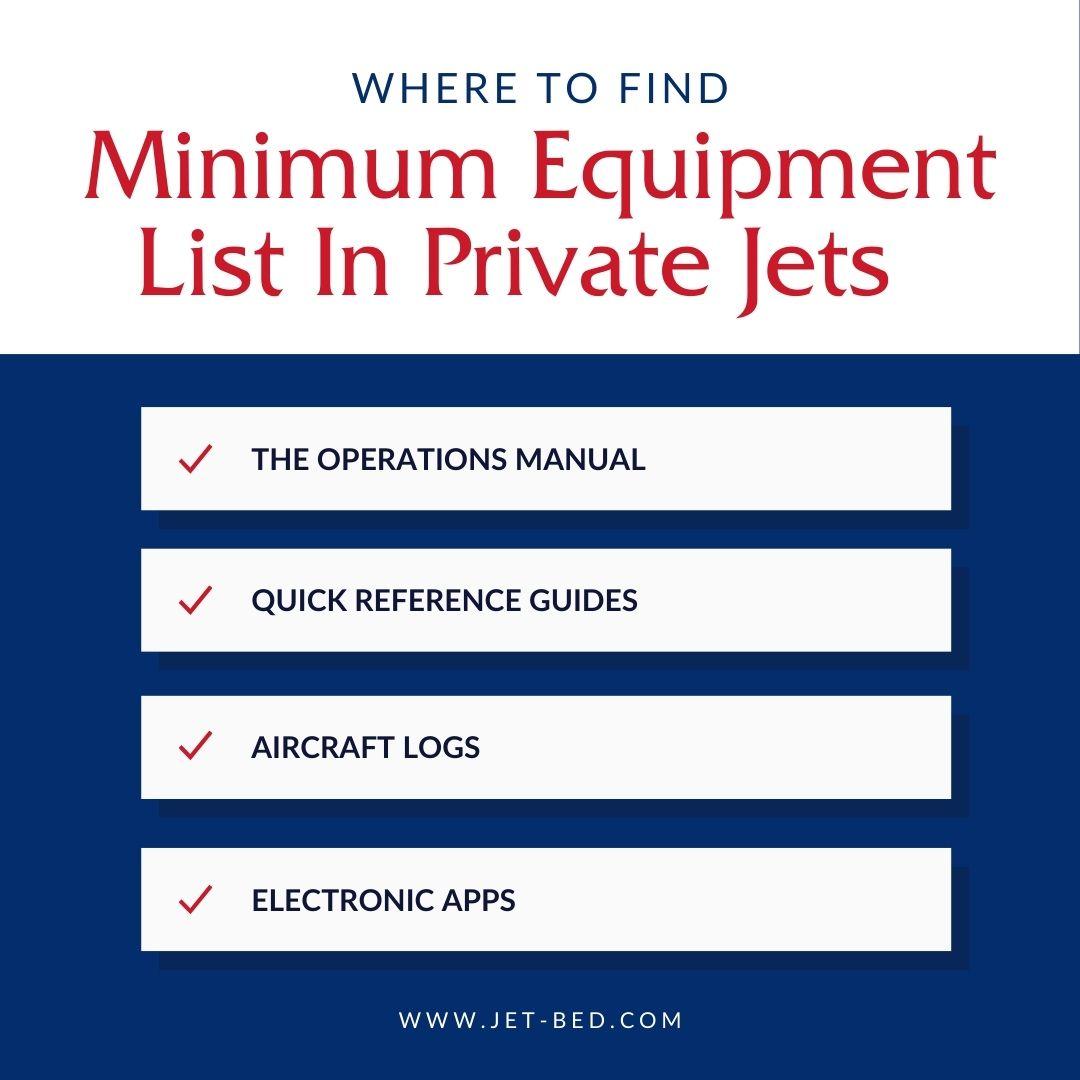
Where to Find Minimum Equipment List In Private Jets
In private jets and corporate aircraft, pilots can typically find the MEL in a few standard locations:
- The Operations Manual: The MEL approved for that specific aircraft registration number will be published in the company’s FAA-approved Operations Manual.
- Quick Reference Guides: Summary MEL guides are often kept as a quick reference in flight bags or near the dispatch office for preflight use.
- Aircraft Logs: The MEL status is documented in maintenance logs, journey logs, or flight manifests kept with the aircraft records.
- Electronic Apps: Some operators transitioned MELs to electronic flight bag applications for easy access anytime during a flight.
Minimum Equipment List outlines which non-essential aircraft systems may be inoperative during flight operations.
While a Minimum Equipment List provides flexibility, pilots must never compromise safety. Any operation with an inoperative item requires extra caution, planning and review of all procedures like in the flight manifest to catch less obvious impacts of known defects. Used correctly, the MEL is an important tool helping pilots and operators maintain high standards of safety while maximizing aircraft availability.
Now that you know what a Minimum Equipment List is, you can reference them at any time and enjoy peace of mind during your travels. Alongside, remember not to compromise or settle for less with your comfort in flight. Rest the right way with a Jetbed to ensure every minute spent in the air feels like you’re right at home.
For more information on aviation protocols, safety operations, aviation trends, and so on, kindly check our blog.