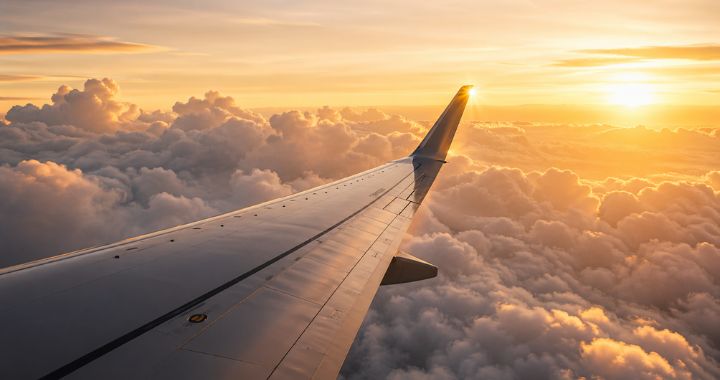
Cruising altitude is the phase of the flight during which most of the trip occurs. It is where speed, fuel efficiency, comfort, and cabin environment are all optimized. Most passengers are aware of takeoff and landing procedures. However, it’s the decisions made at the cruise level that directly impact the quality and efficiency of the flight.
What many often overlook is that cruising altitude is not a fixed number. It is carefully selected based on aircraft performance, weight, route, weather patterns, and air traffic control requirements. Pilots and operators consistently balance these variables to determine the most efficient and stable route for that specific flight.
To better understand the importance of this process, this post covers what cruising altitude is, how pilots select it, and why it matters for everyone on board. For private operators and flight department managers, understanding those variables is part of running an efficient operation.
Long flights are where cruising altitude and quality rest intersect. JetBed’s patented inflatable design creates a flat, comfortable sleeping surface in minutes. It’s custom-fit to your specific aircraft model, made in the USA, and finished with luxury Italian linens. Travel with JetBed—the comfortable way to fly.

What Is Cruising Altitude? Inside the Flight Deck
Cruising altitude is the height above sea level at which an aircraft flies for most of the flight. Pilots carefully select it by balancing fuel consumption, speed, weather conditions, and air traffic control requirements. The exact altitude depends on aircraft type, weight, and route.
At higher altitudes, thinner air reduces drag and lowers fuel burn. That same altitude puts the aircraft above most weather, which means smoother rides and more direct routing. For private operators, those factors translate directly into operating cost and passenger comfort.
Private jets frequently fly higher than commercial airliners. More specifically, commercial flights typically cruise between 35,000 and 40,000 feet. Aircraft like the Gulfstream G650 and Bombardier Global 7500 are certified up to 51,000 feet. The Cessna Citation Longitude tops out at 45,000 feet, while most light jets cruise in the high 30s to low 40s.
At cruising altitude, the cabin is pressurized to maintain a breathable and comfortable environment for passengers and crew. For a deeper look at how the body adjusts to altitude changes, read our guide “What Are the 3 Stages of Acclimation to High Altitude?”
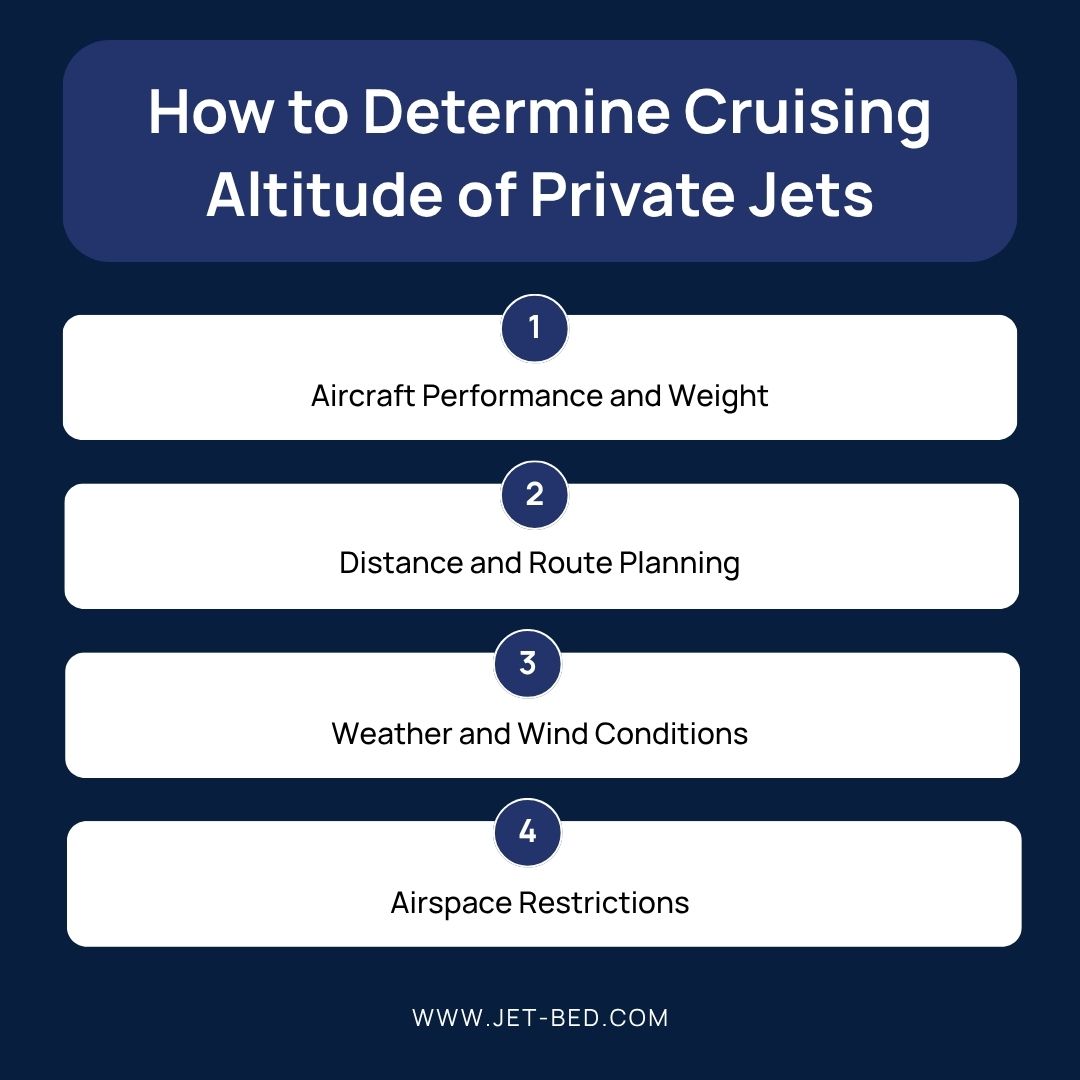
How to Determine Cruising Altitude of Private Jets
Aircraft Performance and Weight
Every jet has a certified service ceiling, but actual cruise altitude depends on the weight. A heavier aircraft cannot climb as high with the same available engine power. For example, a Phenom 300 departing with full fuel and a full cabin may level off at 41,000 feet early in the flight. As fuel burns off, the pilot can request a step climb to 43,000 or 45,000 feet to recover efficiency.
Distance and Route Planning
Short routes rarely justify a high cruise altitude. Climbing to 45,000 feet and descending again burns more fuel than it saves on a 300-mile leg. As a result, pilots on short routes often cruise in the low 30s or skip the optimal altitude entirely. However, on long-range and international flights, the calculus reverses—higher altitudes hold their efficiency advantage over hours, and the fuel savings compound accordingly.
Weather and Wind Conditions
Winds aloft can shift the optimal cruise altitude by thousands of feet. A strong tailwind at 39,000 feet delivers better fuel margins and a time advantage over a calmer ride at 43,000. When the aircraft has the performance, pilots also climb above turbulence, thunderstorm cells, and icing layers to keep the ride clean and the route direct.
Learn additional information about this concept in our post, “What Is Density Altitude?”
Airspace Restrictions
Air traffic control (ATC) assigns cruise altitudes based on traffic flow, direction of flight, and sector capacity. Eastbound traffic uses odd flight levels above FL290, whereas westbound traffic uses even ones. Restricted airspace, active military operations, and congested corridors can all force a crew to accept a lower altitude than requested.
Dive deeper into how direction affects flights in our guide “What Is the Difference Between Eastbound and Westbound Flights?”
How Fast Do Planes Go at Cruising Altitude?
Cruising speed varies by aircraft class. Light jets like the Phenom 300 cruise around 450 knots, or 520 miles per hour. Mid-size jets run closer to 470 knots, and large-cabin aircraft cruise between 488 and 516 knots.
Those figures describe true airspeed—the aircraft’s speed through the surrounding air mass. Ground speed determines actual travel time, and wind separates the two. The difference can be quite significant.
Jet stream cores over the North Atlantic and continental US regularly run 100 to 200 knots in winter. A G650 cruising at 488 knots true airspeed with a 150-knot tailwind moves over the ground at 638 knots. That can shave an hour off a transatlantic crossing. The same aircraft pushing into a 150-knot headwind drops to 338 knots over the ground—slower than many turboprops.
Pilots and dispatchers study upper-level wind charts before departure and adjust altitude or route to find the most favorable winds. That planning is why a New York to London flight takes six hours in one direction and eight in the other.
How Cold Is it at Airplane Cruising Altitude?
Air temperature at cruising altitude is well below what most passengers expect, averaging -70°F from 40,000 to 65,000 feet. The exact figure varies by latitude and season. However, the air outside the fuselage is always far below freezing once a jet reaches cruising altitude.
Aircraft manage these conditions through pressurization and bleed air systems. Hot air drawn from the engine compressors cools through heat exchangers. It is then routed into the cabin at a controlled temperature. The same system maintains cabin pressure at a simulated altitude—typically 6,000 to 8,000 feet on most jets.
Cabin comfort depends on more than temperature. Airplane pressurization affects how rested passengers feel on arrival. Humidity is also a factor—source air at altitude contains almost no moisture, which keeps cabin humidity low. Long-range jets add humidification systems to offset this, reducing the dry-cabin fatigue common on transoceanic flights.
The cabin environment directly affects how passengers arrive. JetBed’s patented design creates a flat, comfortable sleeping surface in minutes so you arrive at your destination well-rested.
How Long Does It Take to Reach Cruising Altitude?
Most private jets reach initial cruise altitude within 20 to 30 minutes of takeoff. Light and mid-size jets climb at roughly 3,000 to 4,000 feet per minute when light, with the climb rate decreasing as altitude increases. Large-cabin aircraft are strong climbers despite their weight. A Gulfstream G650 reaches 41,000 feet in roughly 18 minutes and can then continue to 51,000 feet on a step climb later in the flight.
ATC affects climb time as much as aircraft performance. Departures from busy airports like Teterboro or London Luton often involve altitude restrictions and holds at intermediate flight levels. A jet capable of reaching 43,000 feet in 20 minutes may spend 40 minutes getting there if ATC stages the climb.
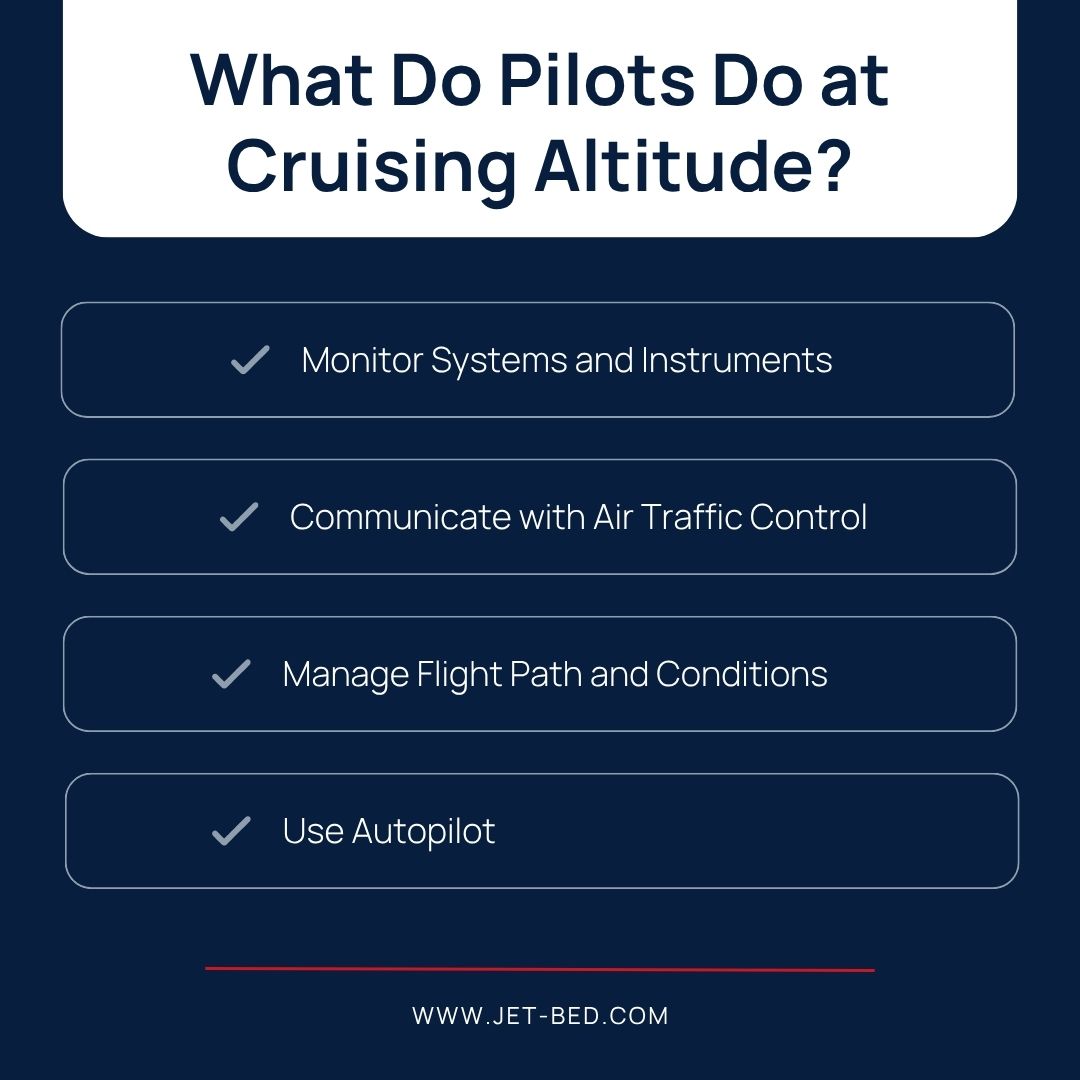
What Do Pilots Do at Cruising Altitude?
Monitor Systems and Instruments
At cruising altitude, pilots monitor engine parameters, fuel burn, pressurization, and electrical systems on a regular scan cycle. Modern flight decks, such as the Gulfstream Symmetry and Garmin G500, then consolidate that data. However, the crew still cross-checks values against the flight plan. Any deviation in fuel flow, oil temperature, or cabin pressure is investigated before it becomes a problem.
Communicate with Air Traffic Control
Pilots check in with each new ATC sector as they cross boundaries. This can sometimes be every 10 to 15 minutes on a busy route. They request altitude changes for ride quality or fuel efficiency and accept reroutes around weather. Additionally, pilots relay position reports on oceanic crossings where radar coverage ends.
Manage Flight Path and Conditions
The crew monitors weather radar, datalink updates, and pilot reports from aircraft ahead on the route. A line of thunderstorms 200 miles out requires a deviation request well in advance. Moreover, wind shifts at altitude can prompt a step climb or descent to find better fuel numbers.
Use Autopilot
At higher altitudes where the aircraft is at cruise level, the autopilot flies the aircraft coupled to the flight management system. It holds altitude, heading, and speed with a precision that cannot be matched manually over hours of flight. The pilots supervise the automation and verify that each waypoint sequence is correct. They remain ready to assume manual control if a system fails or conditions change, ensuring safety at all times.
For a deeper look at safety procedures during cruise flight, review our guide “Flight and Safety at High Altitudes.”
Find ultimate comfort at cruising altitude with JetBed’s patented design.
Cruising altitude is far more than a number on a flight display. It’s a dynamic, calculated decision that influences every aspect of the journey, from fuel efficiency and flight time to ride quality and passenger comfort. Understanding this, whether a traveler or operator, is efficient to a seamless, optimized journey.
Whether you’re cruising at 35,000 or 51,000 feet, rest is part of the operation. JetBed’s patented inflatable design is custom-fit to your specific aircraft model, lightweight, and easy to stow. Contact us to find the right JetBed for your aircraft today.