Ground effect is an aerodynamic phenomenon that pilots must pay serious attention to. Flying close to the ground introduces unique challenges that come with the cushion of air between your wings and the surface below.
Today, we will discuss the phenomenon of ground effect and explain how an understanding of its impacts can help ensure safe and efficient operations during take off and landing. We will explore why it is relevant to pilots, and techniques for controlling one’s aircraft as performance is altered within this domain.
But before you dive in, be sure to check out our range of JetBeds: made for passengers and pilots alike! Made in the USA, Jetbeds are the most comfortable way to fly!
Aviation Ground Effect: The Gist
Ground effect is a phenomenon that occurs when an aircraft flies close to the ground or over water, particularly when the aircraft wings are within one wingspan of the surface below. The cushion of air between the wing and the ground inhibits downwash or wingtip vortices rapidly spinning columns of air that trail behind the wingtips from forming. This disrupts the airflow below the aircraft in a way that increases lift and reduces induced drag.
At this low altitude, the proximity of the ground prevents the wingtip vortices from forming completely. Without these rapidly spinning vortices, the air pressure below the aircraft remains higher than it would be if the aircraft were higher in the air. The higher-pressure air provides additional lift, reducing the workload of the wings and improving low-speed maneuverability. However, it also reduces the aircraft’s controllability because the control surfaces are less effective in this dense cushion of air.
What Is Ground Effect In Aviation?
Ground effect is a phenomenon that impacts aircraft dynamics when flying at close proximity to the earth’s surface. The formation of wingtip vortices sheds light on the foundation of ground effect aerodynamics. As air passes over an aircraft’s wing, lower pressure is generated above while higher pressure persists below. This pressure differential is what creates the lifting force. However, a byproduct is the spinning columns of air, or vortices, that spill off the wingtips trailing behind in the sky.
At higher altitudes, these vortices have room to fully materialize undisturbed. But, when an aircraft descends nearer to the ground, the vortices are restricted from complete formation by the solid surface below. Instead of discrete columns, the downward airflow flattens and spreads across the ground plane. This disruption prevents the lower pressure from developing fully underneath the wing.
Interestingly, it is the resultant maintenance of higher air pressure below the aircraft that forms the basis for ground effect’s impact. With pressure still optimized, lift can be achieved with less effort from the wings. Less engine power is required to remain airborne or achieve faster speeds. Additionally, the stable air mass acts as an energy source that augments control surface authority for improved low-speed maneuverability.
The interplay between a wing’s output and its environment defines ground effect. While simple in essence, multiple aerodynamic mechanisms are at play. Pilots able to comprehend this interaction can harness the performance advantages, but must also respect how proximity to terrain alters the way in which the aircraft should be flown. In subsequent sections, we will delve deeper into ground effect’s implications for safety and flight operations.
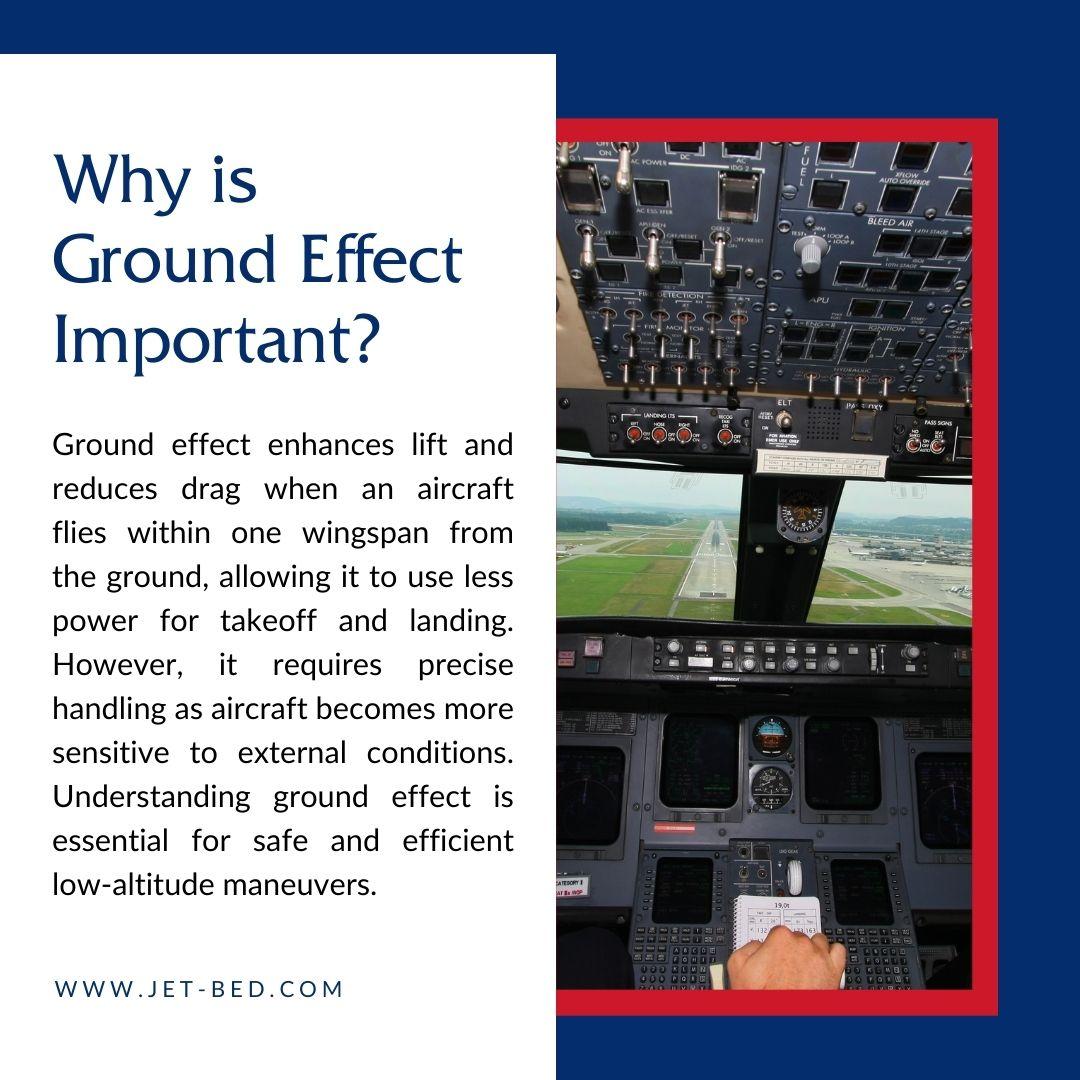
Why is Ground Effect Important?
Ground effect is important for pilots to understand due to its impact on aircraft performance and handling characteristics. When an aircraft flies within ground effect about one wingspan or less from the ground it experiences significant changes in performance and handling characteristics. For example, an aircraft in ground effect will typically need less engine power to maintain a given airspeed or altitude compared to flying higher above the ground. This is due to the increased lift and reduced drag provided by the stabilized air pressure below the wings within the ground effect zone.
The changes in forces when within ground effect also mean an aircraft can hover closer to stall speeds and have better short-field performance for critical flight phases like takeoff and landing. Shorter distances are necessary to transition from hover to forward flight and to decelerate and stop from a landing roll. However, while ground effect confers benefits, it also means the aircraft is subject to more variations in external conditions like terrain inconsistencies, other aircraft operations, and atmospheric influences very near to the earth’s surface.
Until pilots have taken the time to understand, recognize, and properly manage an aircraft’s transition into and out of the zone of influence of ground effect, it also poses handling and safety risks. Due to the disruptions in normal airflow, especially near boundaries, changes occur rapidly, which can challenge aircraft control if unanticipated. In low-altitude flight dominated by ground effect, keeping a sharp focus on altitude, performance, and tactile control feedback is essential. Experience flying an aircraft through differing ground effect strengths helps pilots optimally navigate the shifts for each phase of operation like takeoff, landing, and low altitude maneuvers.
What Causes Ground Effect?
Ground effect is caused by the disruption of wingtip vortices when close to the ground. As an aircraft’s wings generate lift, they also produce wingtip vortices. These vortices form due to the pressure differential created above and below the wing surfaces. Higher pressure exists below the wing, while lower pressure exists above. This differential is what generates the lifting force on the wings.
However, when an aircraft flies low to the ground, less than about one wingspan altitude, the proximity of the solid ground surface directly affects the natural formation of wingtip vortices. The ground’s close proximity restricts the usual downward and upward airflows that feed wingtip vortices, preventing them from fully forming as distinct spinning columns. Instead of being able to fully circularize into vortex tubes, the air flowing off the wingtips spreads out across the ground plane in thin sheets. This disruption to the typical vortex flow prevents the lower pressure from truly generating under the wings. Without the typical vortex wake structure establishing the pressure differential, the higher pressure from the air below the wing does not decompress downward as it normally would with increasing altitude.
As a result of this atypical airflow behavior very near to the ground, the pressure directly underneath the aircraft’s wings remains higher than it would be if formed wingtip vortices were present. It is this stabilized, higher air pressure under the wings within approximately one wingspan of the ground that leads to increasing lift experienced in ground effect. As pressure builds below the wings instead of decreasing, the airfoil shape generates lift with minimal effort. This enables aircraft performance advantages when operating close to the earth’s surface within the sphere of influence of the ground effect phenomenon.
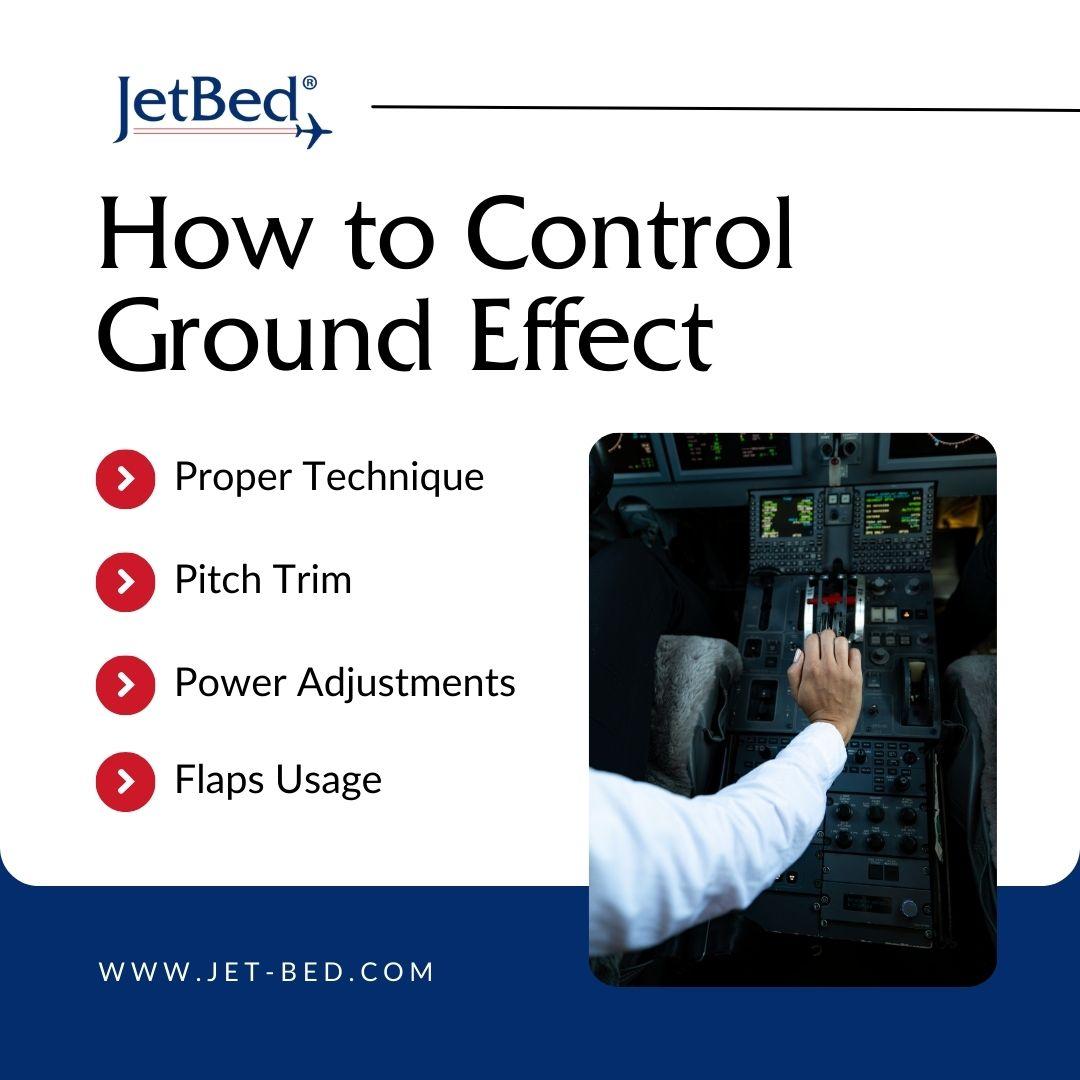
How to Control Ground Effect
Proper Technique
Keeping a consistent height when flying close to the runway helps pilots control the onset and dissipation of ground effect. Altitude shifts near the ground immediately affect handling, demanding swift adjustments to regain stability. Maintaining a steady altitude requires focus and precision control inputs.
Pitch Trim
As lift varies with ground effect, pilots may need to adjust pitch trim to maintain a constant glide path or altitude. Failure to re-trim can result in an unexpected change in performance that challenges aircraft control. Monitoring pitch attitude and adjusting trim responsively is key.
Power Adjustments
Ground effect lets an aircraft hold airspeed with less power, but power needs tight control to prevent a sudden drop or sharp climb as ground effect wanes. Smooth, timely power changes maintain control and stability during takeoffs and landings affected by ground effect.
Flaps Usage
High-wing aircrafts are more prone to ground effect influences. Deploying flaps both utilize the benefit of increased lift from ground effect and provide better control authority from the wing at lower airspeeds. Proper flap settings for conditions support stability, performance, and the smooth transition through changing ground effect levels.
What Does Ground Effect Feel Like?
While it’s commonly known that private jets typically fly higher, flying at low altitudes firsthand highlights the importance for pilots to understand its effects. Within ground effect, the aircraft almost seems to skim just above the ground. It glides with ease upon what feels like a thickened cushion of dense air wedged between the wings and the Earth’s surface below.
However, the feelings imparted through the flight controls also reveal ground effect’s transformation of typical handling responses. Vertical and lateral stick inputs feel sluggish and delayed, as if fighting against unseen forces. The jet’s control surfaces work harder to counter the dense, less responsive air resistance created by its close proximity to the ground. Pitch adjustments also require extra vigilance, as the aircraft’s attitude displays seem muted and less reactive to trim wheel movements compared to cruise flight aloft.
Power lever adjustments further display ground effect’s subtleties. Move the throttles in smooth, gradual arcs to prevent sudden performance shifts. Settling with the wings or excessively climbing from dissipating effect necessitate smooth, modulated engine interventions rather than quick snaps typically used in standard flight. Overall, the experience underscores why pilots must recognize they are flying an aircraft with temporarily altered dynamics until clear of ground effect’s sphere. Careful technique ensures maintaining equilibrium through transition phases near terrain.
Overall, the experience underscores why pilots must recognize they are flying an aircraft with temporarily altered dynamics until clear of ground effect’s sphere. Careful technique ensures maintaining equilibrium through transition phases near terrain. As with all phases of flight, maintaining exemplary tool control, as discussed in our post on “Importance of tool control in aviation”, is essential for pilots to seamlessly adapt their manipulation of engines and flight controls to varying aerodynamic conditions like those caused by ground effect.
Ground effect is an important aerodynamic phenomenon.
In summary, ground effect is an aerodynamic phenomenon that most aircraft experience to some degree when flying close to the ground. It produces an increase in lift and a reduction in induced drag. However, this cushion of air between the wings and the surface also impacts aircraft control and handling qualities.
Pilots must pay special attention when flying close to the ground to control the ground effect and ensure stability, performance, and safety throughout takeoffs, landings and low-altitude maneuvers. With experience and meticulous technique, they can manage the varying effects on their aircraft.
For more information on aviation protocols, safety operations, aviation trends, and so on, kindly check our blog. And, also check out our JetBed for all your private jet travels. Your jet seats can be as comfortable as your king-size bed at home, making in-air sleeping as relaxing as possible. With different options depending on the aircraft in mind, JetBed is a must-have for a blissful rest.