When flying privately, safety processes are the cornerstone of aviation—especially on long-haul flights. To uphold these protocols, however, cabin crews and flight attendants must ensure they get sufficient sleep. Rest is a vital aspect for maintaining safety, service, and attentiveness throughout the journey.
While passengers are focused on comfort and entertainment, flight attendants remain alert to respond to their needs, monitor the passenger cabin, and uphold strict safety standards. This becomes especially demanding on flights that cross multiple time zones.
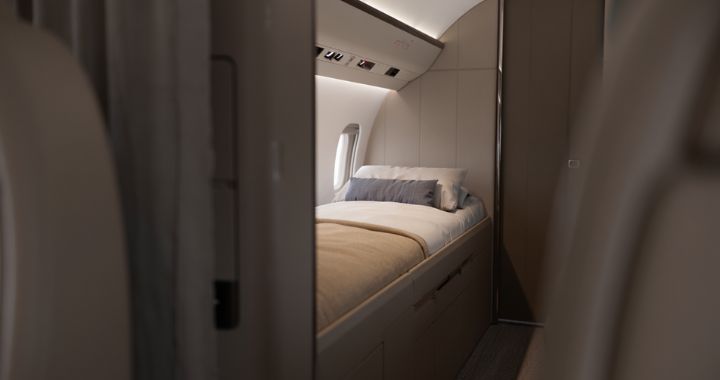
Many travelers are surprised to learn that there are structured crew rest areas onboard, often in discreet locations. Therefore, in this guide, we will discuss exactly how and where flight attendants sleep on long-haul flights. We’ll also explore how rest breaks work and what accommodations exist to ensure operational efficiency.
For passengers, crew members, flight attendants, and pilots, proper rest remains an imperative aspect of private aviation. After years of engineering, JetBed developed an exclusive sleep solution thatdeliverswhat no other in-flight bed can: a perfectly flat sleep surface,custom-fit to aircraft models. Don’t compromise—allow your rest to be as seamless as your journey ahead.

Where Do Flight Attendants Sleep on Long-Haul Flights?
If you’ve ever wondered how the cabin crew and flight attendants manage to stay energized throughout the duration of travel, you are not alone. While seemingly minor, proper rest is one of the most pivotal factors in safe, efficient flights—and in providing bespoke services.
Sleep on long-haul flights for both cabin crews and flight attendants is strictly regulated and supported through rigorous onboard procedures. Where they sleep, however, can vary depending on aircraft type and size. Therefore, in this post, we’ll explore whether flight attendants are allowed to sleep, how they schedule rest breaks, and where the rest areas are hidden throughout the plane.
Are Flight Attendants Allowed to Sleep?
Yes, flight attendants are absolutely allowed to sleep. And on long-haul flights, rest is typically required. The Federal Aviation Administration (FAA) originally mandated flight attendant rest in 1994 to support safety and reduce fatigue. However, these early regulations established baseline rest requirements, allowing limited flexibility under specific circumstances.
In 2018, the FAA released the Reauthorization Act—a public law that addresses regulatory oversight within aviation. In addition to passenger rights and environmental measures, the act also mandated non-reducible rest periods. More specifically, the FAA upholds various stringent regulations regarding flight attendants and rest periods, including:
- 10-Hour Rule: Flight attendants must receive a minimum of 10 consecutive hours of rest following a duty period of 14 hours or less.
- No Reduction: There is an explicit prohibition of reducing the rest period for any reason.
- Longer Rest Periods: If the flight attendant’s duty period surpasses 14 hours, they must receive a required rest period of 12 consecutive hours.
- Weekly Rest: If a flight attendant works 7 consecutive calendar days, they must receive at least 24 consecutive hours of rest.
14 CFR 121.467 covers all additional information applicable to rest periods. Moreover, in respect of aircraft size and passenger count, safety regulations also demand multiple flight attendants for long-haul flights.
To learn more, view our guide: “How Many Flight Attendants Are on a Plane?” Here, we discuss the differences in requirements between private and commercial travel, as well as the operational necessity for additional crew and attendants.
You may also be interested in “How Often Do Flight Attendants Work?” where we discussed about work schedule and shifts.
How Do Flight Attendants Sleep?
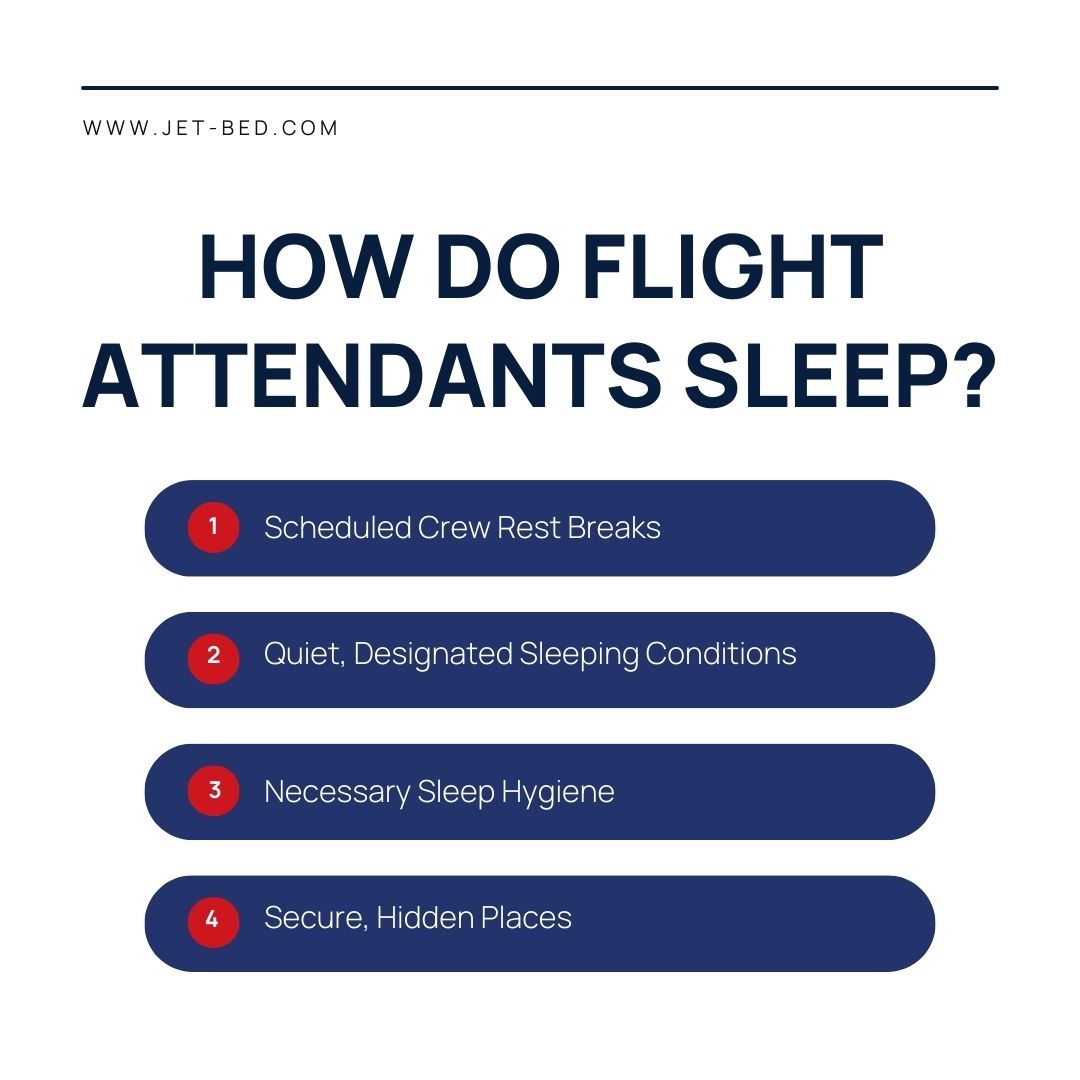
Scheduled Crew Rest Breaks
An in-flight break is significantly different from those mandated by the FAA standards discussed above. In light of this, during a long-haul flight, flight attendants rest during scheduled, rotating breaks. Additionally, depending on the length of the trip, these breaks can range from 90 minutes to 4 hours.
Most importantly, crew rotation is essential during this process. Scheduled alternations ensure that both crew and flight attendants are always readily available for both pilots and passengers. If you’re interested in learning more, visit our post, “How Does a Flight Attendant Schedule Work?”
Quiet, Designated Sleeping Conditions
Private aircraft are known for enhanced privacy and a quieter cabin environment—especially compared to commercial travel. This is often due to a smaller cabin, thoughtful engine placement, advanced soundproofing materials, and overall lower in-cabin noise levels.
Considering this, it’s much easier for flight attendants to sleep soundly even on smaller aircraft flights. Nonetheless, attendants will rest in spaces separate from passenger cabins, both for discretion and for optimal noise reduction.
Necessary Sleep Hygiene
When flight attendants rest on long-haul flights, sleep hygiene is non-negotiable. They will often bring essentials such as darkening eye masks, noise-canceling headphones, and melatonin supplements.
Additionally, if the aircraft has them, crew rest areas also incorporate dimmable lighting or small reading lights into each bunk. Not only does this promote better sleep cycles, but it also creates a functional environment for rest without disrupting other crew members.
We discuss similar information in our post, “Airplane Sleeping Hacks.”
Secure, Hidden Places
As we will discuss further below, crew members and flight attendants rest on long-haul flights in various locations. Ultimately, however, the specific location depends entirely on the type of aircraft used during each flight.
Smaller and mid-size jets, for example, generally do not have a dedicated rest area as there is a lack of room. In comparison, long-range jets or those with larger galleys do have additional space for certified rest areas. In either case, a flight attendant will sleep in areas hidden from passengers, irrespective of aircraft size.
If you’re planning for future travel, you may find these guides helpful: “Private Jets with Showers” and “The Best Private Jets for 20 People.”
Where Do Flight Attendants Sleep on a Plane?
Where flight attendants sleep on an aircraft depends on the jet size and whether it’s commercial or private. However, most long-haul flights include dedicated rest areas, some of which include:
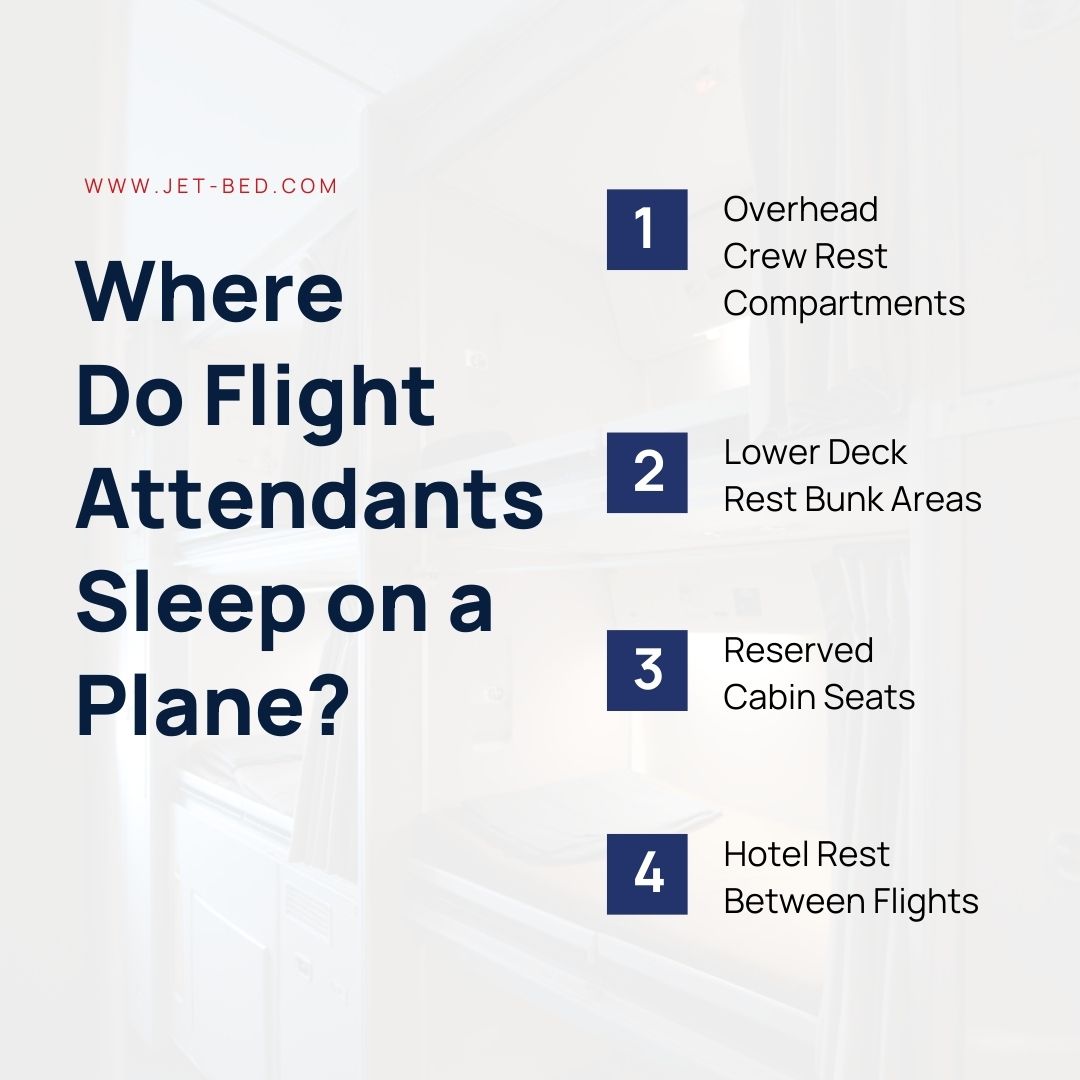
Overhead Crew Rest Compartments
Many ultra-long-range private jets, including the Gulfstream G700 and Bombardier Global 8000, feature secret rest areas. These spaces allow flight attendants to rest comfortably during extended flights. Commonly located in the “crown” or above the main cabin, these rest areas are also accessible via hidden, easily concealable stairs.
Additionally, depending on the aircraft model, compartments can feature 6 to 10 bunks, 2 business-class seats, and 2 berths. Each bunk is equipped with a seatbelt, emergency oxygen system, smoke detection, interphone, power outlet, reading light, bedding, and privacy curtain.
Both inconspicuous and comfortable, overheard crew rest compartments allow flight attendants to achieve proper rest without disrupting the passenger cabin.
Lower Deck Rest Bunk Areas
Some private jets, such as the Dassault Falcon 7X, feature lower deck rest bunks rather than overhead compartments. This isn’t necessarily due to a lack of space, but instead, a strategic design choice that preserves a spacious passenger cabin.
Additionally, this space allows attendants to rest without light pollution or additional noise from galley disruptions. Featuring 6–8 stacked beds, crews and attendants have access to bedding, reading lights, power outlets, and required safety equipment. This area, located near the cargo compartment, is windowless and sound-insulated, and is accessible via a private ladder.
Reserved Cabin Seats
On long-haul flights that lack additional space for full bunk accommodations, airlines may designate specific seats for rest breaks. Aircraft models that prioritize this feature include mid-size to super-mid size jets, such as the Hawker 800XP/900XP.
These cabin seats are hidden from view and in restricted-access only spaces, typically in the front of the cabin area near the main entrance. Additionally, attendants can often convert these seats into flat or near-flat beds, entirely out of the passenger’s view.
Hotel Rest Between Flights
For multi-day trips, flight attendants will instead rest at a hotel arranged by the operator or airline. Doing so allows them to achieve their mandatory rest period in a quiet, uninterrupted space. Additionally, some airlines will often place attendants within the same quiet, designated floor to streamline operations.
While not always necessary, especially after the flight has disembarked passengers, this is often the safest and most cost-effective option. Many flight attendants even prefer these additional amenities rather than boarding an immediate flight back home.
We discussed this concept at length in our post, “Do Flight Attendants Get Free Hotels?”
Flight attendants sleep in designated areas during long-haul travel to ensure they remain fully prepared to maintain onboard safety.
In private aviation, safety and white-glove service are among the most defining factors in the field. Long-haul flights and extensive international travel are no exception. To uphold these standards, flight attendants must ensure they receive proper, regulated rest. Additionally, the FAA maintains stringent regulations to protect the safety of both attendants and passengers.
Quality rest is the foundation of all we do at JetBed, where precision engineering meets artisanal craftsmanship. Made in the USA and complemented with luxury Italian linens, JetBed is a uniform sleep solution designed to enhance every private travel journey—from start to finish. Contact the JetBed team today to learn more!