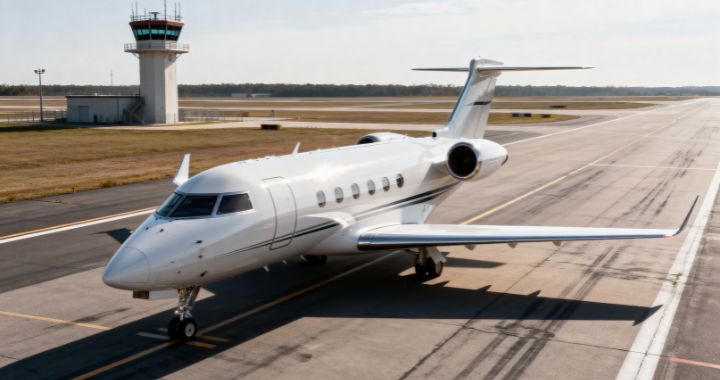
The world of private aviation is grounded in convenience, flexibility, and a level of luxury that commercial airliners simply cannot rival. However, it’s not uncommon to still experience significant delays or cancellations.
Multiple factors can influence timing and disrupt even the best-planned flight itineraries. Whether it’s due to weather or congested air traffic control systems, it’s a challenging obstacle for all involved—passengers, crew members, and pilots.
Ultimately, understanding common contributors can help all involved plan accordingly. In today’s post, we will explore the primary causes for delayed flights in private aviation. Additionally, we’ll discuss how to manage both delays and cancellations swiftly and effectively.
Flight delays can cause considerable stress, especially in time-sensitive circumstances. In light of this, in-flight rest is essential for restoration and relaxation. At JetBed, our patented, custom-fit system transforms cabins into fully flat, hotel-quality sleep spaces. With U.S. manufacturing and premium Italian linens, sleep has never felt so luxurious.

Why Are Flights Delayed for Private Planes?
Adverse Weather Conditions
Bad weather is one of the top contributors to flight delays—even for private aircraft. While it’s not uncommon to fly through rain and heavy cloud cover, particular weather conditions can affect visibility and runway safety. Ultimately, this compromises flight security for all on board.
To ensure optimal safety, pilots will use both VFR and IFR operations. Nonetheless, under FAA rules 14 CFR (e.g., § 91.155, § 91.157, § 135.223), operators must ensure minimum visibility, cloud clearance, and alternate reserves based on weather forecasts.
Delays due to weather can vary from 15 minutes to several hours, depending on severity. To learn more, visit our posts: “Are Flights Cancelled During Tropical Storms?” and “Can Planes Fly in Thunderstorms?”
Air Traffic Control System Congestion
Private jets rely on air traffic control (ATC) systems for takeoffs, landings, and navigation. However, there are many factors that can result in lengthy delays. For example, high traffic volumes, especially during peak travel seasons, create high demand across the United States.
Additionally, internal disruptions, such as staffing shortages or outdated technology, can also lead to delays. Operators can streamline this process by effectively communicating with ATC advisories and adjusting the flight schedule accordingly.
For more information, review: “What Does ATCM Stand for in Aviation?”
Unforeseen Aircraft Maintenance
As discussed in “Private Plane Maintenance,” routine upkeep is crucial for the longevity of aircraft. While this occurrence is generally scheduled, private jets still encounter unforeseen challenges.
Maintenance may include engine checks, avionics inspections, or minor mechanical repairs. However, under CFR Part 43, the aircraft may be turned to service only after procedures have been performed. Furthermore, an aircraft mechanic with Inspection Authorization must clear the aircraft and deem it safe for operation.
In such cases, delay times vary and may range anywhere from 45 minutes to several hours. In certain situations, passengers may receive accommodations, such as an alternative flight or revised itinerary.
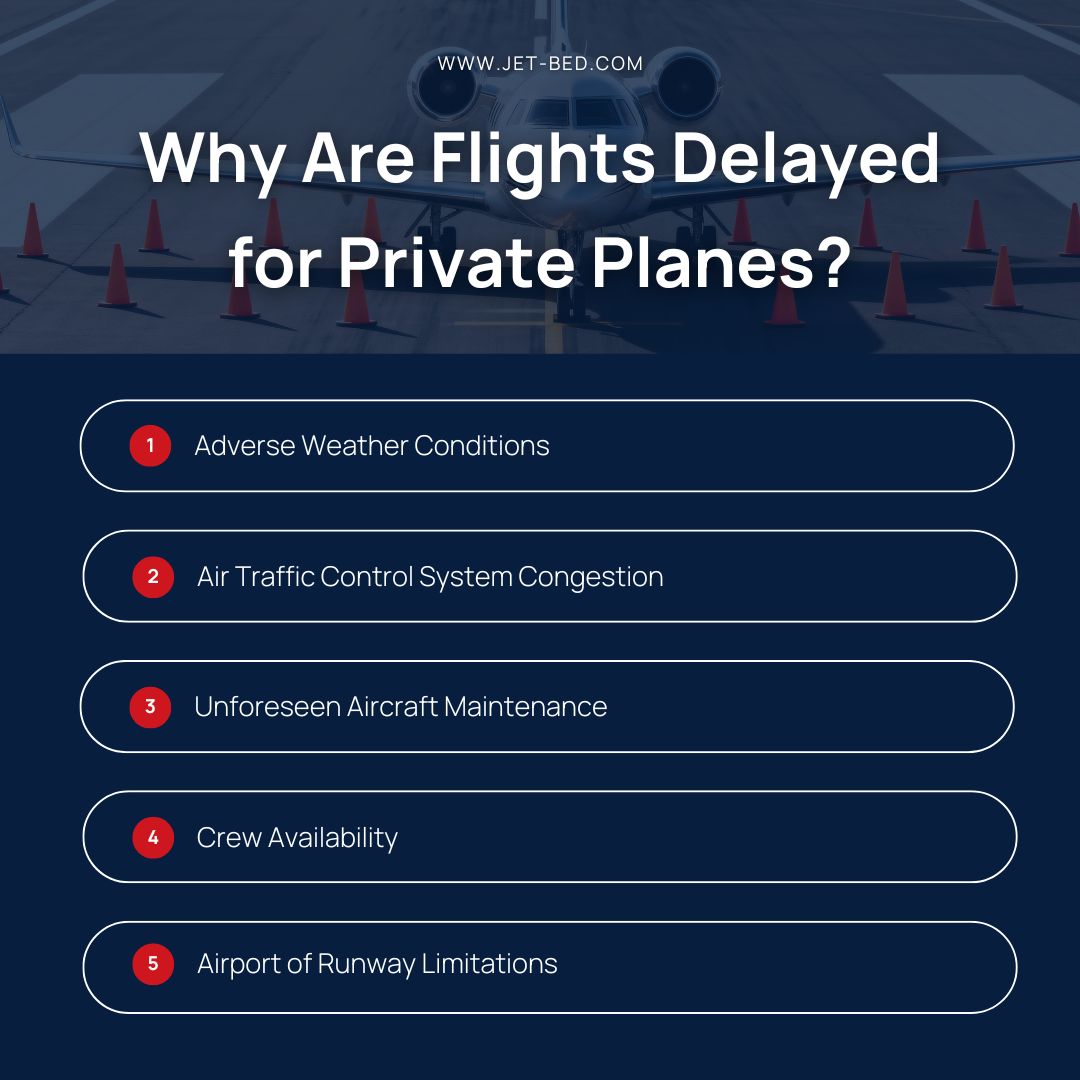
Crew Availability
The FAA enforces extremely strict duty and rest regulations for both flight attendants and additional crew members. Ultimately, this is a zero-tolerance policy designed to prevent dangerous levels of fatigue. Therefore, delays can occur if a crew is not immediately available.
However, these delays are generally predictable and preventable. Private jet management works to mitigate any overlapping duties before they become a full-scale challenge.
Learn more in: “How Many Hours Does a Flight Attendant Work?” and “How Does a Flight Attendant Schedule Work for Private Planes?”
Airport of Runway Limitations
One of the many luxuries of chartering a jet is seamless access to more remote or quieter runways. That said, runway closures, construction, or other operational constraints can still result in delays.
In most cases, these situations are resolved quickly, with delays averaging around 30 minutes. Nonetheless, this is why clear communication with ATC and expert-level logistics is critical for jet operators.
Can You Get Compensation for Delayed Flights?
According to the U.S. Department of Transportation, there are no federal requirements for airliners to compensate passengers for delayed flights. This includes charter services, as DOT regulations only guarantee compensation for flight cancellations—not delays.
Likewise, the Federal Aviation Administration, which governs charter operations (Part 135) and fractional ownership (Part 91 Subpart K), outline safety and operational requirements. However, they do not mandate compensation for delays.
Contrary to popular belief, the same regulators apply to commercial airlines. However, rules are more stringent in private aviation, as travel is considered a private contract rather than public transportation.
Furthermore, because they are not federally mandated, individual private charter operators determine reimbursement qualifications, often setting policies contractually.
How to Get Compensation for a Delayed Flight
If you are entitled to compensation, it will specifically outline this factor in your contract. More specifically, under 14 CFR § 380.32, the operator-participant contract must explicitly state what the operator is required to do in the event of a delay or cancellation.
Depending on the circumstance, operators may provide partial refunds, credit for future flights, or alternative arrangements. It’s essential to review terms and agreements in advance and coordinate with your charter operator or service provider.
To learn more, visit: “What Is Private Aircraft Management?”
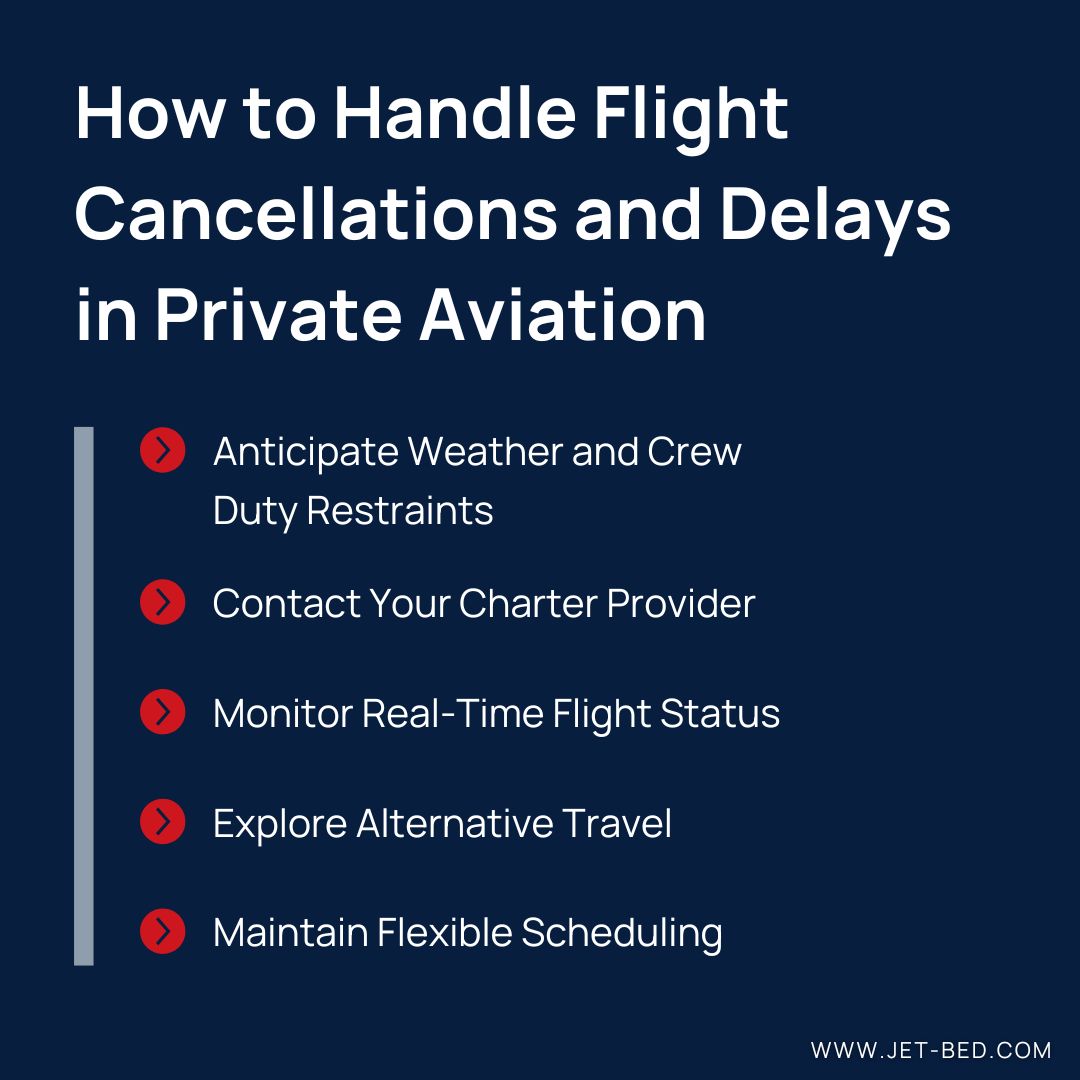
How to Handle Flight Cancellations and Delays in Private Aviation
Anticipate Weather and Crew Duty Restraints
As mentioned previously, weather is one of the most common causes of flight delays and cancellations. However, unfortunately, weather conditions can often be extremely unpredictable. Rather than braving the storm, the FAA requires airlines to remain grounded until the atmosphere is fully safe for travel.
Contact Your Provider
Clear communication with the charter operator or broker is essential—especially if and when delays occur. Your provider will have the most up-to-date information regarding crew readiness, aircraft timing, and operational adjustments. Reach out early to receive realistic estimates.
Monitor Real-Time Flight Status
While many passengers may be unaware, they’re always permitted to monitor real-time flight statuses and plan their next steps. Many tools will explicitly state departure times, runway availability, and potential delays. Staying updated with this level of information allows passengers to stay alert and plan ahead.
To learn more, visit our post: “How to Track Private Jets.”
Explore Alternative Travel
When meeting with charter brokers, we highly recommend hiring one that offers standby solutions in case of delays. More specifically, operating with standby aircraft and an additional crew is a core principle of effective service. Without it, passengers may then have to figure out alternative travel options on their own.
Maintain Flexible Scheduling
Delays can become incredibly problematic, particularly for corporate travelers or executives rushing to meetings or events. However, it’s essential to build in additional buffer time to the itinerary. Doing so ensures that, even with delays, you will still reach your destination with ample time to spare.
With the right planning, even unexpected delays can become manageable.
Flying privately is a superior method of travel—one that offers unparalleled convenience, flexibility, and comfort. Even so, delays and the challenges that prompt them are inevitable. However, understanding why delays happen and having applicable strategies to manage each situation is essential.
After a long day of waiting for a delayed aircraft, in-flight rest becomes essential. At JetBed, we recognize that restorative rest shouldn’t be a luxury—it should be a requirement. With our inflatable, custom-fit design, passengers can effortlessly transform a spacious cabin into a hotel-quality oasis. Contact us today to learn how you can upgrade your private flight experience.