
Flying on a private jet is the epitome of luxury and convenience. Instead of dealing with the crowds, long security lines, and rigid schedules of commercial airlines, private jet passengers enjoy a tailor-made flying experience catered to their every need. A key part of this elevated service is the team of flight attendants on board.
Flight attendants for private jets have a very different work schedule and responsibilities than their commercial aviation counterparts. While commercial flight attendants are often assigned to specific routes and bound by fixed schedules, private jet attendants must be prepared to adapt to the dynamic and often unpredictable nature of private flight operations.
In this post, we’ll look at how exactly scheduling works for flight attendants on private jets, the flexibility they can enjoy, and what it takes to break into this exciting side of the aviation industry.
But before you dive in, be sure to check out our range of JetBeds to get the most out of your private jet experience. JetBeds are made in the USA and are absolutely the most comfortable way to fly private! Plus, it’s the perfect tool to fight pilot flight fatigue. Don’t fly without one!

How Does A Flight Attendant Schedule Work for Private Planes?
The needs and preferences of their clients largely dictate the schedule of a private jet flight attendant. Unlike commercial flights that operate on a fixed schedule, private jets can be chartered to fly on-demand, often with little advance notice. This means the flight attendant’s schedule is highly variable and dependent on the travel plans of the private jet owners or charter customers.
Typically, private jet flight attendants are part of a larger cabin crew that may include multiple attendants, a chef, and even a butler. The size of the flight crew will depend on the size and configuration of the aircraft, as well as the number of passengers.
Some key differences in the schedule of a private jet flight attendant versus a commercial airline flight attendant include:
- Unpredictable schedules: Private jet flight schedules can change at a moment’s notice, requiring attendants to be flexible and responsive.
- Longer duty days: Private jet attendants may work 12-hour days or more, depending on the flight plan.
- Overnight stays: When traveling long distances, private jet attendants may need to stay overnight at the destination, rather than returning home.
- On-call availability: Attendants may need to be on-call and ready to fly at any time, sometimes with little advance notice.

Can Flight Attendants Choose Their Schedule?
Yes, private jet flight attendants have a certain level of flexibility and control over their schedules. Unlike commercial airline flight attendants, who follow a fixed schedule assigned by their employer, private jet attendants have more autonomy in deciding when and how often they work.
Many private jet companies and charter operators allow their flight attendants to essentially “bid” on trips or flights that fit their availability and preferences. Attendants can choose to work as much or as little as they like (within reason, of course). This allows them to maintain a better work-life balance and accommodate other commitments, such as family responsibilities or outside employment. Experienced attendants with niche skills (e.g., multilingualism, sommelier training) can leverage their expertise to secure preferred clients or set boundaries around their work hours.
That said, private jet companies do need reliable and consistent crew members to ensure their operations run smoothly. So while attendants have more scheduling flexibility, there is still an expectation that they will make themselves available for a minimum number of hours or trips per month. The specific requirements can vary by employer, but it’s not uncommon for private jet attendants to work 10-15 days a month on average.
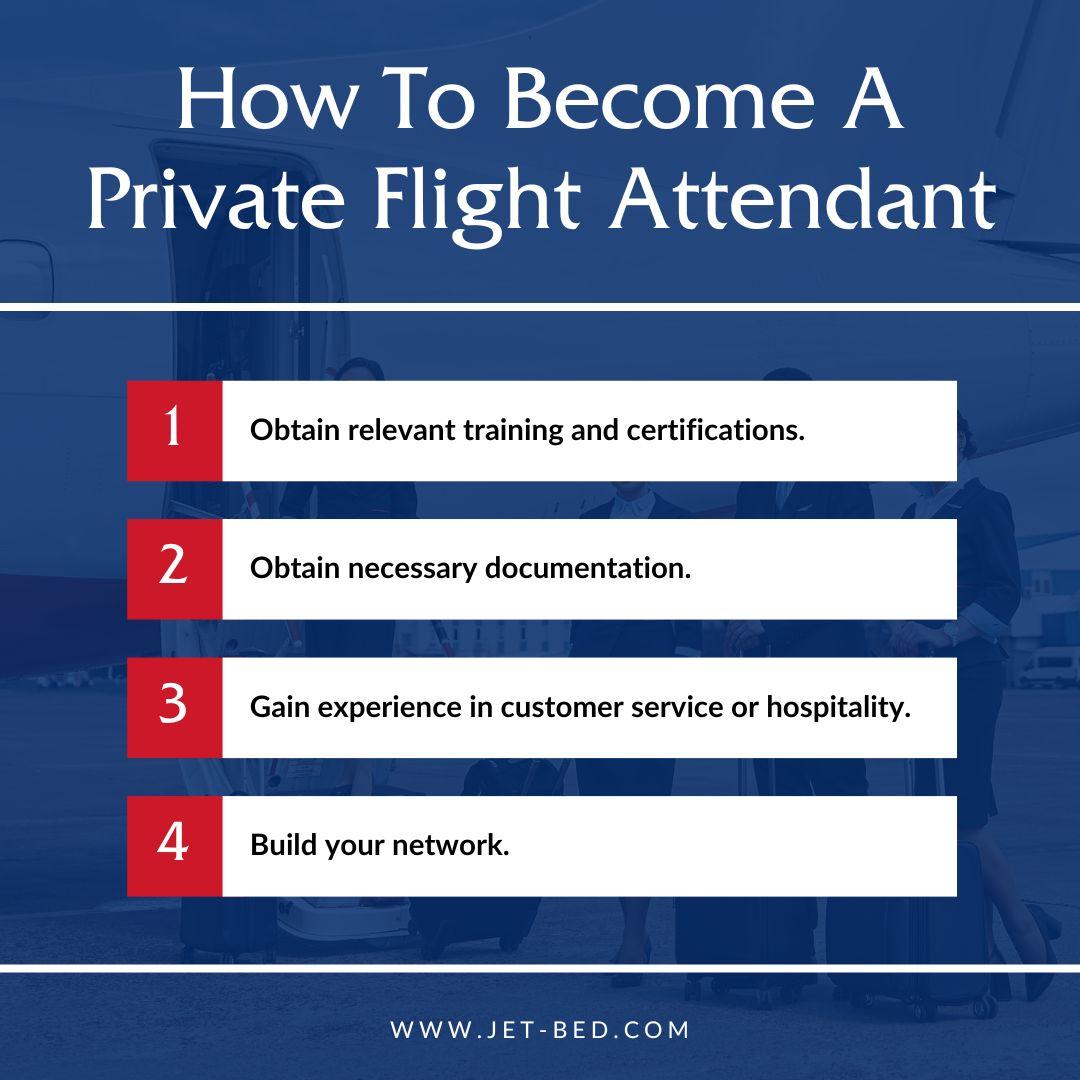
How To Become A Private Flight Attendant
Obtain relevant training and certifications.
While the FAA doesn’t mandate any certifications, completing a specialized training program for private flight attendants can significantly enhance your job prospects. These programs cover topics such as customer service, fine dining, wine service, safety procedures, and emergency response. Some programs also offer certifications in areas like culinary arts or medical training, which can make you a more attractive candidate.
Obtain necessary documentation.
Ensure that you have the necessary documentation to work as a flight attendant in the countries where you plan to fly. This may include a valid passport, visa, and any required medical certifications. Research the specific requirements of each country and obtain the necessary documents well in advance of your job search.
Gain experience in customer service or hospitality.
Employers highly value experience in customer service, hospitality, or any related field for flight attendants. This experience can help you develop the skills and knowledge needed to provide exceptional service to discerning passengers. Consider working on private yachts, luxury hotels, or high-end restaurants to gain relevant experience. Effective communication and interpersonal skills are also essential for flight attendants working on private jets to ensure passengers are comfortable.
Build your network.
Networking is crucial in the private aviation industry. Attend industry events like NBAA-BACE, join professional organizations, and connect with other flight attendants, pilots, and charter company representatives. Building relationships with people in the industry can help you learn about job opportunities and gain valuable insights.
Private jet flight attendant schedules are as dynamic as the industry itself.
Breaking into the world of private jet aviation can be a rewarding and exciting career path for experienced flight attendants. By understanding the unique scheduling requirements and honing the right skills, you can position yourself for success in this exclusive sector of the industry.
Of course, always ensure your jets are equipped with JetBed. The innovative product turns your jet seats into a luxurious, comfortable bed for optimal in-air sleeping. It’s easy to use and lightweight, so there’s no reason it’s not available on every private aircraft you find!
After all, every other experience will improve aboard a private jet when you’re well-rested and relaxed. So, don’t settle for less when it comes to chartered flights keep JetBed on your must-have list!