
Private aviation offers a unique level of flexibility and personalized service that sets it apart from commercial travel. From bringing pets onboard to adhering to exclusive in-flight policies, passengers are met with unparalleled convenience. Ultimately, behind each seamless experience lies a dedicated team of professionals.
While most people accredit the flight crew to pilots and co-pilots, flight attendants play an essential role. Their responsibilities extend beyond in-flight generosity—attendants are also trained in emergency procedures, safety compliance, and customer care tailored to the unique standards of private aviation.
However, the presence of flight attendants is highly dependent on the aircraft type and number of passengers. Today, we will explore how many flight attendants are typically onboard private flights, and how they contribute to the overall experience.
While a skilled flight crew is essential to any private flight, comfort-focused solutions like JetBed play an equally important role. Whether you’re embarking on a long-haul journey or a shorter regional flight, quality rest is essential. Proudly manufactured in the U.S. with a patented design and precision contouring, JetBed is crafted to elevate comfort on every private flight.

How Many Flight Attendants Are on a Plane?
The number of flight attendants on a private flight is highly dependent upon regulatory standards. For example, the Federal Aviation Administration (FAA) mandates that aircraft must have at least one flight attendant for each unit of 50 passengers. This ensures that there is enough staff on board to manage overall passenger safety and emergency situations. For example:
- 51 passengers: 2 flight attendants (1 per 50 passengers, rounded up)
- 100 passengers: 2 flight attendants
- 101 passengers: 3 flight attendants (2 attendants, plus one additional flight attendant for the extra seat)
For long-haul flights, airlines will often assign additional flight attendants beyond the mandated FAA minimum. This allows the cabin crew to rotate when necessary for rest periods, ensuring the same service quality during long flights without detriment to staff members.
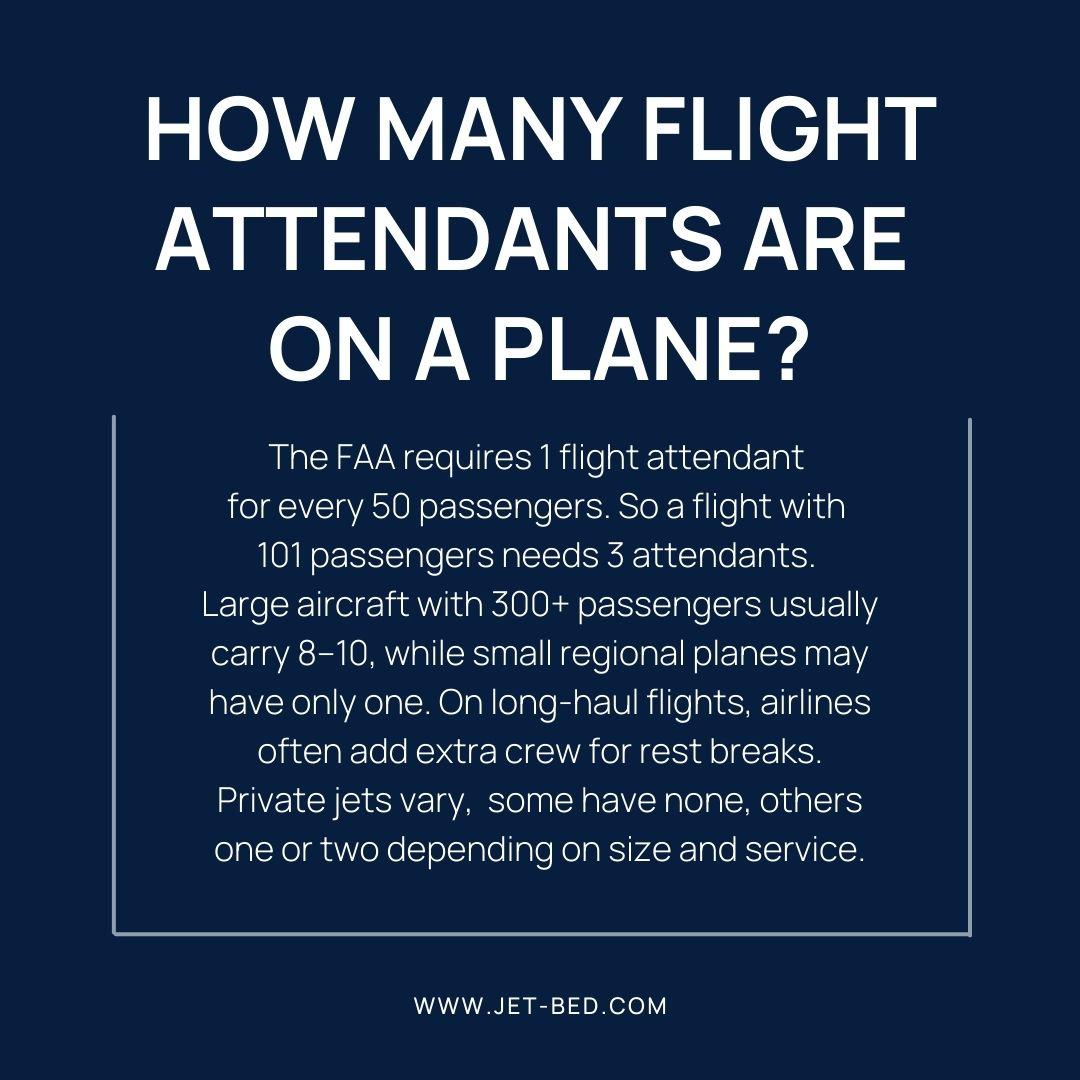
The number of cabin crew also varies by aircraft size. While small domestic flights with fewer than 50 passengers may operate with one attendant, wide-body aircraft carrying 300+ passengers may have anywhere from 8 to 10 attendants.
Commercial flights must follow FAA-mandated regulations. On the other hand, private jets often operate differently. Smaller private aircraft can have no attendants at all, while larger jets may carry one or two for safety and comfort. Ultimately, it depends on the passenger load and level of service requested.
For a deeper look into flight operations, you can also read “How Many Pilots are on a Plane?” This insight offers aviation enthusiasts and passengers alike a better understanding of the distinct roles of both cockpit and cabin crews.
What Do Flight Attendants Do on a Plane?
Safety Briefings and Emergency Procedures
Flight attendants attend briefings to obtain any necessary information about the trip from the pilot. This is essential for effectively communicating expectations to the passengers prior to takeoff.
In addition to this, flight attendants conduct pre-flight safety demonstrations to ensure passengers know what to do in case of an emergency. This includes revealing exit locations and preparing the cabins for emergency evacuations if necessary.
For more on potential emergencies during flights, make sure to check out: “Emergency Landing Procedures for Passengers.”
Passenger Comfort and Service
Flight attendants play a vital role in ensuring passenger comfort and satisfaction. Beyond serving meals, distributing blankets and pillows, and attending to individual needs, attendants continuously monitor the cabin environment.
This allows them to maintain both safety and a pleasant atmosphere. While doing so, attendants can manage special accommodations and promptly address any concerns that may arise. Ultimately, these seemingly small tasks contribute to a seamless and comfortable journey.
Make sure to visit “The Ultimate Guide to Food on Private Jets” to learn more about this process.
Medical Assistance
When traveling privately, passengers experience a level of attention and care incomparable to that on a commercial flight. To support this standard, flight attendants undergo comprehensive training designed to equip them with the necessary skills for effectively managing medical emergencies.
This training consists of administering immediate first aid and CPR, assessing passenger health conditions, and implementing appropriate emergency protocols. Additionally, flight attendants undergo training for effective and efficient communication to all cabin crew members. Their role is critical in maintaining passenger well-being and overall safety.
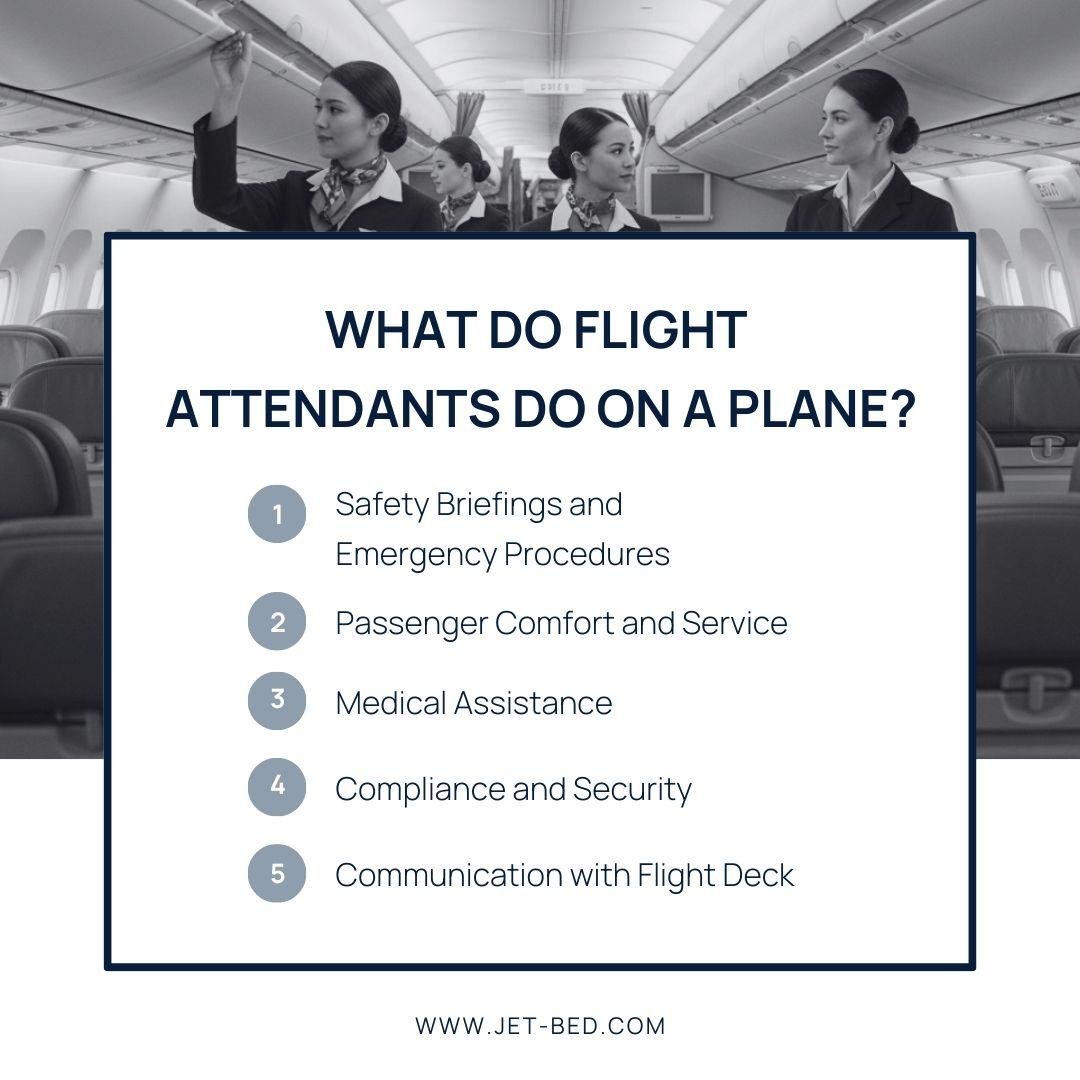
Compliance and Security
Cabin crew members enforce FAA safety regulations, monitor passenger behavior, and respond to security concerns. In this instance, their primary objective is to maintain a secure and orderly environment.
In order to accomplish this, flight attendants will closely monitor passenger behavior and comfort of those onboard. In addition, attendants are also trained to recognize and respond to potential concerns. Through these responsibilities, they ensure compliance with all regulatory requirements while simultaneously maintaining the welfare of passengers.
Communication with Flight Deck
Throughout the duration of the flight, the entire cabin crew requires consistent and precise communication. This ongoing exchange of information is essential for maintaining operational efficiency and promptly addressing passenger needs.
Whether coordinating service delivery or monitoring safety protocols, accurate communication from the flight attendant to the rest of the crew fosters a collaborative environment that upholds the standards expected in private aviation.
Flight attendants play a vital role in ensuring the safety, security, and overall quality of every flight.
Every flight relies on a precisely calculated crew to ensure safety and service quality. To uphold these standards, flight attendants undergo thorough training to develop the necessary expertise in a wide range of critical areas. This preparation enables them to anticipate and effectively manage a diverse range of situations.
For travelers trying to find extra comfort, the JetBed offers a lightweight, high-quality, and easy-to-carry solution for luxurious in-flight rest. Comfort made this easy isn’t a privilege, it’s a necessity.
To learn more, visit our following posts: